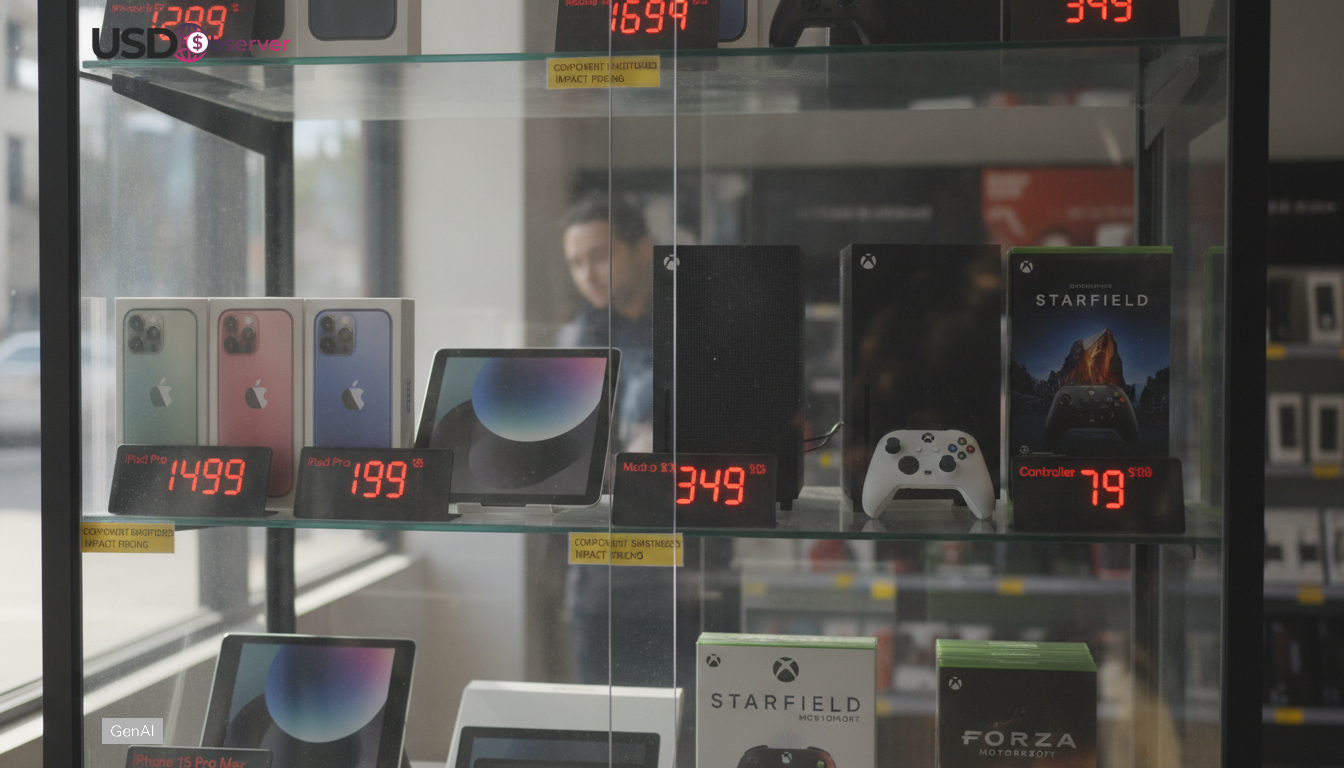
Rising component costs drive Apple and Xbox price hikes
Consumer tech brands are reevaluating pricing strategies as component costs increase, with recent insights from Apple and Microsoft suggesting how these higher expenses might affect consumers. As indicated by industry analysts and company commentary from market research firms, vendors have faced ongoing pressure due to fluctuating memory prices, limited display and battery supplies, and rising logistics and energy costs. Typically, when the cost of materials increases faster than retail demand, companies may adjust prices, reduce promotional offerings, or steer consumers toward higher-margin products—developments often seen in smartphones and consoles where cost adjustments frequently begin with storage-heavy models and new accessories. This situation tends to elevate entry prices for many consumers and reduce the number of aggressive launch deals, according to channel partners and market observers.
Apple adjusts pricing as rising component costs squeeze margins
According to available reports, Apple is said to be adjusting pricing for select hardware and accessory lines across several markets, based on retailer listings and market observations. Briefings and earnings documents from Apple have highlighted supplier pricing and logistics instability, with analysts at Counterpoint Research linking margin pressure in premium devices to increased material costs. For more on how risk appetite can influence tech pricing, see EU crypto market shifts as Binance limits services. The driving factor appears to be rising component costs, which compress margins when demand is inconsistent and promotions are minimal, as noted by Counterpoint Research and broader industry analysis. Retailers have started showcasing adjusted pricing levels in store listings, with channel partners reporting that changes often initially affect products with higher storage and newer displays.
Xbox raises console and accessory prices amid higher inputs
Microsoft has reportedly increased prices on certain Xbox console bundles and accessories in various regions, aligned with visible retail pricing and regional listings, as financial constraints tighten within gaming hardware. The company asserts its hardware strategy aims to balance affordability with sustained investment in content and services, while Ampere Analysis market trackers have identified a challenging cost environment for consoles compared to previous cycles. Analysts and suppliers broadly cite rising component costs and manufacturing pressure from constraints in silicon, memory, and power-management parts, though regional and temporal variations exist. For consumers assessing total ownership expenses, higher entry prices may heighten dependence on subscriptions and financing, potentially affecting the pace at which households upgrade consoles, according to industry analysts.
What buyers see: fewer discounts and trade downs
Consumers may immediately notice narrowed discounts on favored configurations and increased initial costs for new buyers, especially under ongoing cost pressures. Data from IDC’s retail pricing history suggests that as vendors raise list prices, promotional opportunities often shrink instead of disappearing, prompting buyers to opt for older models or reduced storage choices as component costs rise. The influence of Apple’s price changes might also extend to carrier and retailer financing offers, potentially raising monthly payments even when trade-in values remain stable, according to terms of carrier plans and retail financing structures. In gaming, elevated Xbox console costs might shift some interest toward subscriptions and cloud gaming, provided broadband conditions and latency allow, as frequently noted by analysts. Fluctuating energy and shipping costs might also affect retail pricing, as highlighted in Iran war update: oil prices retreat after Hormuz risk, with investors often interpreting such adjustments as margin protection during volatile input costs instead of straightforward demand indicators, based on market commentary.
Supply chain, currencies, and outlook for tech pricing
Executives and suppliers report a supply chain that, while operational, remains costly, influenced by unpredictable freight, energy, and component lead times, as per company statements and supplier commentary. These challenges are often exacerbated by currency fluctuations against the USD, potentially necessitating local price changes even when dollar-based wholesale costs are stable, according to foreign exchange market dynamics and regional pricing tactics. An example of how resilience in infrastructure can impact tech operations was noted by CoinDesk when Coinbase’s Base blockchain resumed after a two-hour outage, illustrating how investment in resilience can compete with product margins. In the near term, pricing might remain stable, as vendors typically prefer clear price steps rather than frequent minor changes that could confuse sales channels, according to retail and distribution practices. Consumers might observe more focus on refurbished and older products while new releases maintain their price levels longer, a pattern identified by industry analysts. For additional insights on macroeconomic pressures influencing consumer demand, refer to Brexit Economic Impact on UK Economy: Prospects.