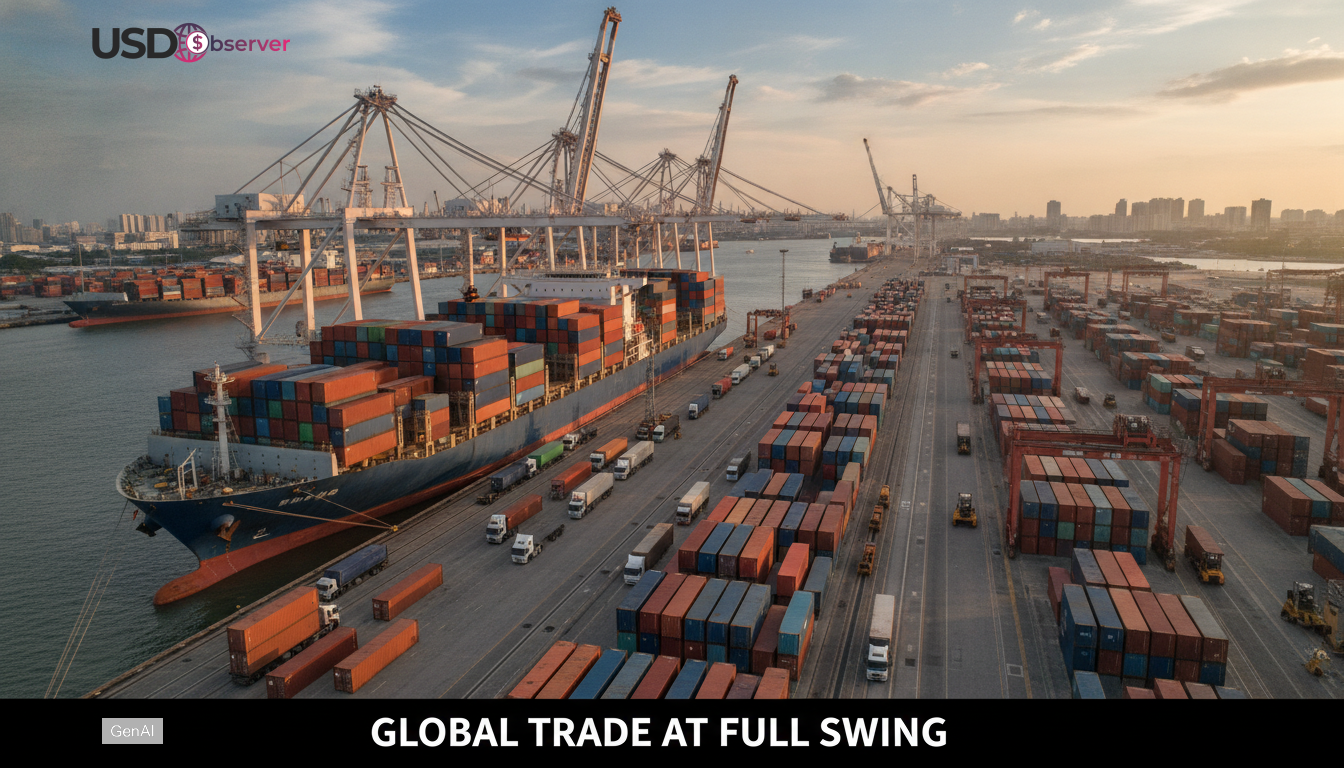
For decades, sovereign reserve management followed a relatively stable formula. Central banks accumulated US dollars through trade surpluses, invested heavily in Treasuries, and relied on established correspondent banking channels for liquidity access. While portfolio diversification occurred at the margins, the structural foundation of dollar deployment remained largely unchanged. Today, however, a more fragmented global settlement environment is prompting reserve managers to reassess not the dollar’s dominance, but how and where it is deployed.
This reassessment is driven less by ideology and more by operational risk, liquidity flexibility, and geopolitical uncertainty. The dollar continues to anchor global reserves, yet the mechanisms used to mobilize those reserves are evolving in response to changes in financial infrastructure and cross-border clearing dynamics.
The operational side of reserve deployment
Reserve management is not only about asset allocation. It is equally about accessibility, convertibility, and settlement reliability. During periods of global stress, central banks must deploy reserves quickly to stabilize currencies, manage capital flows, or support domestic banking systems. Delays in settlement or reliance on narrow channels can constrain response speed.
Fragmentation in global settlement systems has made operational flexibility a priority. While traditional dollar clearing remains dominant, alternative programmable and modular settlement layers are emerging in parallel. These systems do not replace the dollar as a reserve asset but provide additional pathways for deploying dollar liquidity when needed.
Liquidity stress and the lesson of recent cycles
Recent tightening cycles highlighted how quickly offshore dollar funding conditions can deteriorate. Sudden spikes in swap spreads and cross-currency basis levels revealed the importance of immediate access to cleared dollars. Reserve managers observed that liquidity is not merely about quantity but about timing and transmission efficiency.
As a result, many central banks are reviewing how reserves are structured across custodians, settlement rails, and counterparty networks. The objective is resilience through diversification of operational channels rather than diversification away from the dollar itself.
Trade realignment and settlement diversification
Global trade patterns are gradually shifting toward regional blocs. While invoicing remains heavily dollar-denominated, settlement infrastructure increasingly reflects regional integration efforts. Reserve managers must ensure that dollar assets can support trade financing needs across multiple jurisdictions.
This environment encourages the development of settlement frameworks that allow faster reconciliation and programmable allocation of funds. By integrating modern clearing tools alongside legacy systems, central banks enhance their ability to mobilize reserves without creating friction in trade flows.
The balance between concentration and flexibility
The US Treasury market continues to offer unmatched depth and safety. For this reason, dollar assets remain central to global reserves. However, concentration risk is now assessed not only in portfolio terms but also in infrastructural terms. Dependence on limited settlement pathways can create bottlenecks during sanctions, geopolitical disruptions, or systemic shocks.
Fragmented settlement landscapes, when properly coordinated, can reduce single-channel exposure. The key distinction is between harmful fragmentation that isolates liquidity and constructive diversification that expands access points. Reserve managers are increasingly attentive to this nuance.
Technology integration and governance standards
The adoption of modern settlement frameworks requires robust governance and compliance standards. Central banks operate within strict legal mandates and cannot expose reserves to opaque systems. Therefore, integration focuses on transparency, auditability, and interoperability with existing financial oversight.
Well-designed digital settlement layers can enhance monitoring and reduce operational risk. By embedding clear transaction logic and real-time verification, they complement traditional custodial arrangements rather than compete with them. This integration supports gradual evolution instead of abrupt transformation.
Implications for global dollar resilience
The reassessment of deployment strategies ultimately strengthens dollar resilience. By improving operational flexibility, reserve managers increase confidence in their ability to respond to shocks. This reinforces the credibility of the dollar as a global anchor currency.
Forex markets may interpret diversification of settlement channels as a signal of structural change, but it is more accurately viewed as modernization. Reserve composition remains heavily dollar weighted, yet the tools used to manage and mobilize those reserves are expanding.
Policy coordination and future outlook
Policy coordination will determine whether fragmentation enhances or undermines stability. International institutions and regulatory bodies are working to ensure interoperability between settlement systems. Clear standards reduce the risk of liquidity silos while preserving sovereign control.
Reserve managers are likely to continue balancing depth, safety, and flexibility. The dollar’s dominance is not being displaced, but its operational framework is becoming more adaptive to a multipolar settlement environment.
Conclusion
Sovereign reserve managers are reassessing dollar deployment strategies to enhance operational flexibility within an evolving settlement landscape. By diversifying settlement channels while maintaining dollar-centric portfolios, they strengthen liquidity resilience and reinforce the structural stability of the global dollar system.