Introduction
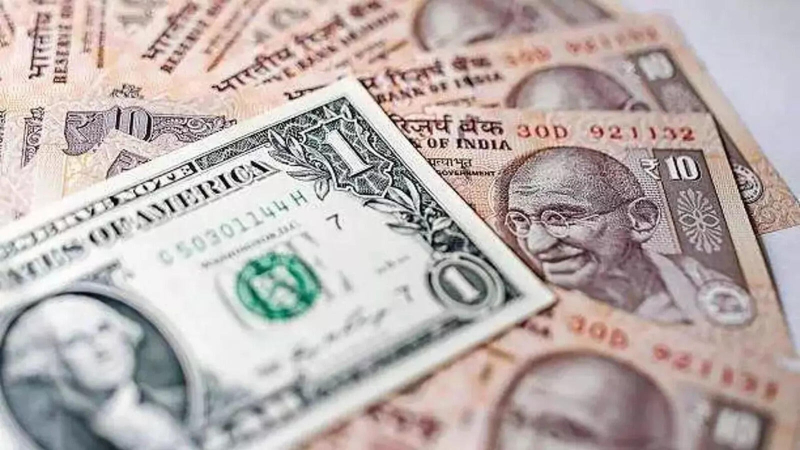
The Reserve Bank of India (RBI) has reaffirmed its commitment to defending the rupee amid renewed pressure from a resurgent U.S. dollar. As global investors continue to favor dollar assets, the rupee has faced consistent downward momentum, hovering near critical technical levels that have drawn the attention of policymakers. Market participants report that the RBI has intervened intermittently through public sector banks to maintain stability and prevent sharp depreciation. The central bank’s strategy has been to manage volatility rather than defend a fixed level, signaling an effort to maintain credibility while preserving flexibility. The broader objective is to avoid panic-driven selling that could unsettle domestic markets and investor sentiment.
The current phase of rupee weakness reflects a broader shift in global currency dynamics. As the dollar strengthens against most major peers, emerging markets are once again under pressure from capital outflows and rising external borrowing costs. India’s case, however, differs from many of its regional counterparts due to its strong reserves, relatively stable macro fundamentals, and moderate inflation trajectory. These factors give the RBI more room to smooth fluctuations without exhausting reserves or undermining monetary credibility. Nonetheless, the persistence of global dollar demand and portfolio rebalancing toward U.S. assets ensures that currency management will remain a key policy challenge for the foreseeable future.
The Dollar’s Global Resurgence and Its Impact on the Rupee
The recent resurgence of the U.S. dollar has been driven by a combination of resilient U.S. data, elevated yields, and investor caution amid geopolitical uncertainty. With the Federal Reserve signaling that it intends to keep policy restrictive until inflation moves decisively lower, capital has continued to flow into dollar-denominated assets. This shift has tightened global financial conditions and placed pressure on emerging market currencies. For the rupee, this has translated into repeated tests of support levels, particularly around 88.80 per dollar, a threshold closely monitored by traders and policymakers alike. The RBI’s measured defense has helped prevent disorderly movements that could have triggered speculative behavior or market instability.
While the dollar’s rise is largely a reflection of global forces, domestic factors have also influenced the rupee’s path. India’s trade deficit has widened slightly in recent months, reflecting strong energy imports and softening export demand. At the same time, portfolio inflows have moderated as global risk appetite wanes. Despite these pressures, India’s foreign exchange reserves remain substantial, providing an important cushion against external shocks. The RBI’s interventions, though not explicitly confirmed, have aimed to smooth volatility rather than engineer appreciation. The approach aligns with the central bank’s philosophy of gradualism, balancing market confidence with reserve adequacy.
Policy Strategy and Market Signaling
The RBI’s recent actions reflect a deliberate attempt to manage expectations and prevent market overreaction. By allowing limited flexibility in the rupee’s trading band while intervening to contain excessive moves, the central bank signals that it will not tolerate speculative attacks or rapid depreciation. This strategy serves multiple objectives: it reassures investors, anchors inflation expectations, and preserves liquidity conditions within the domestic financial system. Traders have noted that the central bank’s operations are often subtle, conducted through state-owned banks rather than direct announcements. This method provides deniability while maintaining influence over market sentiment.
Equally important is the signaling value of the RBI’s approach. Market participants interpret the central bank’s tolerance for moderate depreciation as a pragmatic recognition of global realities rather than weakness. By not defending an artificial level, the RBI avoids the perception of rigidity that has, in the past, led to costly interventions. This flexible management style has strengthened the institution’s credibility in both domestic and international markets. The focus is on reducing volatility and ensuring that any adjustment in the rupee’s value occurs in an orderly manner. The RBI’s ability to balance short-term defense with long-term stability has been a defining feature of its policy approach in recent years.
Broader Economic Implications
The defense of the rupee carries significant implications for India’s broader economic landscape. A stable exchange rate helps limit imported inflation, which is particularly important in an economy that relies on imported oil and other commodities. By preventing excessive depreciation, the RBI indirectly supports real household income and business confidence. At the same time, the policy stance influences the behavior of domestic investors and corporates with foreign currency exposure. Companies involved in trade or offshore borrowing tend to adjust their hedging strategies based on perceptions of central bank intent. When the RBI demonstrates active engagement, it helps reduce uncertainty in corporate planning and financing decisions.
However, currency defense is not without cost. Frequent intervention can deplete reserves if sustained over long periods, and sterilization operations can distort domestic liquidity conditions. The RBI’s challenge is to strike a balance between maintaining external stability and preserving internal monetary consistency. Analysts argue that India’s strong reserve position provides sufficient room for short-term management, but persistent global dollar strength could test that resilience. The key to sustainability lies in the alignment of fiscal and monetary policy, ensuring that domestic conditions support the broader objective of exchange rate stability.
Regional Context and Investor Confidence
India’s approach to currency management contrasts with that of several other Asian economies. Some central banks in the region have opted to allow sharper depreciation to preserve reserves, while others have intervened heavily to stabilize their currencies. The RBI’s middle path has been viewed positively by investors, who see it as a sign of policy maturity. By avoiding abrupt moves, the central bank fosters a predictable environment that encourages continued foreign investment. India’s improving macro fundamentals, including steady growth and controlled inflation, reinforce confidence in the rupee’s medium-term outlook despite short-term volatility.
Foreign institutional investors have also shown greater trust in India’s financial governance compared to other emerging markets. The combination of policy transparency, strong reserves, and gradual adjustments has enhanced the rupee’s resilience. Furthermore, India’s role in global supply chains and its growing integration with major economies add structural support to its currency. The RBI’s credibility has become a stabilizing force in this environment, helping to differentiate India from peers facing sharper depreciation pressures. While near-term challenges persist, the country’s policy framework remains one of the most robust in the emerging market universe.
Conclusion
The Reserve Bank of India’s defense of the rupee underscores its commitment to stability amid global currency turbulence. By intervening selectively and maintaining a flexible stance, the central bank has successfully prevented volatility from escalating into crisis conditions. Its strategy reflects a careful balance between market discipline and proactive management. Although the dollar’s strength remains a dominant global theme, India’s policy coherence and reserve adequacy have allowed it to weather the storm with minimal disruption.
Looking ahead, the durability of this stability will depend on external conditions and domestic coordination. If global risk aversion continues or if U.S. yields rise further, renewed downward pressure on the rupee is likely. The RBI’s credibility, built through measured intervention and transparent communication, will remain its strongest asset in maintaining market confidence. The currency’s path forward will not depend solely on defense but also on structural reform, consistent growth, and the continued evolution of India’s macroeconomic framework.