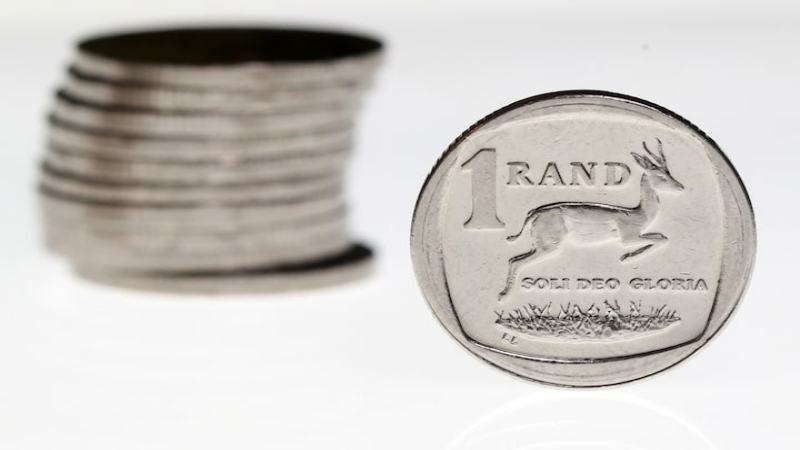
The South African rand advanced at the start of the week as higher gold prices and a softer US dollar provided near term support, while investors looked ahead to the final round of domestic economic data for clearer signals on growth and inflation. The currency strengthened against the dollar as global risk sentiment improved slightly, helped by declining US yields and reduced demand for safe haven positioning. As one of the world’s major precious metals producers, South Africa often sees its currency move in tandem with bullion prices, making gold’s recent strength an important external factor shaping rand performance and influencing broader USD sentiment in emerging markets.
The dollar’s subdued tone has been a key driver behind the rand’s appreciation, reflecting a pause in recent USD momentum as markets reassess the US policy outlook. Expectations around future Federal Reserve decisions, combined with weaker yields, have limited the dollar’s ability to regain ground against higher yielding or commodity linked currencies. In this environment, the rand has been able to sustain gains, reinforcing a pattern seen across parts of the emerging market FX complex where selective currencies benefit from shifts in global rate expectations rather than purely domestic fundamentals.
Local data has also played a role in shaping investor positioning. Recent figures showed a reduction in foreign direct investment outflows compared with earlier in the year, offering some reassurance about capital flow dynamics even as structural challenges persist. Attention is now turning to upcoming inflation releases, which are expected to provide guidance on the South African Reserve Bank’s policy stance heading into the new year. For currency markets, these data points matter not only for domestic rates but also for how South Africa compares to other emerging economies competing for yield as global liquidity conditions evolve.
For the US dollar, movements in the rand highlight how shifts in commodity prices and relative rate expectations can influence bilateral exchange rates without signaling a broad based USD reversal. While the dollar remains supported by its role as a reserve currency and by underlying US economic resilience, short term weakness against select emerging market currencies underscores growing sensitivity to global data and policy signals. As year end approaches, currency traders are likely to remain focused on whether upcoming US inflation and labor data restore confidence in the dollar or allow commodity linked and higher yielding currencies to extend gains.