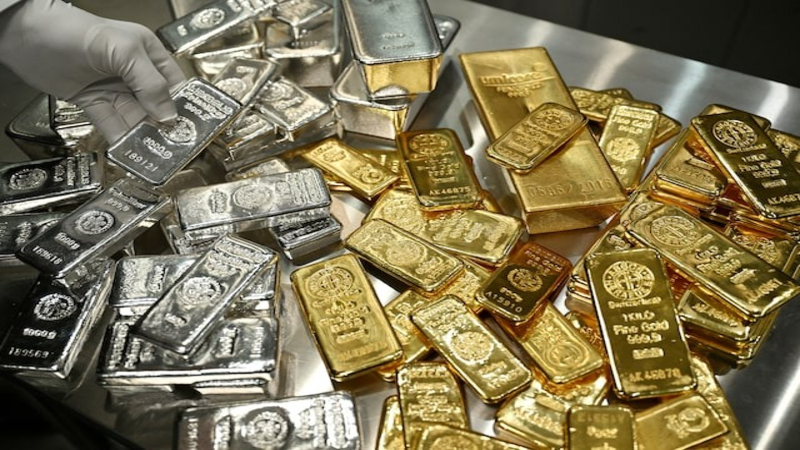
Precious metals began 2026 with renewed strength, extending momentum from a historic rally last year as investors returned to bullion following a late December profit-taking period. Gold prices rebounded sharply, supported by expectations of lower US interest rates and persistent geopolitical uncertainty that continues to reshape portfolio allocation. The metal’s advance reflects a market still focused on real yields rather than short-term price fluctuations, particularly after gold delivered its strongest annual performance in decades during 2025. Early-year buying also coincided with a recovery in physical demand across major consumption hubs, where price pullbacks encouraged renewed retail interest. Together, these forces reinforced gold’s role as a strategic asset rather than a tactical trade, as investors entered the new year positioned for policy easing and elevated global risk.
The broader precious metals complex also opened the year with strong gains, underscoring how demand has expanded beyond traditional haven flows. Silver and platinum extended rallies that defined much of last year, driven by a combination of supply tightness, industrial demand, and investment inflows. Silver’s performance has been particularly notable as its role in energy transition technologies and industrial applications tightened available inventories, amplifying price moves. Platinum benefited from similar dynamics, with constrained supply and improving demand contributing to outsized gains. While prices had retreated earlier in the week following margin changes and year-end positioning, the quick rebound highlights how underlying demand remains resilient. Investors appear increasingly willing to view these metals as part of a broader real asset allocation strategy rather than cyclical commodities.
Looking ahead, market expectations for monetary policy remain a central driver for precious metals in 2026. Anticipation of further rate cuts has kept real yields under pressure, creating a supportive backdrop for non-yielding assets. At the same time, ongoing uncertainty around global growth, fiscal policy, and geopolitical alignments continues to underpin demand for assets perceived as insulated from counterparty risk. Central bank buying remains a key structural factor, reinforcing long-term support even as short-term volatility persists. The start of the year suggests that last year’s rally was not solely a function of momentum, but part of a broader repricing of risk and value. As long as policy and geopolitical conditions remain unsettled, precious metals are likely to retain a prominent role in global portfolios.