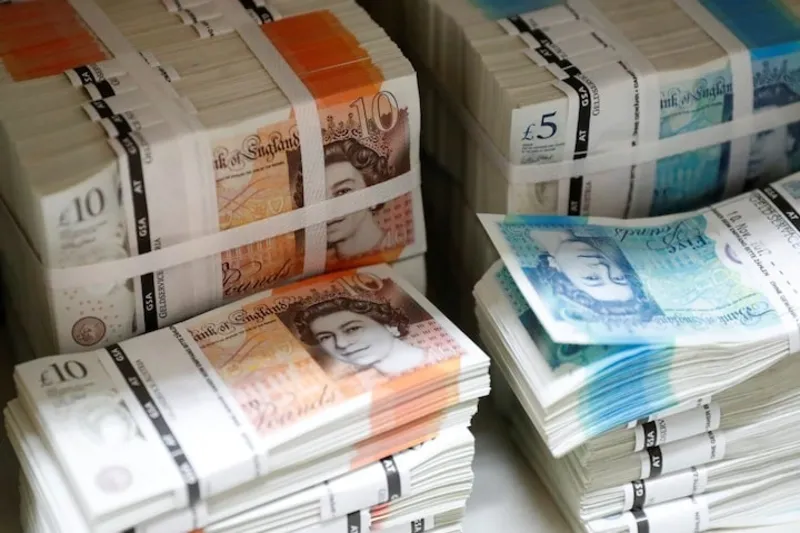
The British pound slipped against both the United States dollar and the euro after weaker than expected economic data raised concerns about the strength of the United Kingdom’s recovery. Currency markets reacted quickly after new figures showed that the British economy unexpectedly stalled in January, intensifying worries that domestic demand may be losing momentum. At the same time rising geopolitical tensions in the Middle East pushed global investors toward the dollar, which is widely considered a safe haven during periods of uncertainty. The combination of disappointing economic data and global risk aversion created additional pressure on sterling as traders reassessed the outlook for UK interest rates and economic growth.
Market movements reflected this shift in sentiment as the pound recorded its fourth consecutive daily decline against the dollar. Sterling was trading around 1.3273 dollars during the latest session, falling roughly half a percent on the day. The euro also strengthened slightly against the British currency, climbing to around 86.37 pence after touching its lowest level in several weeks earlier. Analysts say that the renewed demand for the dollar is largely tied to geopolitical uncertainty and higher energy prices linked to tensions in the Middle East. When global risks rise investors often move capital toward the dollar due to its deep liquidity and its role as the world’s primary reserve currency.
Economic data from the United Kingdom has added to concerns among investors and policymakers. Figures showing stagnant economic activity in January surprised many analysts who had expected moderate growth. The data suggested that consumer spending and business activity may be slowing at a time when inflation expectations remain relatively high. Economists say this combination complicates the policy decisions facing the Bank of England. Central bank officials must balance the need to control inflation with the risk that tighter monetary policy could further weaken economic growth if demand continues to soften.
Market strategists are closely watching the upcoming policy decision from the Bank of England’s Monetary Policy Committee. Some economists expect the central bank to keep interest rates unchanged for now as policymakers assess the broader economic impact of rising energy costs and global uncertainty. Analysts believe that concerns about persistent inflation could encourage most members of the committee to maintain a cautious stance rather than move quickly toward rate cuts. However several economists also argue that if inflation pressures begin to ease later this year the central bank may resume a gradual easing cycle to support economic activity.
Financial markets are also pricing in changing expectations about interest rates across Europe. Currency traders are factoring in the possibility that the European Central Bank could maintain relatively tighter monetary conditions compared with the United Kingdom over the coming year. This outlook has supported the euro against sterling in recent trading sessions. Meanwhile British government bond yields have climbed as investors reassess the future path of UK interest rates. Two year gilt yields have risen sharply in recent weeks as markets begin to price in a more cautious approach from the Bank of England.
The broader global environment is adding another layer of complexity for currency markets. Rising oil prices and geopolitical tensions in the Middle East are influencing investor behavior across multiple asset classes including currencies, bonds and equities. Higher energy prices tend to increase inflation risks for many economies, including the United Kingdom, which relies on energy imports. Economists warn that if energy prices remain elevated for an extended period they could slow consumer spending and reduce economic growth while also keeping inflation pressures elevated.
Investors are therefore monitoring a combination of domestic economic data and global developments when assessing the outlook for the pound. If future data shows a recovery in consumer demand and business activity the currency could regain some stability. However if economic weakness persists and geopolitical tensions continue to support the dollar, sterling may remain under pressure in the near term as global markets navigate an increasingly uncertain macroeconomic environment.