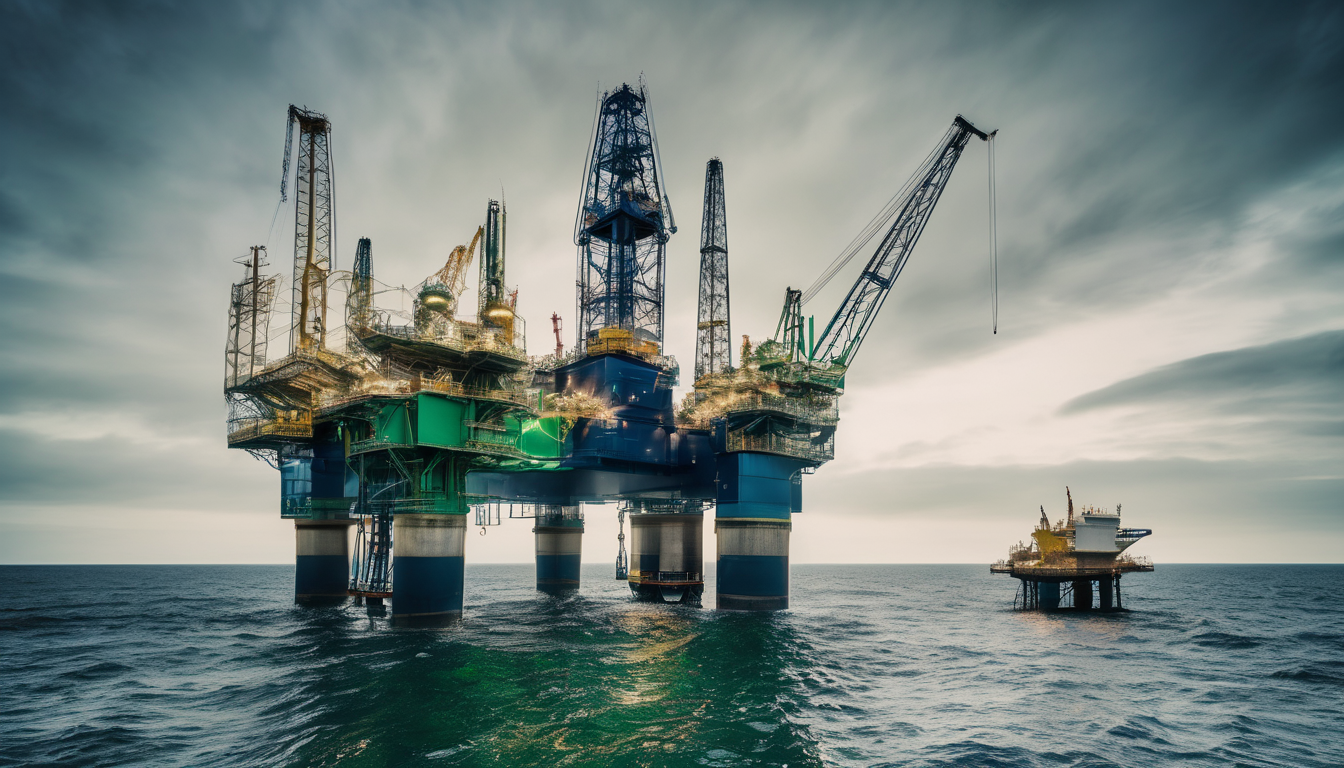
The Importance of Energy Independence
North Sea oil sits at the center of the UK’s argument over resilience, because energy independence is ultimately about control: who sets the price shock, who can keep industry running, and how quickly supply can be replaced when geopolitics turns. The trade body’s call to back oil and gas drilling is a response to the reality that the UK still consumes large volumes of hydrocarbons even as renewables expand. When domestic output falls faster than demand, imports rise, and the country becomes exposed to shipping routes, foreign policy shifts, and currency swings. Those pressures show up in household bills and in the wider economy, linking energy security to inflation and growth rather than ideology alone.
Current State of North Sea Oil and Gas
Production from the basin has matured, and that maturity is why the debate has sharpened: the remaining barrels and molecules are typically harder, costlier, and more regulated to extract, yet they are also nearer to UK refineries and existing pipelines. Industry groups argue that stable licensing and investment conditions matter as fields decline, because stop-start policy raises costs and accelerates decommissioning decisions that are difficult to reverse. In parallel, the market still reacts to supply risks elsewhere, with knock-on effects for prices and confidence, as seen in coverage of shipping chokepoints and oil supply uncertainty in related reporting such as tanker route monitoring and supply risk. On the news side, the trade body position has been echoed in mainstream reporting, including the BBC’s coverage of calls to support North Sea drilling.
Economic Benefits of Local Production
The economic case for maintaining output is not limited to direct jobs; it is about the full supply chain and tax base that rides on consistent activity. Local production can reduce the import bill and improve the current account during periods of high prices, while supporting skilled employment in engineering, subsea services, and port logistics. It also stabilizes procurement for firms that pivot between oil and gas work and adjacent sectors such as offshore wind, helping retain capability inside the UK rather than exporting it. The consumer angle matters too: when prices jump, the effects can feed into food and retail costs, complicating household budgets and business margins, which is why energy-linked inflation has become a recurring theme in economic coverage, including analysis of how higher energy bills hit growth. In this framing, UK energy independence is less slogan than balance sheet.
Environmental and Regulatory Considerations
Environmental scrutiny is the hard boundary around any expansion case, and the regulatory argument now turns on standards rather than slogans. Operators point to methane controls, electrification of platforms, and tighter measurement as ways to reduce intensity per barrel, while critics stress that absolute emissions remain inconsistent with long-term climate goals if demand is not cut quickly. Regulators, meanwhile, face the task of setting predictable rules that both enforce targets and prevent capital from fleeing to jurisdictions with weaker oversight. The credibility contest often hinges on transparent reporting and independent benchmarking, and industry commentary frequently cites ongoing work and data discussions carried by specialist outlets such as Energy Voice. In the background, technology and data are becoming part of compliance, as partnerships like SLB and Nvidia’s energy data collaboration show how monitoring and optimization are evolving across the sector.
Future Prospects for the UK’s Energy Supply
The forward path for energy security is likely to be defined by how the UK sequences decline and replacement rather than by a single yes-or-no decision on drilling. If domestic production falls before alternative capacity and storage are ready, imports rise and price exposure deepens; if investment continues without demand reduction, climate targets become harder to meet. The practical middle ground being argued in public is about managing decline: use existing infrastructure efficiently, avoid premature decommissioning, and align remaining production with a faster build-out of renewables, grids, and flexibility. Market signals will keep intruding, because oil price volatility can reshape policy and consumer sentiment in a matter of days, as reflected in broader market coverage such as the relationship between oil prices and the world economy. In that sense, the North Sea’s impact is measured in shocks avoided as much as in barrels produced.