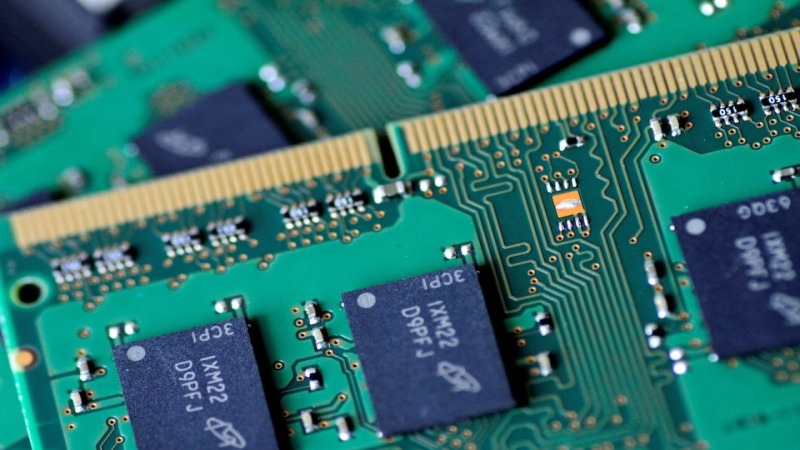
Global consumer electronics markets are entering a more challenging phase as surging memory chip prices begin to weigh heavily on manufacturers and demand outlooks. The rapid expansion of artificial intelligence infrastructure has absorbed a significant share of global memory supply, redirecting production toward higher margin data center clients and tightening availability for consumer focused devices. As a result, electronics makers are being forced to raise prices to offset sharply higher component costs, a shift that risks dampening demand across smartphones, personal computers, and gaming consoles. Market expectations for 2026 have already adjusted downward, with shipment forecasts turning negative after earlier projections of modest growth. The shift underscores how AI driven investment cycles are reshaping traditional hardware markets, often at the expense of consumer affordability and volume driven business models.
The cost pressures are especially pronounced because memory pricing momentum shows little sign of easing. After sharp increases over the past year, further gains are expected in the near term, extending the strain on device makers already navigating inflation sensitive consumers. Higher prices are expected to translate directly into weaker unit sales, particularly in mass market segments where price sensitivity is highest. While some manufacturers may absorb part of the increase to protect market share, analysts note that the scale and persistence of the shortage limit how much cost can be internalized without hurting profitability. As a result, the industry faces a difficult balance between margin preservation and demand stability, with the risk that prolonged price increases could accelerate replacement cycle slowdowns.
The impact is uneven across the sector, with low and mid range device makers facing the greatest vulnerability. Companies competing primarily on price are less able to pass on rising input costs without losing customers, making them more exposed to declining volumes. This dynamic could reshape competitive positioning within the global electronics market, favoring firms with stronger pricing power and more diversified supply arrangements. Retailers are also expected to feel the effects, as higher shelf prices may discourage discretionary purchases, compounding challenges from earlier cost pressures tied to logistics and trade policy. The broader consequence may be a contraction across multiple hardware categories, reversing recent post pandemic recovery trends.
Larger technology firms with scale and long term supplier agreements are viewed as better positioned to manage the disruption, though they are not immune. Contract based sourcing strategies can provide insulation from spot market volatility, allowing more predictable cost structures compared with rivals reliant on short term purchasing. Even so, sustained input inflation could eventually filter through to consumers if margins come under sustained pressure. The current cycle highlights a structural shift in semiconductor markets, where strategic demand from AI and cloud infrastructure increasingly sets pricing dynamics. For consumer electronics, this transition raises fundamental questions about affordability, growth sustainability, and how manufacturers adapt to a supply chain now optimized for data driven rather than consumer driven demand.