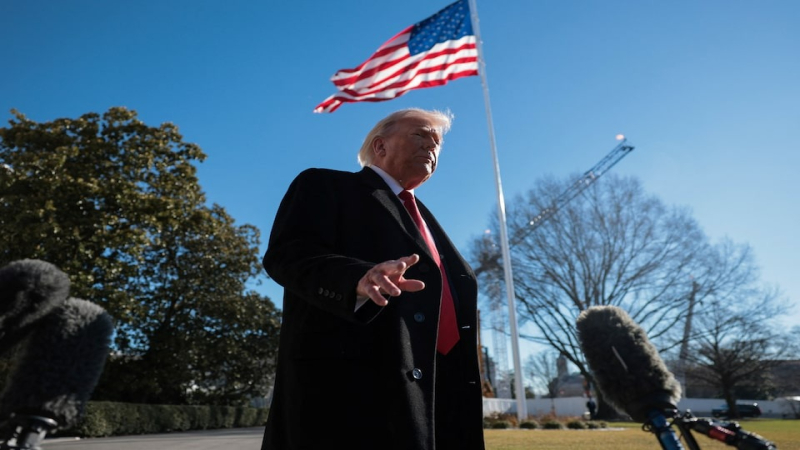
Global financial markets are increasingly grappling with how to price a rapidly changing geopolitical landscape as policy shocks and strategic realignments challenge long held assumptions. Recent moves in foreign policy and trade have unsettled investors, reviving volatility across equities, bonds, and currencies. While similar episodes in the past year faded quickly, the scale and speed of recent developments have made it harder for markets to dismiss them as temporary noise. Investors are confronting a world where long standing alliances and global norms appear less stable, complicating traditional risk assessment models. Despite these disruptions, markets until recently showed remarkable calm, raising questions about whether pricing fully reflects the magnitude of political and strategic change now underway across multiple regions.
The policy environment has become more interventionist, adding further uncertainty to economic and financial outlooks. Measures affecting credit markets, energy investment, and regulatory institutions have blurred the line between political objectives and market mechanisms. These actions have coincided with heightened geopolitical tensions, including renewed disputes among major allies, contributing to sharp market reactions. Safe haven assets have attracted stronger demand, while risk assets have shown increased sensitivity to policy headlines. This shift suggests investors are beginning to reassess exposure as the probability of sustained disruption rises. Still, it remains unclear whether these moves represent a lasting change in market behavior or another short lived adjustment similar to prior episodes.
At the same time, underlying economic fundamentals continue to provide support for risk assets, creating a complex and sometimes contradictory market picture. Growth expectations remain resilient, underpinned by strong investment in technology infrastructure and early signs of solid corporate earnings performance. Forecasts for profit growth and economic expansion suggest conditions that would normally support higher equity valuations. This disconnect between improving fundamentals and rising geopolitical risk has resulted in unusual asset price behavior, with both defensive and growth oriented investments attracting capital. Such patterns highlight the difficulty investors face in weighing structural political change against near term economic momentum.
The challenge for markets lies in the absence of clear reference points for pricing systemic change. Large scale shifts in global order do not unfold gradually in ways that fit neatly into standard valuation frameworks. Instead, markets oscillate between confidence and caution, often relying on liquidity flows and passive investment demand to anchor prices. As long as capital continues to flow steadily into financial markets, volatility may remain contained. However, the growing gap between political risk and market pricing suggests underlying vulnerability. Investors are increasingly aware that once regime change becomes undeniable, repricing could be swift rather than incremental.