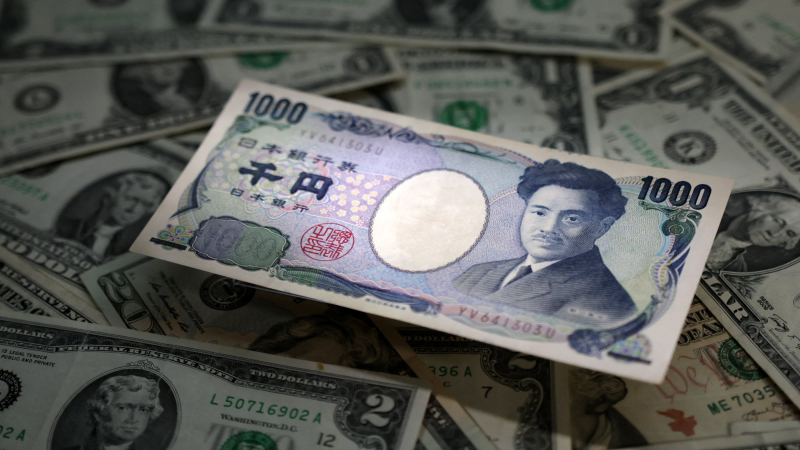
The Japanese yen has fallen sharply against the U.S. dollar, touching 160 for the first time in decades, as the Bank of Japan struggles to stabilize its currency despite multiple interventions. The widening policy gap between Japan’s ultra-loose monetary stance and the Federal Reserve’s tighter approach has placed persistent pressure on the yen, reinforcing the dollar’s dominance in global markets.
For traders and policymakers alike, the move signals a critical moment in Asia’s financial landscape. The yen’s weakness not only affects Japan’s import costs and inflation outlook but also influences regional capital flows and trade competitiveness across major economies.
The Struggle to Contain Yen Weakness
Japan’s central bank has spent much of the year attempting to slow the yen’s decline through verbal warnings and direct market interventions. However, these measures have offered only temporary relief. Investors remain focused on the fundamental divergence between Japan’s negative-rate policy and the higher yields available in U.S. assets.
Currency traders continue to sell yen in favor of the dollar, attracted by the yield differential that shows little sign of narrowing. The Bank of Japan’s cautious approach to tightening, combined with ongoing purchases of government bonds, has limited its ability to defend the currency without disrupting domestic markets.
The recent breach of 160 reflects more than short-term speculation. It underscores the structural challenge facing the BoJ as it balances financial stability, inflation management, and the need to sustain economic recovery.
Policy Divergence and Dollar Strength
The contrast between the Federal Reserve and the Bank of Japan remains one of the most powerful forces in global forex markets. The Fed’s higher interest rates continue to attract capital inflows, while Japan’s near-zero or negative yields push investors abroad in search of better returns.
This divergence has widened the interest-rate gap to multi-decade highs, putting additional strain on the yen. Even as U.S. inflation moderates, policymakers in Washington have maintained a cautious stance, signaling that rate cuts will be gradual. This keeps dollar yields attractive and reinforces upward momentum against lower-yielding currencies.
In Japan, inflation has risen modestly, driven by imported costs and currency weakness. Yet the BoJ remains hesitant to tighten aggressively, fearing it could destabilize the fragile recovery in consumer spending and business investment. This hesitation has left the yen exposed to persistent selling pressure.
Market Reactions and Intervention Challenges
The Ministry of Finance has intervened several times in recent months, spending billions to buy yen and stabilize exchange rates. While these interventions briefly slowed the decline, market participants quickly resumed dollar buying once the immediate effects faded.
Foreign-exchange traders have learned that unless policy fundamentals change, such interventions can only delay, not reverse, long-term trends. With global investors betting on sustained U.S. rate advantages, speculative positions against the yen have continued to grow.
Domestic markets have begun to adjust to the weaker currency. Export-oriented firms benefit from improved price competitiveness abroad, but households face rising import costs that erode purchasing power. The combination of higher prices and stagnant wage growth is adding pressure on policymakers to balance monetary support with currency stability.
Global Implications of Yen Depreciation
The yen’s sharp fall has broader implications for regional and global markets. As one of the world’s key funding currencies, the yen plays a central role in global liquidity and carry-trade strategies. A sustained depreciation increases volatility in financial flows and can influence asset pricing across Asia and emerging markets.
Neighboring economies are monitoring the situation closely. A weaker yen makes Japanese exports more competitive, potentially affecting trade balances in South Korea, Taiwan, and China. At the same time, the yen’s fall raises questions about financial stability, particularly if it triggers rapid adjustments in leveraged positions.
Global investors view the yen’s trajectory as a reflection of confidence in central-bank policy coordination. Persistent weakness could prompt discussions among major economies about currency management, especially if volatility spreads into bond and equity markets.
The Road Ahead for Japan’s Monetary Policy
Looking ahead, Japan faces difficult choices. Allowing the yen to weaken further risks imported inflation and public discontent, while tightening too quickly could destabilize the recovery. The Bank of Japan may need to gradually raise its policy rate or adjust its yield-curve control framework to restore credibility and reduce currency pressure.
Analysts believe that even modest policy shifts could help stabilize expectations if communicated clearly. Coordinated action with the Ministry of Finance, combined with a signal of reduced bond purchases, might provide a more durable defense against speculative selling.
In the longer term, the yen’s recovery depends on narrowing the interest-rate gap with the United States and rebuilding confidence in Japan’s economic resilience. Until then, the dollar is likely to remain dominant, supported by stronger yields and investor preference for U.S. assets.
Conclusion
The yen’s slide to 160 marks a pivotal point in Japan’s monetary history. Repeated interventions have failed to offset deep policy divergence, leaving the currency vulnerable to sustained weakness. While the dollar’s strength reflects solid fundamentals, Japan’s challenge lies in restoring balance without undermining growth. As global markets adjust, the yen’s future will hinge on how decisively the Bank of Japan navigates the intersection of inflation control, policy credibility, and financial stability.