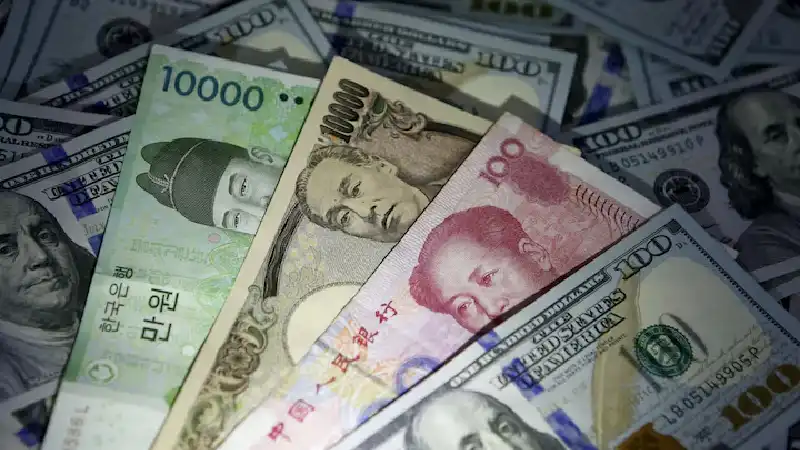
Japan and South Korea have signaled their readiness to respond to growing currency volatility as the Japanese yen and South Korean won continue to weaken against the US dollar amid rising geopolitical and economic uncertainty. Finance ministers from both countries expressed concern over the sharp depreciation of their currencies following recent movements in global markets. The warning reflects increasing pressure on Asian currencies as investors move capital into the US dollar, which has strengthened significantly during the ongoing geopolitical tensions and the surge in global energy prices.
The depreciation of the yen and the won has been closely linked to the stronger US dollar, which has benefited from global safe haven demand as financial markets react to geopolitical tensions and economic uncertainty. The conflict in the Middle East has pushed oil prices higher, creating additional challenges for economies that rely heavily on imported energy. Both Japan and South Korea are major energy importers, and rising oil costs can weaken their currencies by increasing the demand for foreign currency payments while also adding pressure to domestic inflation and trade balances.
Recent market movements have pushed both currencies toward critical levels that have historically prompted concern among policymakers. The Japanese yen has fallen close to the 160 level against the US dollar, a threshold that market participants believe could trigger government intervention to stabilize the currency. Meanwhile the South Korean won recently crossed the symbolic level of 1,500 per dollar for the first time since the global financial crisis. Such declines can increase import costs, intensify inflation pressures and create broader financial instability if volatility persists.
Officials from both governments emphasized that they are closely monitoring developments in foreign exchange markets and remain prepared to take action if movements become excessive or disorderly. Policymakers highlighted the importance of maintaining stable currency conditions to protect economic stability and household purchasing power, especially during periods of rising global energy prices. Rapid depreciation can raise the cost of imported goods and fuel, placing additional strain on consumers and businesses already facing inflationary pressures.
Despite repeated warnings from policymakers, currency markets remain sensitive to broader global factors such as interest rate expectations and capital flows toward the US dollar. Higher US interest rates and strong demand for dollar assets continue to attract international investors, putting pressure on other currencies. Analysts note that if geopolitical tensions persist and oil prices remain elevated, the dollar could maintain its strength, making it more difficult for Asian currencies to recover without policy intervention.
Some policymakers have privately acknowledged that direct intervention in currency markets may have limited effectiveness if broader economic forces continue to support the dollar. However governments often signal readiness to act in order to discourage speculative trading and stabilize investor expectations. By coordinating messaging and monitoring financial conditions, Japan and South Korea aim to prevent disorderly currency movements that could disrupt economic stability across their domestic markets.
The situation highlights the delicate balance facing policymakers in energy importing economies where currency depreciation, rising commodity prices and global financial uncertainty can quickly interact. As markets continue to respond to geopolitical developments and monetary policy decisions around the world, Asian governments are likely to remain vigilant about foreign exchange volatility and its potential impact on inflation, trade balances and economic growth.