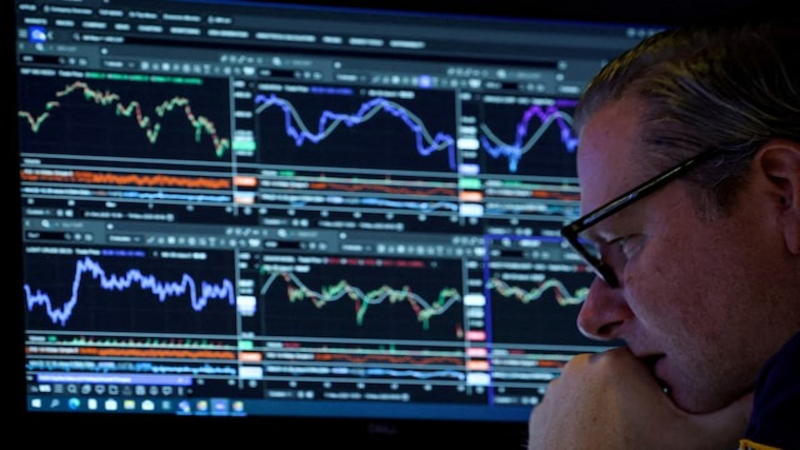
Global investors are entering 2026 with a growing willingness to look beyond highly valued technology stocks, as the powerful rally driven by artificial intelligence shows signs of maturing. After a volatile 2025 marked by sharp drawdowns and rapid recoveries, markets have regained momentum, but confidence is becoming more selective. Portfolio managers increasingly view this phase as one where dispersion matters more than broad market exposure. While enthusiasm around AI remains intact, concerns over crowded positioning and stretched valuations are prompting a reassessment of where future returns may come from. This shift does not signal an exit from risk assets, but rather a recalibration toward areas where pricing has lagged fundamentals. Investors are focusing on earnings visibility, balance sheet strength, and sensitivity to interest rates as they prepare for a year where returns may depend more on allocation discipline than thematic momentum alone.
Equities tied to domestic growth cycles are attracting renewed interest as expectations build for lower borrowing costs. U.S. small cap stocks, which lagged larger peers during periods of tighter financial conditions, are now seen as potential beneficiaries of easing monetary policy. As the Federal Reserve is expected to gradually reduce rates, companies with higher leverage stand to gain disproportionately from lower financing expenses. Improved earnings prospects have reinforced the case for rotating into segments that were previously sidelined. At the same time, sectors such as healthcare and financials are drawing attention due to favorable policy dynamics and valuation support. Investors view these areas as offering exposure to cyclical recovery without the valuation risk embedded in the largest technology names. The emphasis is increasingly on diversification within equities rather than outright risk reduction.
In commodities and currencies, shifting expectations around growth and policy are reshaping positioning. Gold continues to attract strategic interest following its strong performance, supported by central bank diversification and a softer outlook for the U.S. dollar. Currency markets are also reflecting this transition, with investors anticipating renewed volatility as rate differentials narrow. A weaker dollar environment could lift emerging market assets, particularly where macro stability has improved and valuations remain moderate. Analysts note that currency performance in 2026 is likely to be driven more by relative policy paths than by synchronized global cycles. This creates opportunities across both developed and emerging markets for investors willing to engage actively rather than rely on passive exposure.
Fixed income markets are also adjusting to a landscape shaped by persistent issuance and evolving risk appetite. High yield and corporate bonds are expected to remain active as companies seek funding for acquisitions and capital intensive investments, including continued spending on AI infrastructure. Demand has so far absorbed increased supply, reinforcing confidence in credit markets. At the same time, investors are weighing newer asset classes tied to market outcomes and events, reflecting a broader expansion of investable themes. While these instruments remain small relative to traditional markets, their growth highlights how investor behavior continues to evolve alongside technology and policy shifts. Overall, 2026 is shaping up as a year where value hunting reflects not caution, but a more granular approach to opportunity.