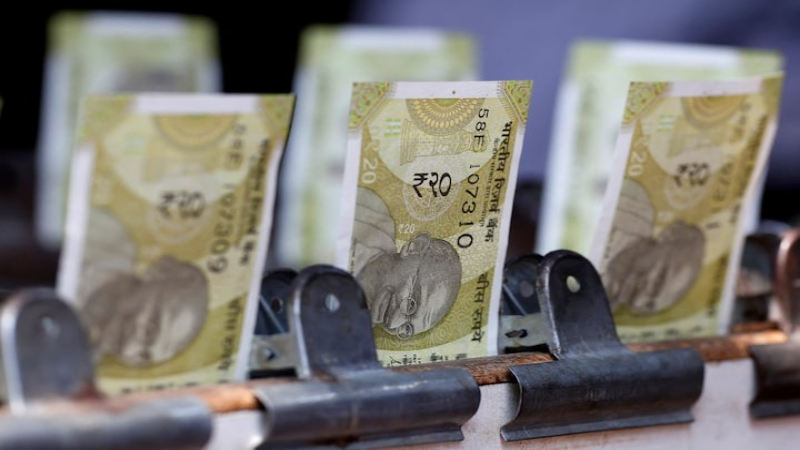
The Indian rupee traded in a narrow range against the U.S. dollar this week as the Reserve Bank of India intensified interventions to keep volatility in check and discourage speculative positions.
The currency hovered between 88 and 88.50 per dollar, supported by steady dollar sales through state-run banks. Traders said the central bank’s active presence reflects its determination to maintain exchange-rate stability after recent weakness in the domestic currency.
The rupee has declined about 3.4 percent so far in 2025, making it one of Asia’s softer performers. However, analysts note that the RBI’s consistent actions have kept fluctuations limited compared with peers in the region.
Data show that net short dollar forwards rose by nearly $6 billion in September to $59.4 billion, marking the first increase in six months. Earlier in the year, the RBI had reduced its forward book from around $89 billion in February to approximately $53 billion in August. The rise suggests that authorities are once again leaning on forwards and offshore non-deliverable forwards to smooth rupee movements.
Economists said the central bank’s approach underscores its focus on stability over sharp market swings. One senior economist at a major public-sector bank noted that the RBI aims to prevent large moves in either direction, as rapid appreciation can hurt exporters while excessive weakness raises import costs.
Three-month implied volatility in the rupee has fallen to 3.4 percent, nearly half its May peak. India’s robust foreign-exchange reserves, now at $695.36 billion, continue to provide ample room for intervention without unsettling markets.
Analysts believe the recent measures are meant to contain speculative bets following a period of capital outflows. Foreign investors have withdrawn around $17 billion from equities and close to $1 billion from debt this year under the voluntary retention route.
Some market observers argue that excessive control could deter long-term foreign participation, while others see the RBI’s stance as prudent given the uncertain global environment and uneven domestic inflows. Maintaining confidence in the currency, they say, remains essential as India navigates shifting external conditions.
The Indian economy expanded 7.8 percent in the April–June quarter, though analysts expect moderation in the coming months as export demand softens. The rupee’s narrow trading band signals continued caution among global investors despite India’s relatively strong growth outlook.
Market forecasts suggest the rupee could firm slightly to 88.25 per dollar by January, hold near 88.08 by April, and edge back toward 88.50 within a year. The projections indicate expectations of gradual stability rather than strong appreciation as the RBI continues balancing stability with market flexibility.