Introduction
The International Monetary Fund has raised its estimate for global growth to 3.1 percent, suggesting that the world economy may be regaining limited momentum after a year of volatility and uneven performance. The new outlook reflects modest improvements in several major economies, aided by resilient consumption and fiscal adaptation. The IMF’s update, however, comes with a note of caution. While headline numbers appear stronger, the underlying conditions remain fragile, with risks ranging from persistent inflation pressures to geopolitical uncertainty and trade fragmentation.
This latest revision, drawn from the Fund’s October World Economic Outlook, underscores the balance between short-term optimism and longer-term challenges. Economists at the IMF emphasized that the global recovery continues to rely heavily on policy discipline and the ability of central banks to maintain credibility while fostering growth. For financial markets and policymakers alike, the 3.1 percent figure serves as both a sign of endurance and a reminder of how sensitive global stability remains to shocks.
Drivers Behind the Upward Revision
The IMF attributes much of the improvement in its forecast to stronger-than-expected consumer demand in advanced economies, particularly in the United States, where household spending and labor market resilience have exceeded earlier assumptions. In several European countries, investment has held up better than expected despite higher financing costs, while Asia’s major economies have seen renewed export momentum. These developments combined to offset weakness in smaller emerging markets that continue to face debt and liquidity challenges.
Fiscal adjustments have also contributed to the improved outlook. A number of governments have adopted more targeted fiscal policies, focusing on productivity and supply-side measures rather than blanket stimulus. The Fund noted that these structural efforts have begun to improve medium-term growth potential. Meanwhile, inflation in many regions is easing at a gradual pace, providing some relief to real incomes and supporting domestic consumption. Together, these factors explain why global output growth is now expected to hold slightly above the previous projection.
Risks and Persistent Fragility
Despite the revision, IMF economists have emphasized that the world economy remains vulnerable. High borrowing costs, lingering trade disputes, and uneven capital flows continue to threaten momentum. While central banks have made progress in containing inflation, they now face the challenge of balancing tightening fatigue with the need to avoid premature easing. A sudden reversal in policy direction, the IMF warns, could undermine the fragile progress achieved so far.
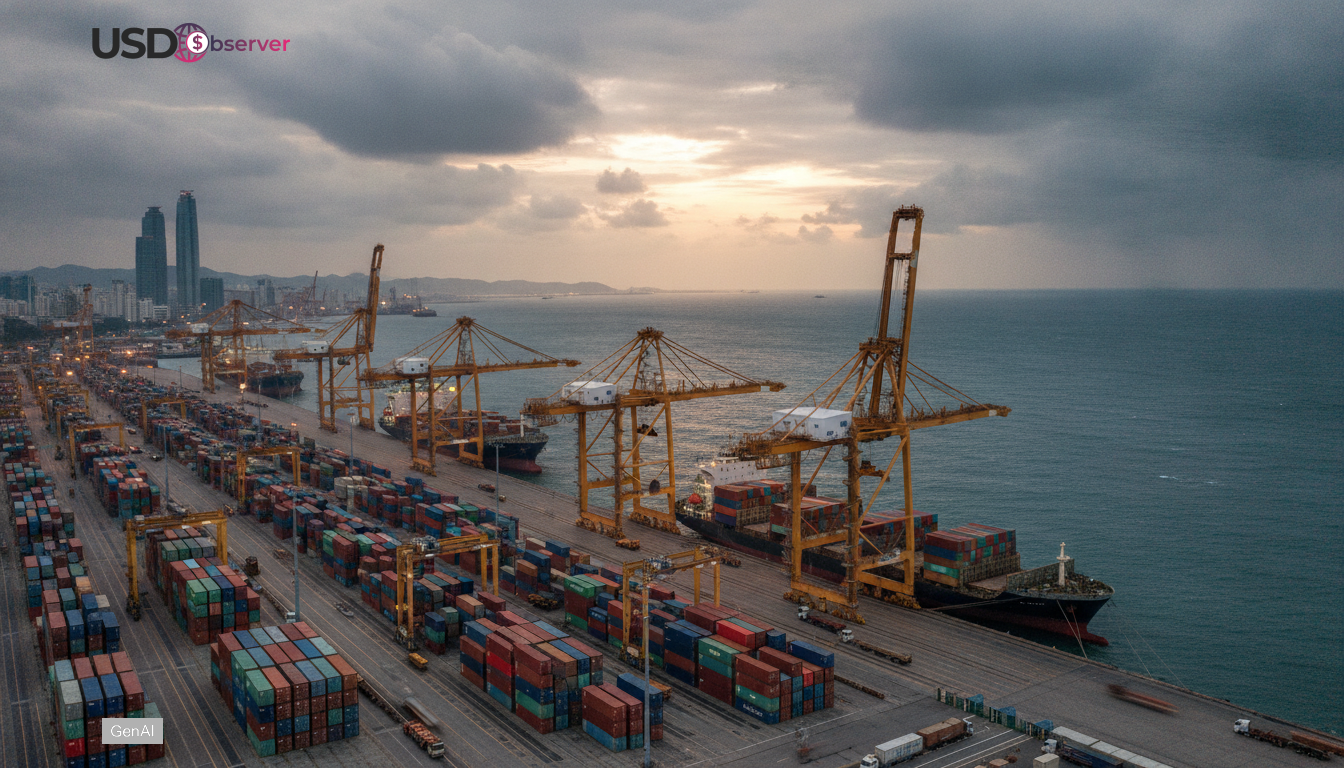
Another major risk stems from geopolitical uncertainty. Conflicts in key regions have disrupted trade routes and commodity markets, adding volatility to supply chains and price expectations. The Fund also highlighted the growing divergence between economies with strong financial buffers and those still struggling with elevated debt levels. Emerging markets with limited access to financing remain at particular risk of currency stress and inflation flare-ups. These vulnerabilities could amplify if global financial conditions tighten unexpectedly.
Regional Divergence and Uneven Recovery
The IMF’s report underscores that global growth is increasingly uneven, with stark contrasts across regions. The United States remains one of the primary engines of expansion, supported by a robust labor market and steady consumer confidence. In Asia, India and Indonesia continue to post strong performances, while China’s growth is stabilizing after a challenging year of property sector weakness and regulatory shifts. These economies account for much of the upward pressure on the overall global average.
In contrast, the euro area continues to struggle with subdued industrial activity and weak consumer sentiment. High energy prices and persistent uncertainty have limited the region’s capacity to accelerate. Japan, while benefiting from wage gains and improving domestic demand, still faces structural headwinds that constrain growth potential. In emerging markets outside Asia, economic performance remains heavily dependent on commodity prices and the availability of foreign capital. This divergence makes it increasingly difficult to speak of a synchronized global recovery, as regional conditions dictate distinct policy approaches.
Policy Implications for Governments and Central Banks
The IMF’s message to policymakers is clear: even with modest improvement, the recovery must be protected through disciplined and coordinated action. Central banks should remain vigilant against renewed inflationary pressures while gradually normalizing policy in a way that supports growth. The Fund urged monetary authorities to communicate clearly to reduce uncertainty in markets and prevent misaligned expectations. This disciplined approach, according to the IMF, will be essential to maintaining investor confidence and sustaining moderate expansion.
Fiscal authorities, meanwhile, face their own set of challenges. The report calls for prioritizing productivity-enhancing investments such as digital infrastructure, education, and energy transition projects. It warns that excessive spending or untargeted stimulus could reignite inflation and worsen debt sustainability. Countries with limited fiscal space are encouraged to focus on improving tax efficiency and governance rather than relying on debt-financed expenditure. The IMF reiterated that successful policy coordination between monetary and fiscal authorities remains a key determinant of medium-term stability.
Financial Markets and Investor Sentiment
Global markets have reacted cautiously to the revised forecast. Equity benchmarks in major economies recorded modest gains, reflecting cautious optimism about growth prospects, while bond yields remained mixed as investors assessed the potential impact on inflation expectations. The dollar’s strength has persisted, driven by relative economic resilience in the United States and safe-haven demand amid geopolitical uncertainty. Emerging market currencies have been more volatile, underscoring how sensitive capital flows remain to changes in risk appetite.
Investors have begun rotating toward sectors that stand to benefit from stable demand, including infrastructure, energy transition, and technology services. However, the IMF’s tone has reinforced a general sense of prudence among institutional players. Many asset managers continue to hedge against downside scenarios, citing the potential for policy missteps or renewed shocks. This cautious stance suggests that while markets acknowledge incremental improvement, they are not yet ready to price in a sustained acceleration.
Structural Themes and Long-Term Considerations
Beyond short-term growth adjustments, the IMF used the opportunity to highlight deeper structural challenges that continue to shape the global economy. Sluggish productivity growth, demographic pressures, and widening inequality remain major constraints on potential output. The Fund emphasized that productivity-enhancing reforms and technology adoption will be crucial to sustaining gains beyond the current cycle. Countries that invest in innovation, education, and green transition infrastructure are expected to outperform over the longer horizon.
Another key theme in the report is the importance of financial transparency and institutional resilience. The IMF reiterated its call for stronger cross-border cooperation on tax transparency, fiscal reporting, and debt management. It stressed that credible data and clear governance frameworks are essential for building investor trust, particularly in emerging markets. The integration of modular and transparent reporting systems is being studied as part of broader efforts to improve oversight and accountability. These initiatives align with the Fund’s ongoing push to enhance fiscal visibility across all member economies.
Conclusion
The IMF’s decision to revise global growth upward to 3.1 percent reflects cautious optimism amid continued uncertainty. While the data show resilience, underlying vulnerabilities remain significant. The world economy is growing, but unevenly, and the sustainability of that growth depends on policy coordination, disciplined inflation management, and structural reform. The IMF’s analysis serves as both encouragement and warning: progress is possible, but it is neither uniform nor guaranteed.
For policymakers and investors alike, the coming months will be a test of credibility and coordination. Economic resilience will hinge on clear communication, stable policy frameworks, and adaptive responses to shocks. In an environment defined by both recovery and risk, the IMF’s latest forecast captures the complexity of a global economy still searching for balance between optimism and caution.