Introduction
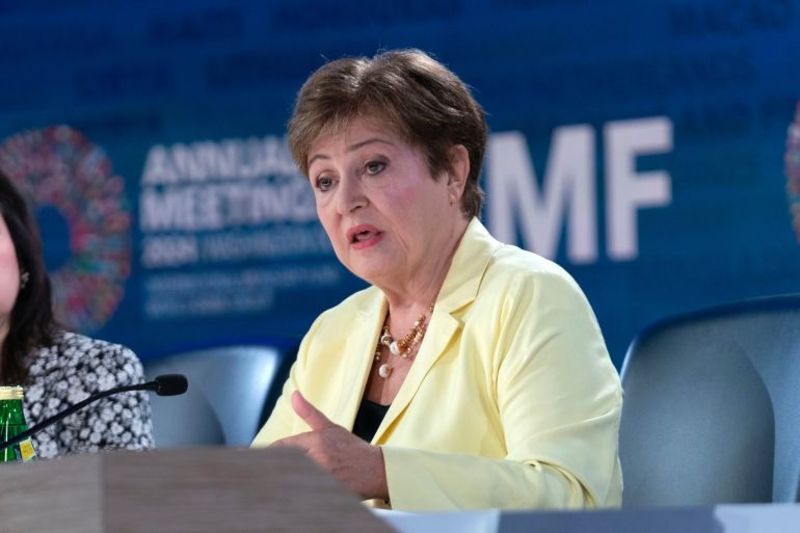
The International Monetary Fund’s Managing Director has signaled that a decision on Argentina’s pending aid package could come soon, as negotiations between Buenos Aires and IMF officials enter their final stages. The discussions, focused on stabilizing Argentina’s fragile economy and restoring market confidence, aim to unlock additional financial support that would help replenish reserves and sustain currency stability. The IMF chief emphasized that both sides are making progress toward an agreement that balances fiscal discipline with the need to protect vulnerable populations.
Argentina is seeking to modify the terms of its existing $40 billion IMF program to secure greater flexibility amid persistent inflation, a depreciating peso, and shrinking foreign reserves. The government hopes that a new tranche of funding will provide the breathing room needed to implement structural reforms without triggering a deeper economic contraction. As global conditions tighten and investor sentiment remains cautious, the IMF’s decision carries high stakes for Argentina’s financial future and for the credibility of the Fund’s broader engagement with emerging markets.
Ongoing Negotiations and Key Priorities
According to IMF officials, negotiations with Argentina have advanced on several technical fronts, including fiscal targets, monetary policy coordination, and reserve management. The Fund’s priority is to ensure that any revised agreement maintains a clear commitment to macroeconomic stability and debt sustainability. While acknowledging Argentina’s progress in reducing its primary deficit, IMF staff remain concerned about the pace of inflation and the use of reserves to defend the peso. The Fund is pressing for measures that strengthen central bank independence and limit monetary financing of fiscal shortfalls.
For Argentina, the talks represent a balancing act between maintaining IMF support and addressing domestic political pressures. The government faces rising public discontent due to falling real wages and high living costs, leaving little room for aggressive austerity. Officials are seeking a deal that allows gradual fiscal adjustment while securing enough external financing to prevent a currency crisis. Sources close to the negotiations indicate that the new package could include an extension of repayment schedules and enhanced monitoring to ensure policy consistency.
Fiscal Policy and Structural Challenges
Argentina’s fiscal position remains one of the central issues in the negotiations. Despite efforts to improve tax collection and rationalize subsidies, expenditures continue to outpace revenues. The IMF has urged stronger controls on public spending and a more predictable fiscal framework to anchor investor confidence. It argues that fiscal discipline is essential not only for repayment capacity but also for reducing inflationary pressures that undermine economic stability. The government, however, insists that adjustment must be calibrated to avoid deepening social hardship.
Structural weaknesses also complicate fiscal consolidation. State-owned enterprises, inefficient subsidy systems, and limited export diversification all constrain Argentina’s capacity to generate sustainable growth. The IMF has encouraged targeted reforms that improve efficiency and competitiveness without triggering social unrest. While some progress has been made, particularly in energy pricing and public procurement, analysts note that long-term success will depend on political commitment to transparency and accountability. The Fund’s upcoming decision will likely hinge on whether these reforms are credible and measurable.
Inflation and Monetary Coordination
Inflation remains Argentina’s most persistent economic challenge. Despite recent interventions, the annual rate continues to exceed one hundred percent, eroding purchasing power and distorting price signals. The IMF has stressed the need for a consistent monetary policy framework that prioritizes inflation control. It has also recommended reducing the reliance on central bank financing of the fiscal deficit, which has been a major driver of money supply growth. Strengthening the central bank’s independence is viewed as crucial for rebuilding trust in monetary management.
The government’s efforts to stabilize the exchange rate through reserve sales have provided temporary relief, but at a significant cost. Foreign currency holdings have fallen sharply, leaving limited room for further intervention. The IMF’s proposed framework encourages a gradual transition toward greater exchange rate flexibility combined with reserve accumulation. This approach aims to improve resilience against external shocks while minimizing short-term volatility. Successful implementation would require strong policy coordination between the finance ministry and the central bank.
Role of the United States and Global Partners
The United States, as the IMF’s largest shareholder, has played a pivotal role in shaping the ongoing discussions. U.S. officials have expressed support for a revised agreement that helps stabilize Argentina’s economy, provided that it is anchored in credible policy commitments. Washington views Argentina’s stability as vital to regional economic health and geopolitical balance in Latin America. The current negotiations also involve dialogue with other key IMF members, including European and Asian nations, which have advocated for balanced solutions that combine fiscal responsibility with social protection.
Argentina’s cooperation with multilateral institutions extends beyond the IMF. Discussions with the World Bank and Inter-American Development Bank have focused on infrastructure financing and social safety programs to complement macroeconomic reforms. Together, these efforts aim to create a more comprehensive policy framework that supports long-term growth. International backing is crucial not only for financial stabilization but also for rebuilding market confidence after years of policy uncertainty. The IMF’s forthcoming decision is therefore expected to set the tone for broader multilateral engagement.
Market Reactions and Investor Sentiment
Financial markets have responded cautiously to news of progress in the IMF talks. Argentine bond prices have stabilized slightly, and the peso has recovered marginally from recent lows. Investors remain wary, however, given the country’s history of program slippages and debt restructurings. Credit rating agencies have indicated that a successful agreement could improve Argentina’s outlook, but only if policy implementation remains consistent. Market participants are particularly focused on the government’s ability to contain inflation and rebuild reserves without resorting to excessive capital controls.
Foreign investors continue to demand higher risk premiums for Argentine assets, reflecting ongoing uncertainty about long-term stability. The IMF’s endorsement could help narrow spreads by signaling external confidence in the government’s economic plan. Analysts believe that a transparent and verifiable agreement could attract renewed portfolio inflows, supporting the peso and alleviating short-term liquidity stress. Still, confidence remains fragile, and sustained credibility will depend on the execution of promised reforms rather than the announcement of new targets.
Social Considerations and Political Dynamics
The IMF has faced criticism in Argentina for the social impact of previous programs, which some citizens associate with austerity and recession. In response, the Fund has emphasized a more flexible and inclusive approach that prioritizes protecting the most vulnerable. The current negotiations include provisions for maintaining social spending and strengthening targeted welfare programs. The goal is to balance macroeconomic adjustment with social stability, a challenge that has often tested the Fund’s relationships with emerging economies.
Politically, the government is navigating a complex environment. Public patience with economic hardship is waning, and opposition parties are leveraging dissatisfaction to challenge the administration’s legitimacy. The outcome of the IMF negotiations will influence not only economic policy but also the political landscape ahead of the next electoral cycle. A successful deal could provide breathing room and boost the government’s credibility, while failure could intensify financial instability and public discontent.
Conclusion
The IMF’s anticipated decision on Argentina’s aid package marks a critical juncture in the country’s long struggle for economic stability. The negotiations underscore the delicate balance between fiscal responsibility, monetary discipline, and social protection. While the Fund’s leadership remains optimistic about reaching an agreement, the ultimate success will depend on Argentina’s commitment to sustained implementation and institutional reform. The upcoming months will determine whether this program serves as a turning point or another chapter in a cycle of temporary relief and renewed crisis.
For the IMF, the outcome carries broader implications for its role in supporting emerging economies facing similar challenges. The Fund’s credibility depends on demonstrating that conditional financial assistance can promote both stability and inclusive growth. For Argentina, this decision represents more than financial support—it is a test of whether pragmatic reform, transparent governance, and international cooperation can finally deliver lasting resilience. The stakes, for both sides, could not be higher.