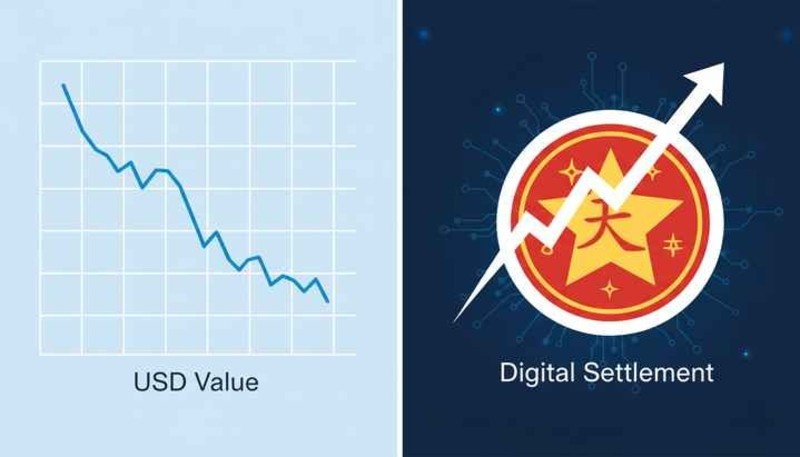
The global role of the US dollar is evolving as financial infrastructure modernizes and settlement mechanisms diversify. While the dollar remains the primary reserve and invoicing currency, new digital settlement assets are gradually influencing how liquidity moves across borders and how transactions are finalized in real time. These developments are not replacing the dollar but reshaping how it interacts with emerging financial rails.
For market participants, this shift matters because settlement efficiency and liquidity velocity directly affect pricing, hedging, and risk management. As trade, finance, and capital flows increasingly operate in multi asset environments, understanding how new settlement models coexist with the dollar is becoming essential for traders and macro analysts alike.
USD Liquidity Behavior in a Multi Asset Settlement Landscape
The US dollar continues to anchor global liquidity, particularly in times of market stress, when demand for dollar funding typically rises. However, newer digital settlement assets are beginning to absorb certain transactional roles that were historically handled through traditional dollar based correspondent banking. This does not reduce overall dollar demand but can redistribute when and where dollar liquidity is required.
In cross border payments, faster settlement layers can shorten transaction cycles and reduce the need for large pre funded dollar balances. This alters short term liquidity behavior, especially in regions with high trade volumes but limited access to dollar clearing infrastructure. As a result, dollar liquidity becomes more concentrated around financing, hedging, and reserves rather than routine settlement.
From a macro perspective, this trend supports the idea that dollar dominance is increasingly expressed through financial depth and market confidence rather than exclusivity in every transaction layer.
Global Trade Invoicing Trends and Settlement Flexibility
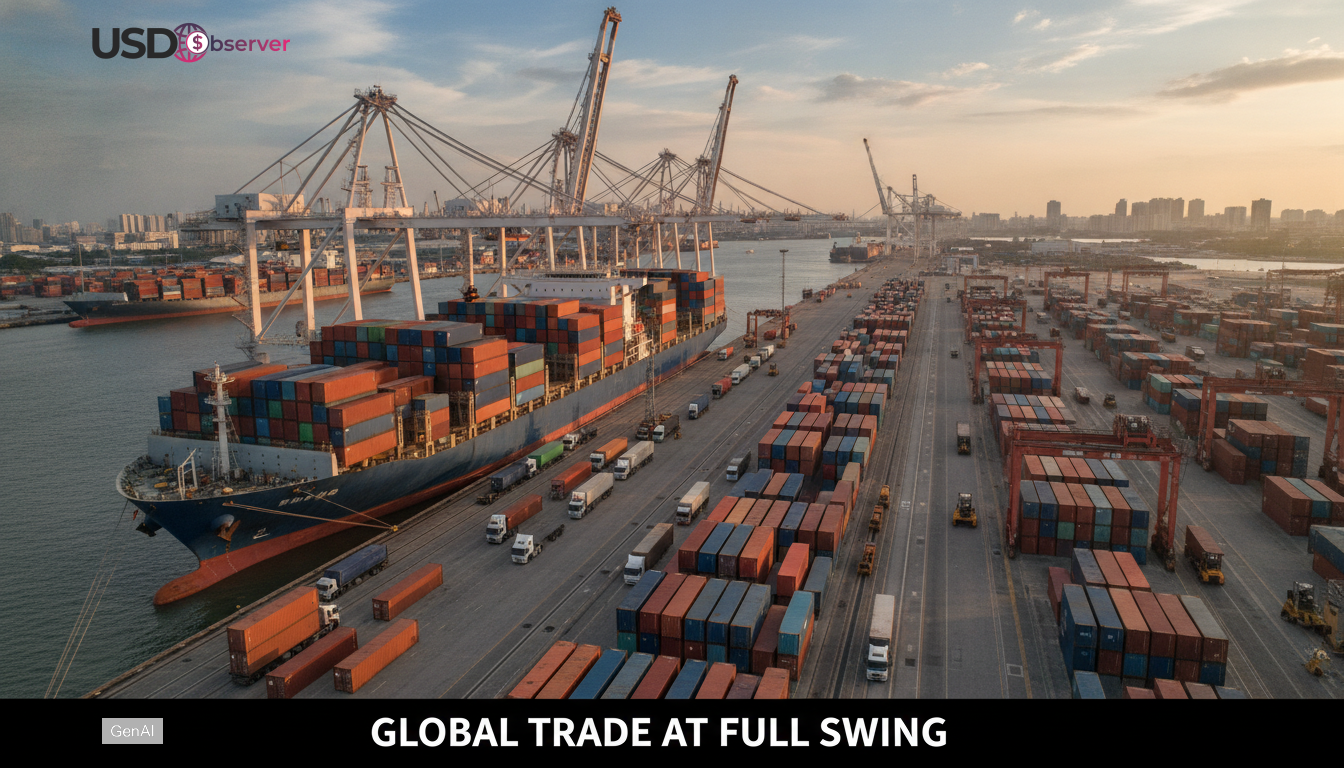
International trade invoicing remains heavily dollar denominated, particularly in commodities, energy, and bulk goods. However, settlement flexibility is increasing as firms seek to lower costs and reduce exposure to delays. Digital settlement assets allow trade partners to finalize payments more efficiently while still pricing contracts in dollars.
This separation between invoicing currency and settlement method is a key structural change. It enables exporters and importers to maintain dollar benchmarks while using alternative clearing formats to manage operational risk. Over time, this can smooth cash flow cycles and improve balance sheet efficiency without undermining the dollar’s pricing role.
For emerging markets, such flexibility is especially valuable. It allows participation in global trade without over reliance on traditional banking channels, while still anchoring value to widely accepted benchmarks.
Dollar Velocity and Transaction Speed in Modern Clearing Systems
Dollar velocity refers to how quickly dollars circulate through the financial system. As settlement processes become faster and more automated, transaction velocity can increase even if total dollar supply remains unchanged. Digital clearing tools contribute to this by reducing settlement times from days to minutes or hours.
Higher velocity can improve market efficiency but also changes liquidity planning for institutions. Banks and corporates may hold smaller transactional balances while relying on rapid access to settlement networks. This reinforces the dollar’s role as a financial backbone while allowing operational layers to evolve independently.
For forex markets, increased velocity can amplify short term flows and intraday liquidity patterns, making real time monitoring more important for traders.
Implications for USD Dominance in a Hybrid System
The emergence of new digital settlement assets highlights a broader shift toward hybrid financial systems. In these systems, the dollar remains central to valuation, reserves, and risk management, while alternative settlement tools handle speed and efficiency. Rather than signaling a decline in dollar influence, this model may actually extend its relevance by making dollar based systems more adaptable.
Policy makers and market participants increasingly view resilience as a function of flexibility. A system where the dollar operates alongside modern clearing assets can absorb shocks more effectively and support global trade growth. This balance is likely to define the next phase of dollar leadership.
Conclusion
New digital settlement assets are influencing how the global financial system uses the US dollar, not by replacing it, but by reshaping liquidity behavior, transaction speed, and settlement efficiency. As trade invoicing, dollar velocity, and clearing mechanisms evolve together, the dollar’s role remains dominant but more integrated within a multi asset environment. For USD focused investors and analysts, understanding this interaction is now a core part of global market analysis.