Introduction
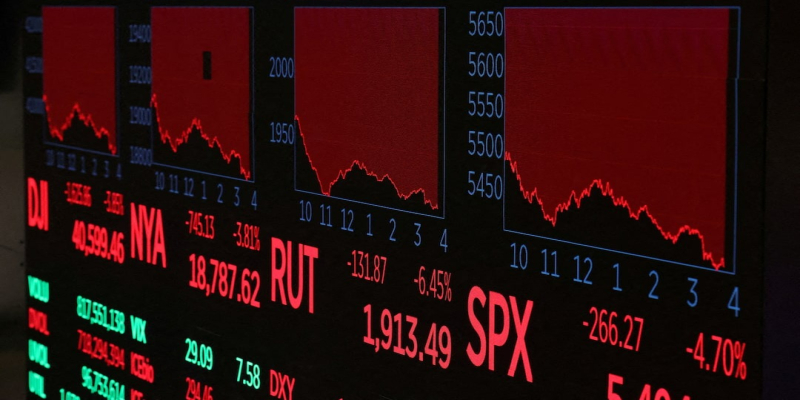
Equity markets in the United States have surged to new highs in recent months, raising fresh concerns among analysts and investors about whether valuations have become unsustainably stretched. The S&P 500 and Nasdaq indexes have posted record gains, supported by robust earnings from major technology companies, resilient consumer spending, and continued optimism about artificial intelligence–driven growth. Yet beneath the surface, many economists and fund managers warn that asset prices may be outpacing fundamentals, echoing early signs of a potential market bubble.
While strong corporate profits have fueled the rally, valuations based on forward earnings now exceed long-term averages by a wide margin. The price-to-earnings ratios for several major U.S. indices are approaching levels last seen before the 2008 financial crisis and the dot-com boom of the early 2000s. The growing disconnect between price momentum and economic indicators such as wage growth and manufacturing output has sparked debate over how long the rally can continue. The question dominating investor sentiment is whether this momentum reflects sustainable optimism or speculative excess.
The Drivers Behind Market Euphoria
The U.S. equity market has been fueled primarily by investor enthusiasm around technology, particularly companies leading advancements in artificial intelligence, cloud computing, and semiconductors. Firms such as Nvidia, Microsoft, and Alphabet have reported consistent earnings growth, and their market capitalizations have expanded dramatically. These companies now account for an outsized share of the total value of the S&P 500, making the index increasingly dependent on their performance. This heavy concentration risk has amplified volatility and raised concerns about whether the broader market reflects genuine economic strength.
Monetary policy has also played a central role in sustaining the rally. Although the Federal Reserve has kept interest rates elevated to control inflation, markets have largely priced in expectations of rate cuts in 2026, boosting investor confidence. Low real yields on government bonds have continued to push institutional investors toward equities in search of higher returns. However, this shift has also contributed to the inflation of asset prices, as more capital flows into riskier investments even when economic conditions do not justify such optimism. Many analysts believe this pattern mirrors previous cycles where liquidity-driven gains led to eventual corrections.
Warning Signals from Analysts and Institutions
Financial institutions have begun issuing cautious statements on the sustainability of current valuations. Analysts from JPMorgan, Goldman Sachs, and the International Monetary Fund have all highlighted the risks of speculative behavior. They note that investor positioning in equities has reached extreme levels, with retail participation increasing significantly since early 2024. According to recent data, margin debt has also climbed, suggesting that more investors are using borrowed money to chase returns. This leverage could amplify losses if markets reverse direction suddenly.
The IMF has cautioned that while corporate balance sheets remain generally healthy, the combination of high leverage and inflated asset prices could lead to sharp corrections. Similarly, JPMorgan’s CEO Jamie Dimon recently warned that markets may face turbulence over the next one to two years as valuations normalize. The consensus among major institutions is that while there is no immediate crisis, the potential for a steep repricing event cannot be dismissed. The key determinant will be how quickly inflation stabilizes and how effectively the Federal Reserve communicates its future policy path.
Economic Fundamentals Versus Market Psychology
One of the key challenges in assessing whether a bubble exists lies in differentiating genuine growth potential from speculative sentiment. The U.S. economy continues to demonstrate resilience, with unemployment remaining low and consumer spending robust. Corporate earnings have exceeded forecasts across multiple sectors, and business investment remains stable. Yet, several economic indicators, including declining manufacturing activity and slowing housing demand, suggest that the pace of expansion may be moderating. This divergence between economic and market performance raises questions about sustainability.
Market psychology plays a crucial role in sustaining price trends even when fundamentals weaken. Investors often continue buying into rallies out of fear of missing out, a dynamic known as momentum trading. This behavior can push valuations higher in the short term but increases the likelihood of abrupt corrections once confidence shifts. Historically, bubbles have formed when collective optimism outpaces realistic assessments of risk. The current environment, characterized by high valuations and concentrated leadership, fits many of these conditions, though timing an exact reversal remains difficult.
The Role of Artificial Intelligence and Corporate Growth Narratives
A defining feature of this market cycle is the dominance of artificial intelligence–related optimism. Companies developing AI technologies have become central to investment strategies across sectors. Earnings projections for firms involved in chip design, data infrastructure, and AI software have surged, with valuations pricing in growth assumptions extending far into the future. While technological transformation is real, economists caution that markets may be overestimating the short-term revenue potential of AI-driven innovation. Similar patterns of inflated expectations have been observed during previous technology booms.
Corporate executives have reinforced this enthusiasm by emphasizing innovation and long-term growth strategies in their earnings communications. Investors have responded positively, rewarding firms that mention AI integration regardless of measurable profitability. The market’s focus on future potential rather than current performance reflects a speculative mindset that can become unstable when reality fails to meet expectations. If earnings growth fails to keep pace with projections, even small disappointments could trigger significant price adjustments, particularly in sectors with concentrated exposure.
Policy and Interest Rate Sensitivity
Interest rates remain a crucial variable in determining whether current valuations are sustainable. The Federal Reserve’s efforts to manage inflation have kept borrowing costs at elevated levels, limiting credit expansion. However, the prospect of rate cuts in 2026 has provided markets with optimism that monetary conditions will eventually ease. This expectation has encouraged risk-taking and contributed to asset inflation. Should inflation prove more persistent than anticipated, forcing the Fed to maintain higher rates longer, the correction in equity markets could be abrupt and severe.
Fiscal policy also plays a role in shaping investor confidence. With U.S. government debt exceeding one hundred and thirty percent of GDP, concerns are rising about long-term fiscal sustainability. Elevated public borrowing can lead to higher bond yields, reducing the relative attractiveness of equities. The interplay between monetary tightening, fiscal imbalances, and market sentiment will determine the extent to which valuations can remain elevated. For now, markets appear to be betting on a soft landing scenario in which growth slows gradually without triggering a recession.
Global Implications and Investor Behavior
The concentration of wealth and liquidity in U.S. markets means that valuation shifts have global consequences. Foreign investors hold significant positions in American equities, and changes in sentiment can influence capital flows across regions. If U.S. markets correct sharply, emerging economies dependent on foreign investment could experience capital flight and currency depreciation. The current cycle has already seen higher volatility in global risk assets, reflecting sensitivity to developments in the U.S. financial system.
Investor behavior remains the most unpredictable factor. Hedge funds and asset managers are increasingly employing short-term strategies to hedge against potential reversals. Retail investors, however, continue to buy into rallies, supported by easy access to online trading platforms and social media–driven sentiment. This democratization of investing has contributed to volatility by amplifying price swings. While it has broadened participation in financial markets, it also raises the risk that sudden shifts in sentiment could lead to rapid market corrections.
Conclusion
The surge in U.S. equity valuations reflects a complex interplay between economic fundamentals, policy expectations, and speculative enthusiasm. While there are legitimate reasons for optimism, the growing disconnect between asset prices and underlying economic conditions poses clear risks. History suggests that markets can remain overvalued for extended periods, but corrections often arrive unexpectedly once confidence begins to erode. Investors who have benefited from the rally must balance optimism with prudence as they navigate an increasingly uncertain environment.
For policymakers, the challenge lies in maintaining financial stability without stifling innovation or economic growth. Clear communication from the Federal Reserve and credible fiscal strategies will be essential to managing expectations. Whether the current rally evolves into a lasting expansion or ends in a sharp correction will depend on how effectively markets and policymakers respond to shifting global dynamics. The warning signs are present, and the coming months may reveal whether this optimism represents sustainable growth or another cycle of speculative excess.