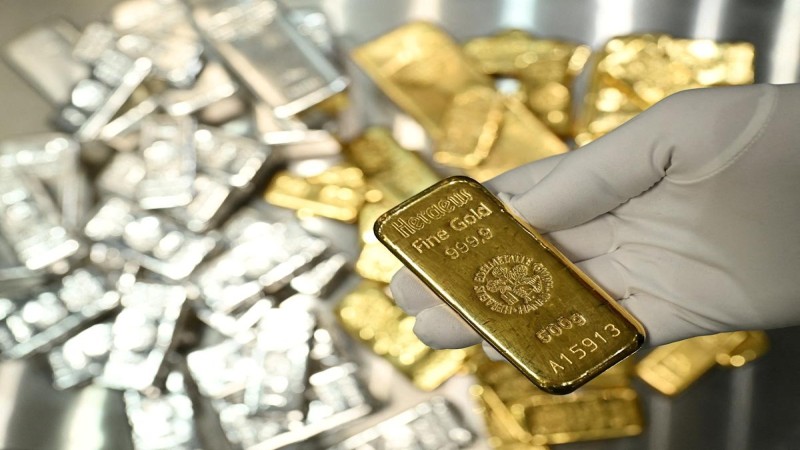
Gold prices surged nearly three percent on Monday, reaching their highest level in more than two weeks as softer U.S. economic data strengthened expectations of a Federal Reserve rate cut in December. Spot gold rose 2.8 percent to $4,111.39 per ounce after touching its highest since October 24, while U.S. gold futures for December delivery settled at $4,122.00 per ounce. The rally was supported by weaker employment and consumer sentiment readings from the United States, which reinforced investor belief that monetary policy will soon pivot toward easing. Market trackers now estimate a 64 percent probability of a rate cut in December and nearly 77 percent by January, according to CME Group’s FedWatch tool. The data confirmed growing caution about economic growth as the prolonged government shutdown weighed on sentiment. Analysts said that the metal’s momentum could continue into year-end, with near-term price targets between $4,200 and $4,300 per ounce as investors seek protection from slower growth and rising fiscal risks.
The advance in gold was mirrored by gains across the broader precious metals complex. Silver climbed 4.5 percent to $50.46 per ounce, its highest level since October 21, while platinum rose 2.4 percent to $1,582.50, and palladium gained 3.1 percent to $1,422.79. Traders attributed the rally to a combination of dovish rate expectations, lower bond yields, and renewed geopolitical uncertainty that has strengthened demand for non-yielding safe-haven assets. Market strategists noted that gold’s performance has become increasingly linked to shifts in rate expectations, with investors favoring bullion as an alternative to government securities in a low-yield environment. Analysts also pointed to the potential reopening of the U.S. government as a secondary factor that may restore official data flow and guide further monetary policy clarity.
Commodity experts observed that a sustained period of lower yields could push gold toward the upper end of its forecast range, with some projections calling for $5,000 per ounce in the first quarter of 2026 if rate cuts materialize. The renewed upward momentum follows a period of consolidation earlier this month when strong U.S. dollar performance limited bullion’s gains. With fiscal concerns resurfacing and uncertainty over consumer resilience, gold’s appeal as a defensive asset remains strong. Market observers believe that the coming weeks will be pivotal in determining whether the metal can sustain its rally, depending on economic updates and Federal Reserve commentary. The continued strength in precious metals suggests investors are positioning for a softer economic outlook and a prolonged period of accommodative policy into early 2026.a