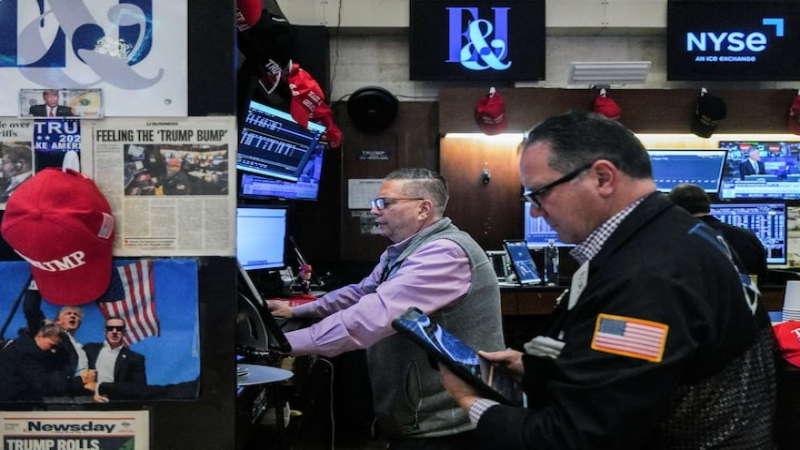
Global markets enter 2026 with optimism tempered by a growing list of political and policy risks that investors are increasingly forced to price in. Equities are expected to advance, but forecasts point to a slower pace after the sharp gains of the previous year as uncertainty builds around elections, central bank leadership, and geopolitical flashpoints. The upcoming change in leadership at the Federal Reserve has emerged as a focal point, with markets watching closely how the end of Jerome Powell’s term reshapes expectations for monetary independence. Political pressure for faster rate cuts has raised concerns that policy could ease ahead of economic conditions, reviving inflation risks. At the same time, geopolitical tensions linked to Latin America and trade policy debates in the United States have added a layer of fragility to global risk sentiment, keeping volatility close to the surface.
Equity markets in the United States, Europe, and Japan are still projected to post gains this year, but analysts expect returns to normalize after an exceptional run. Forecasts suggest major indices such as the S&P 500 and Europe’s STOXX 600 will rise at a more modest pace as valuations face scrutiny. A growing share of investors anticipate a market correction, particularly if enthusiasm around artificial intelligence fades. Heavy spending on AI infrastructure has lifted technology stocks and broadened earnings expectations, but questions are emerging about debt levels and long-term returns. As a result, market leadership is expected to rotate away from a narrow group of mega caps toward a wider set of sectors. This shift reflects a more cautious investment environment where diversification and balance sheet strength matter more than momentum alone.
Central banks are also set to follow diverging paths, reinforcing cross market complexity. While rate cuts are anticipated in the United States, policymakers in Europe appear more committed to holding rates steady as inflation remains the primary concern. In contrast, expectations for tighter policy in Japan and Australia point to a rare moment of global monetary divergence. Despite hopes that easing will lower borrowing costs, longer term bond yields are projected to remain elevated as governments continue to rely on fiscal support. High debt levels across major economies are keeping pressure on sovereign yields, limiting the impact of policy rate cuts on mortgages and corporate financing. This dynamic underscores the challenge central banks face in balancing growth support with fiscal realities that markets are increasingly unwilling to ignore.
Currency markets are also adjusting to a changing macro landscape, with consensus shifting toward a weaker dollar after its sharp run in recent years. Analysts expect the dollar to soften further as U.S. rate differentials narrow, while the yen is forecast to strengthen as Japanese policy normalizes. The euro and sterling are seen holding relatively stable, reflecting balanced risks rather than strong conviction. Meanwhile, cryptocurrencies remain a volatile corner of the market, closely tied to technology sentiment and broader risk appetite. Although long-term adoption themes continue to attract attention, near-term price action is expected to remain sensitive to equity market swings. Taken together, these trends point to a year where political decisions and policy credibility may matter as much as economic data in shaping global market outcomes.