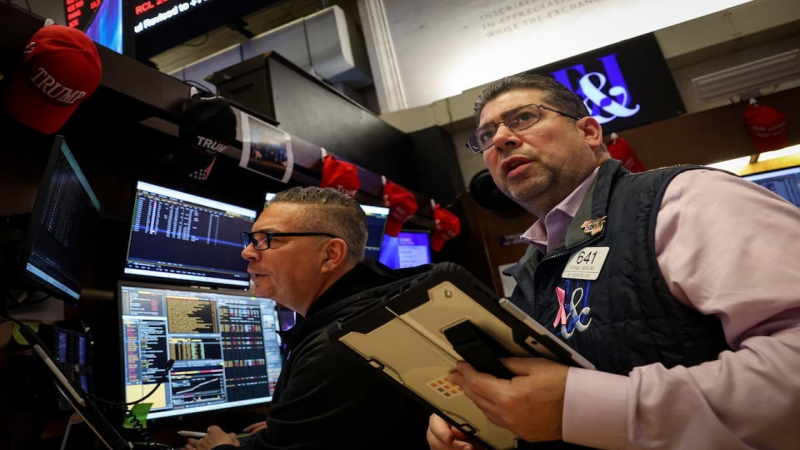
U.S. and global equity markets moved into the end of the week under sustained pressure as concerns around overextended technology valuations collided with shifting expectations for Federal Reserve policy. Trading remained uneven across major U.S. indexes, but the broader tone pointed toward risk reduction as investors reassessed whether the strong gains fueled by artificial intelligence themes can withstand a more uncertain macro path. The Nasdaq and S&P 500 were both positioned for their steepest weekly declines since the tariff driven volatility in April, reflecting renewed sensitivity to valuation risk at a time when economic signals appear increasingly mixed. Treasury yields fell modestly as traders increased their expectations for another policy cut in December, yet the dollar held steady, reinforcing its position as a preferred anchor amid global risk aversion. With labor market readings showing an unexpected uptick in unemployment and policymakers delivering divergent messages on the near term rate path, the markets found little clarity, instead gravitating toward defensive positioning that lent support to USD sentiment.
Concerns surrounding technology sector pricing resurfaced even as strong earnings from major semiconductor leaders temporarily eased pressure earlier in the week. Investors continued to evaluate whether the pace of gains in AI linked stocks is sustainable given macroeconomic headwinds and varied signals from central banks. The rise in expectations for a third rate cut this year provided some support, but it did little to offset the broader rotation away from risk sensitive assets. Global equities mirrored the U.S. trend, with European and Asian markets registering declines tied to similar valuation worries and tighter financial conditions. A simultaneous drop across emerging market equities further emphasized the shift in sentiment, with investors reducing exposure to regions perceived as more vulnerable to external funding conditions. Cryptocurrencies also slid sharply, extending a multi month low as capital moved out of speculative areas of the market. This combination of global equity weakness and reduced risk appetite kept the dollar on track for a weekly gain, reinforcing patterns typically associated with periods of elevated uncertainty.
In currency markets, the greenback advanced against major peers, while the Japanese yen gained some support following stronger verbal intervention from officials seeking to limit the currency’s decline. The dollar index edged higher, capitalizing on global equity pullbacks and the broader movement toward safe haven assets. U.S. Treasury yields dipped as traders recalibrated their expectations for policy easing, but the modest decline in yields was not enough to undermine the dollar’s appeal. Commodity markets echoed the risk off dynamic, with oil prices extending losses on geopolitical developments and gold fluctuating as investors weighed dovish signals from select Federal Reserve officials. For analysts focused on USD positioning, the market’s behavior highlights a familiar pattern in which the currency strengthens when risk appetite softens across asset classes. The combination of global equity stress, shifting rate expectations and tightening valuation scrutiny has created an environment where the USD benefits from its defensive characteristics, reinforcing its role as a stabilizing reference point in volatile weeks like this one.