October 28, 2025
The global economy is showing early signs of stabilization as inflationary pressures begin to ease across advanced markets, according to recent forecasts from the International Monetary Fund (IMF) and the Organisation for Economic Co-operation and Development (OECD). Both institutions noted that headline inflation in major economies such as the United States, Eurozone, and Japan has slowed considerably from its 2022–2023 peaks, paving the way for cautious optimism among investors.
The IMF’s latest World Economic Outlook indicates that global inflation will average 3.8% in 2025, down from 5.6% last year, driven by stabilizing energy prices, improved agricultural output, and easing logistics costs. The OECD echoed this sentiment, citing the gradual normalization of shipping rates and reduced bottlenecks in semiconductor and energy supply chains. However, both agencies warned that structural cost pressures — particularly in labor, housing, and green transition materials — continue to weigh on producer margins.
In the United States, the Federal Reserve’s policy stance has shifted toward what analysts call “measured normalization.” The central bank has slowed its rate hikes amid clear disinflation signals, with core inflation trending near 2.4%. The U.S. dollar has remained relatively stable, trading within narrow ranges against major peers. According to Bloomberg data, the U.S. Dollar Index (DXY) has fluctuated between 105.5 and 107.0 in October, supported by resilient consumer spending and robust Treasury yields.
In Europe, the European Central Bank (ECB) faces a delicate balance as growth remains subdued. While inflation across the Eurozone fell to 2.1%, weak industrial demand and sluggish exports have constrained momentum. Economists at Reuters suggest that the ECB may maintain its current policy rates through early 2026 to avoid tightening financial conditions further.
Emerging markets, meanwhile, continue to attract strong capital inflows as investors diversify from Western debt markets. The OECD report highlights renewed investment in Asia’s digital infrastructure and green finance sectors, particularly in China, India, and Southeast Asia, where local currencies have held up despite global rate disparities.
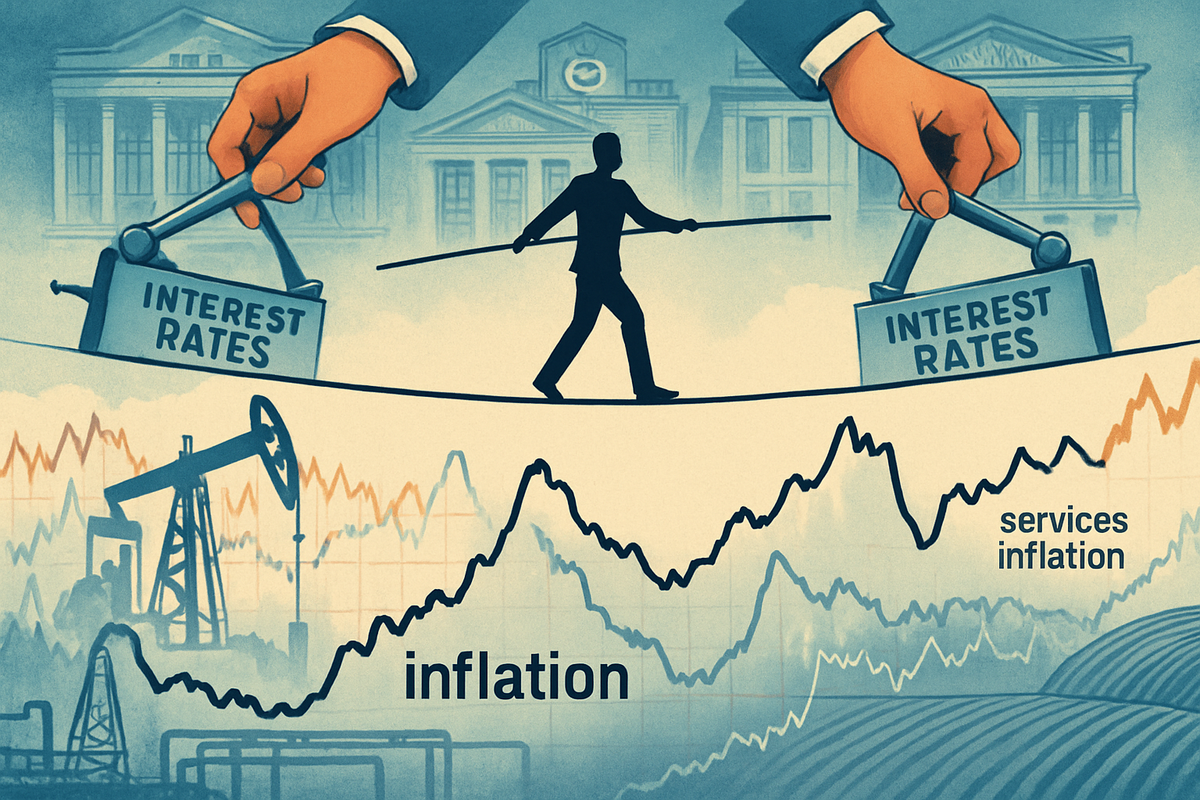
Overall, the moderation in global inflation has brought cautious relief to policymakers, but risks remain tied to geopolitical disruptions and volatile commodity prices. Economists warn that while the “worst of inflation is over,” sustained balance between growth, wages, and supply resilience will determine whether this phase marks a true economic recalibration or merely a temporary reprieve.