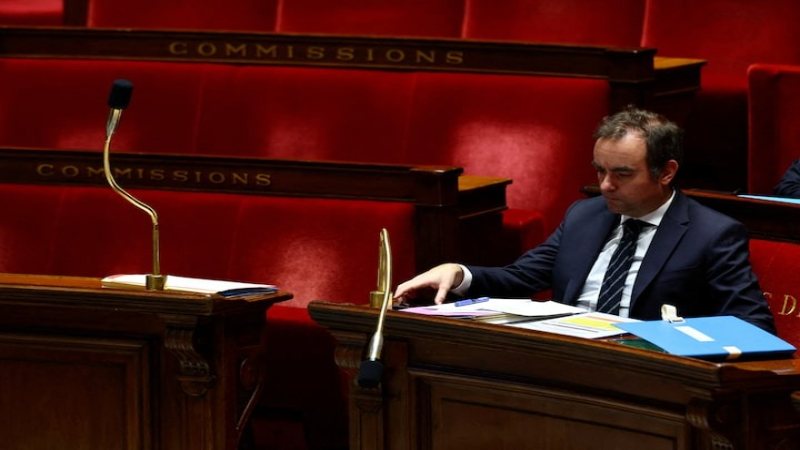
France’s government has unveiled revised budget proposals in an effort to break a prolonged parliamentary deadlock, underscoring the growing fiscal and political pressures facing the euro zone’s second-largest economy. Prime Minister Sebastien Lecornu announced adjustments to the draft 2026 budget aimed at winning support from opposition lawmakers after months of stalled negotiations. The revised plans include measures designed to protect lower-income households and pensioners, signaling a shift toward social concessions as the government seeks broader backing. Despite these changes, uncertainty remains over whether the revised budget can secure sufficient parliamentary support or whether the government will ultimately resort to constitutional mechanisms to force its adoption. The situation has heightened scrutiny from investors who are increasingly focused on France’s fiscal trajectory amid fragile political conditions.
The updated proposals soften several previously contentious elements, including the removal of a planned cut to a pension tax rebate and an increase in monthly income support for low-wage workers. Additional measures include extending subsidized student meals and boosting efforts to expand affordable housing, steps aimed at easing cost-of-living pressures. Lecornu emphasized that the revised budget would still keep the fiscal deficit capped at around 5% of gross domestic product, a level that remains elevated by European standards but reflects the government’s attempt to balance fiscal discipline with political realities. These concessions are intended to revive talks with centrist and left-leaning lawmakers, particularly the Socialists, whose backing is seen as pivotal to avoiding further confrontation.
Political uncertainty continues to loom over the budget process, as the government has paused parliamentary debates while assessing its options. If negotiations fail, authorities could invoke constitutional provisions that allow the executive to pass the budget without a formal vote, though such moves carry significant political risk. Using these mechanisms could trigger no-confidence motions and further destabilize the government, deepening concerns about governance at a time when fiscal credibility is under close watch. France’s political landscape has remained fragmented since recent elections produced a divided parliament, limiting the government’s ability to advance legislation without compromise or procedural intervention.
For markets, the budget impasse highlights broader concerns about fiscal sustainability and political cohesion within the euro zone. France already runs the largest budget deficit among single-currency members, making its policy direction a focal point for ratings agencies and investors assessing sovereign risk. Prolonged uncertainty could weigh on French assets and complicate broader European fiscal coordination efforts. While the revised budget signals a willingness to compromise, questions remain over whether political divisions can be bridged without undermining fiscal objectives. The outcome of the negotiations will be closely watched as an indicator of France’s capacity to deliver policy stability amid an increasingly polarized political environment.