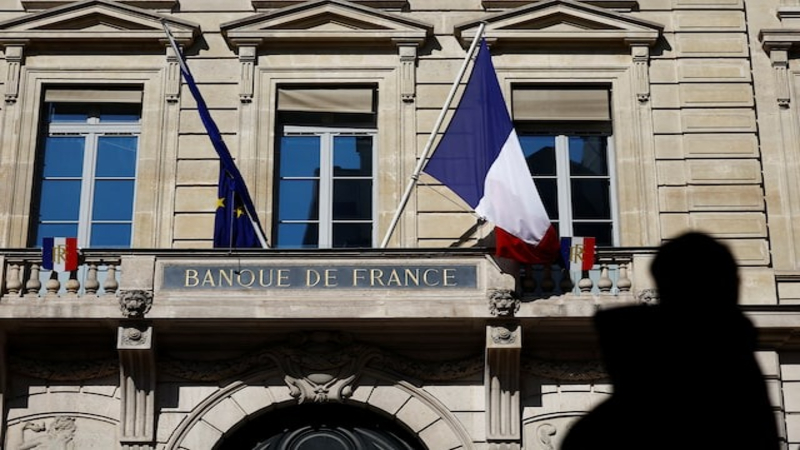
France’s economy likely expanded modestly in the final quarter of last year, supported by resilient industrial activity even as political uncertainty weighed on broader confidence. The central bank indicated that economic output grew by at least 0.2 percent in the fourth quarter, marking a slowdown from the prior period but confirming that momentum remained positive. Survey data showed activity continued to improve in December, albeit at a slightly softer pace than earlier in the quarter. Strength in high value manufacturing segments played a key role in sustaining growth, helping offset more subdued conditions elsewhere in the economy. The assessment suggests France ended the year with underlying stability, even as unresolved fiscal issues clouded the outlook and limited visibility for businesses heading into the new year.
Industrial performance was led by aerospace and defense related activity, which continued to benefit from strong order backlogs and sustained demand. These sectors provided a meaningful boost to manufacturing output at a time when other areas showed signs of moderation. Services activity also advanced in December, though at a more measured pace, reflecting cautious consumer and corporate spending amid political noise. Construction activity remained broadly flat, with finishing work holding up better than structural projects. Taken together, the data points to an economy that is still expanding, but increasingly dependent on a narrow set of drivers as uncertainty dampens broader investment and hiring intentions.
Looking ahead, the outlook for early this year points to a shift in the composition of growth rather than a sharp change in direction. Industrial firms expect activity to slow, partly due to easing aerospace production and limited clarity on future orders. At the same time, service sector companies anticipate stronger momentum in January, closer to long term averages, as demand normalizes and seasonal factors improve. Construction is expected to remain stable, suggesting neither a rebound nor a significant downturn in the near term. This rebalancing highlights how growth may become more service led as manufacturing faces headwinds tied to external demand and planning uncertainty.
Political and fiscal uncertainty continues to loom over the economic outlook, despite some improvement in sentiment indicators. The central bank’s uncertainty measure declined again across industry, services, and construction, signaling slightly improved confidence compared with previous months. However, uncertainty remains elevated as lawmakers continue to grapple with the unresolved 2026 budget. The failure to pass a budget before year end forced the government to rely on temporary measures, and ongoing negotiations have raised the prospect of using special constitutional powers to secure approval. For businesses, the lack of fiscal clarity complicates planning and investment decisions, even as near term activity remains supported. Overall, France appears to be navigating a period of modest growth with uneven momentum, where economic resilience is balanced against persistent political risk.