Introduction
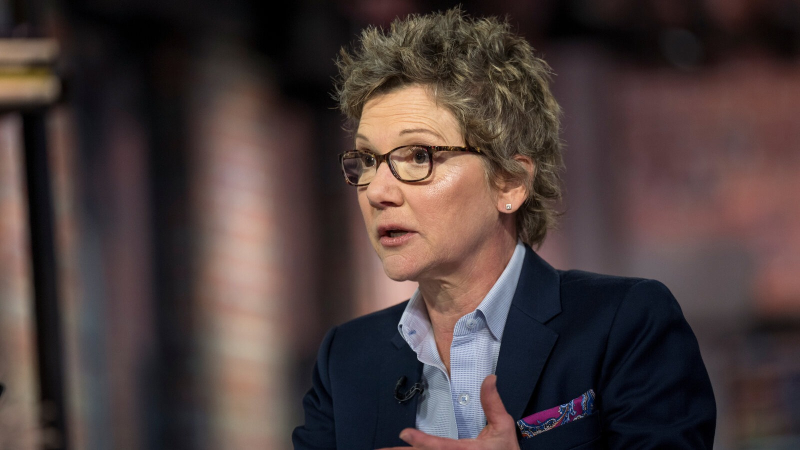
San Francisco Federal Reserve President Mary Daly has warned that signs of weakness in the U.S. labor market are becoming increasingly concerning, emphasizing that the timing of future interest rate decisions will depend on how the economy evolves in the months ahead. Speaking in an interview with Reuters, Daly described the current labor environment as being at a “worrisome point,” where job creation is slowing, wage growth is moderating, and businesses are exhibiting caution in new hiring. Her remarks underline the growing tension between maintaining monetary restraint to control inflation and the need to preserve employment gains achieved over the past two years.
The comments come as the Federal Reserve faces one of its most complex policy environments in years. Inflation has moderated but remains above the central bank’s 2 percent target, while key indicators such as payroll growth, participation rates, and job openings suggest momentum in the labor market is fading. Investors have already begun to speculate on when the Fed might shift toward rate cuts, but Daly’s caution suggests the central bank is reluctant to move too quickly. She stressed that decisions must remain grounded in data rather than market expectations, signaling that policymakers are watching employment trends more closely than ever.
Labor Market Data and Economic Signals
Recent labor market data highlight the shift Daly referred to. The U.S. economy added just 142,000 jobs in September, below consensus forecasts, while the unemployment rate edged up to 4.1 percent. Job openings have declined steadily from their pandemic highs, and the quits rate—a key measure of worker confidence has fallen to its lowest level since 2020. Wage growth, which surged during the post-pandemic rebound, has cooled to an annual rate of 3.8 percent. These developments suggest that labor market tightness, which fueled inflationary pressures in 2022 and 2023, is easing considerably.
Daly emphasized that the Fed’s goal is not to suppress employment but to ensure that inflation and growth evolve sustainably. “We need to see the full picture before making any premature adjustments,” she said, noting that while the labor market has softened, it remains fundamentally healthy. She added that the Fed’s strategy will rely on a balance between data vigilance and flexibility. The message reinforces the central bank’s “higher-for-longer” stance while acknowledging that prolonged restraint could eventually pose risks to job stability and household confidence.
Inflation Trends and Policy Balancing
Inflation remains the primary variable complicating the Fed’s response. Core consumer prices have slowed to 2.9 percent year-over-year, down sharply from the 9.1 percent peak recorded in 2022, but service-sector inflation and housing costs remain persistent. Daly highlighted that the path toward price stability is not yet complete and that inflation expectations must remain anchored to sustain long-term progress. “If we move too soon, we risk undoing the hard-earned progress we’ve made,” she said, reflecting the broader sentiment among policymakers wary of reigniting inflation through premature easing.
The Fed’s challenge lies in sequencing its policy response. While some analysts argue that rate cuts could help prevent a deeper labor market downturn, others believe that the current restrictive stance should be maintained until inflation stabilizes more decisively. Daly’s remarks suggest that the Federal Open Market Committee (FOMC) is not yet prepared to pivot but is open to adjusting its posture if employment deterioration becomes pronounced. The central bank’s focus remains on avoiding a repeat of the 1970s experience, when policy reversals led to cycles of inflation and instability.
Market and Investor Reactions
Financial markets reacted moderately to Daly’s comments, reflecting both relief and caution. U.S. Treasury yields edged lower as investors interpreted her remarks as signaling a possible slowdown in policy tightening but not an imminent easing. Equity markets were mixed, with cyclical sectors such as industrials and real estate outperforming while technology stocks lagged. The dollar remained stable against major currencies, underscoring that markets view Daly’s tone as balanced rather than dovish.
Analysts at JPMorgan and Goldman Sachs noted that Daly’s comments reinforce the message that policy decisions will depend heavily on labor and inflation data in the coming months. Futures markets have slightly increased their probability of a rate cut in early 2026 but remain split on timing. Daly’s emphasis on caution suggests the Fed is preparing markets for a longer period of observation before any concrete policy shift. This measured communication strategy aims to maintain stability across asset classes while preserving the flexibility to respond if economic conditions deteriorate faster than expected.
Broader Economic Implications
The Fed’s focus on labor market health underscores the interconnectedness of employment, consumption, and inflation in sustaining U.S. economic growth. Consumer spending has shown signs of fatigue, with retail sales growth slowing in recent months. Higher borrowing costs have weighed on household budgets, particularly in housing and auto loans. Daly’s warning suggests that if labor conditions continue to weaken, demand could falter further, amplifying downside risks to growth. This scenario could eventually justify a policy adjustment aimed at preventing a sharper contraction.
However, Daly and other Fed officials maintain that patience remains essential. The central bank wants to avoid signaling a policy pivot that could trigger a premature easing of financial conditions. A key concern is that market overreaction could loosen credit too quickly, undermining inflation control efforts. Daly’s remarks echo those of Chair Jerome Powell, who has repeatedly stressed that the path to sustainable recovery requires vigilance, not haste. The Fed’s challenge will be to communicate clearly enough to prevent market volatility while retaining flexibility to respond to emerging risks.
Comparison with Other Central Banks
The Fed’s cautious stance contrasts with trends in other major economies, where central banks have already begun to ease policy. The European Central Bank and the Bank of England have both signaled readiness to cut rates gradually as inflation moderates across the eurozone and the UK. In contrast, the Federal Reserve remains focused on ensuring that U.S. inflation does not reaccelerate. Daly’s remarks reinforce this divergence, highlighting the Fed’s preference for maintaining stability over pursuing rapid growth.
Emerging market policymakers are also closely watching the Fed’s tone. Many have already begun lowering rates to counter domestic slowdowns, taking advantage of declining global inflation. A delayed U.S. pivot could, however, complicate external financing conditions for these economies by maintaining high dollar yields. The Fed’s influence on global liquidity flows underscores the importance of Daly’s caution, as even subtle shifts in U.S. policy rhetoric can ripple through currency and bond markets worldwide.
Domestic Political and Social Context
Daly’s remarks arrive at a politically sensitive moment in the United States, with rising debate over the economic outlook ahead of the 2026 elections. The Fed’s independence remains a cornerstone of its credibility, yet public scrutiny of its decisions has intensified as higher borrowing costs affect households and small businesses. Daly sought to reassure that policy decisions are driven purely by economic data and not external pressures. She highlighted the importance of sustaining employment while maintaining the hard-won progress on inflation, a balance that defines the Fed’s dual mandate.
The labor market’s trajectory will likely influence political narratives about economic management. With wage growth slowing and job vacancies shrinking, concerns about income inequality and cost-of-living pressures are resurfacing. The Fed’s communication strategy, therefore, extends beyond financial markets to public confidence. Daly’s balanced tone aims to convey stability and responsibility, assuring Americans that the central bank remains committed to achieving a durable recovery, not a reprieve.
Conclusion
Mary Daly’s remarks underscore the Federal Reserve’s delicate position as it manages competing risks of slowing growth and lingering inflation. Her acknowledgment that the labor market is showing “worrisome” signs signals that policymakers are increasingly attuned to employment vulnerabilities, even as they remain cautious about policy adjustments. The Fed’s challenge lies in calibrating its response precisely, acting decisively if conditions worsen but avoiding premature moves that could compromise inflation progress.
As the U.S. economy enters a more uncertain phase, the Fed’s ability to interpret and respond to shifting data will be crucial to maintaining stability. Daly’s measured tone reflects an institution aware of its responsibility to safeguard both price and job stability in a volatile environment. The coming months will test whether the Fed’s cautious patience can deliver a soft landing or whether deeper labor market stress will force an earlier recalibration of policy. For now, the message remains clear: watch the data, not the noise.