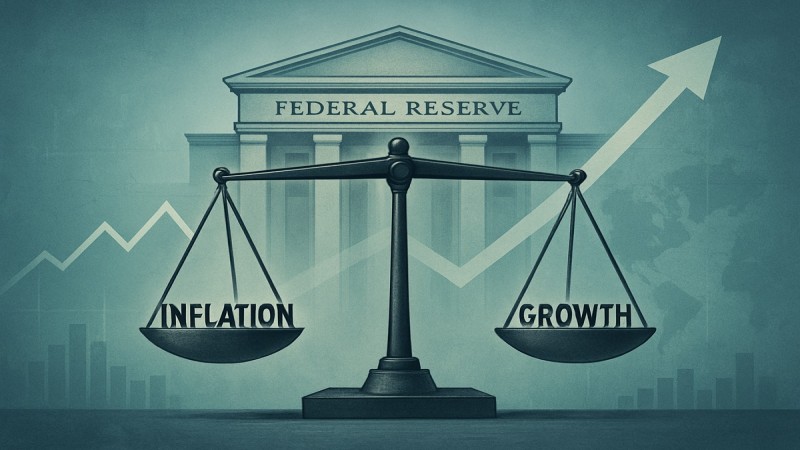
The Federal Reserve faces one of its toughest balancing acts in recent history. Inflation remains above target while growth shows early signs of slowing. Investors and policymakers are watching closely as the central bank weighs whether to hold its stance or begin shifting toward an easing cycle by 2026.
This delicate moment will shape everything from borrowing costs to global capital flows. The outcome of the Fed’s decisions could determine how smoothly the economy transitions into its next phase and how long the dollar can maintain its current strength.
The Shift in the Fed’s Focus
After two years of aggressive rate increases, inflation has gradually cooled but remains sticky in key sectors such as housing and services. The labor market, while still resilient, is showing moderate signs of slowdown as wage gains soften and job creation tapers off. These shifts have given rise to speculation that the central bank may soon begin rebalancing its focus toward sustaining growth.
Analysts anticipate that if inflation continues to edge lower, policymakers could prepare for a measured policy pivot in 2026. Any easing would likely be gradual, aimed at maintaining credibility while preventing a sharp contraction. Market expectations already hint at lower long-term yields, reflecting confidence that the tightening phase may be nearing its end.
For investors, the timing and tone of the Fed’s next moves will influence asset valuations, currency strength, and global portfolio strategies. A signal toward easing could support equity markets and weaken the dollar, while a prolonged hold might sustain the current high-rate environment well into 2026.
Inflation, Growth, and the Trade-Off
The Federal Reserve’s dual mandate promoting maximum employment while maintaining price stability remains in sharp tension. Inflation has cooled from its post-pandemic peaks but remains above the two-percent target. Meanwhile, economic momentum has slowed as manufacturing output, business investment, and consumer confidence decline.
The challenge lies in timing. Tightening too long risks pushing the economy into recession, while easing too soon could trigger a resurgence of inflation. Policymakers are therefore walking a narrow path between ensuring disinflation continues and supporting the labor market.
For households and businesses, these dynamics have direct consequences. Higher interest rates have made borrowing costlier, curbing housing demand and slowing credit expansion. Yet inflation that remains elevated continues to erode purchasing power. Achieving balance will require not just rate adjustments but clear communication that reassures both consumers and markets.
Global Market and Dollar Implications
Monetary policy decisions by the Federal Reserve ripple far beyond U.S. borders. A shift toward easing would likely weaken the dollar, encourage capital flows into emerging markets, and boost commodity prices. Conversely, maintaining higher rates could prolong global financial tightening and suppress risk appetite.
The dollar’s strength in recent years has reflected confidence in U.S. economic performance and the appeal of dollar-denominated yields. However, prolonged high interest rates also carry costs: they make U.S. exports less competitive and increase the burden of dollar-denominated debt across developing economies.
A potential pivot in 2026 would represent a turning point for global liquidity. Lower U.S. rates could ease financial pressure in debt-heavy regions and stabilize trade dynamics. Still, much depends on how smoothly the transition occurs. A disorderly or premature shift could destabilize markets that remain sensitive to changes in global funding conditions.
Risks and the Path Ahead
The Federal Reserve’s next phase will depend on how firmly inflation continues to retreat and how resilient the job market remains. If wage pressures persist or new supply disruptions emerge, policymakers may delay any easing to avoid undoing progress. Conversely, a sharper slowdown in hiring or consumption could force an earlier shift to prevent a deeper downturn.
Communication will be critical. Markets respond not just to policy moves but to expectations. Clear and consistent messaging about the Fed’s strategy can help anchor inflation forecasts and prevent excessive volatility. Policymakers are aware that credibility, once lost, is difficult to regain. Maintaining transparency and gradualism will likely define the next policy cycle.
Looking ahead, the central bank must manage not only domestic outcomes but also international consequences. As the world’s reserve-currency issuer, the U.S. decisions influence credit flows, investment returns, and exchange-rate stability worldwide. The stakes are global, even when the actions are local.
Conclusion
The Federal Reserve’s challenge is to bring inflation to target without undermining growth. A policy pivot in 2026 may be possible, but it will require evidence that price pressures have eased sustainably and that the economy can handle lower rates without reigniting inflation. For markets and policymakers alike, patience and precision will define success in this next phase of monetary policy.