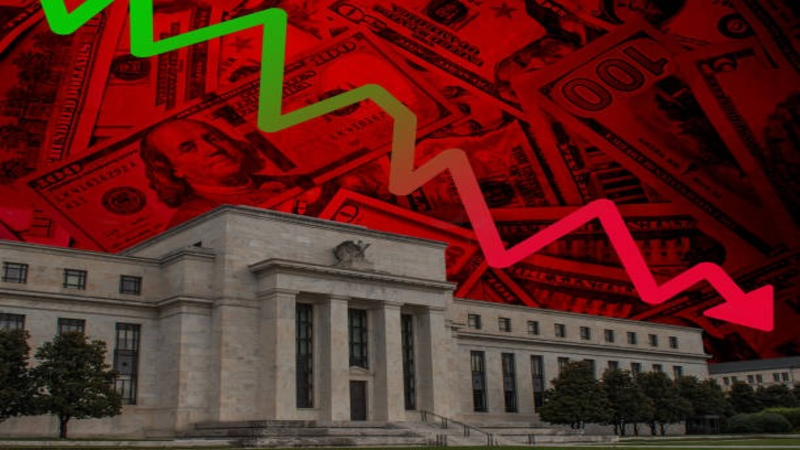
The Federal Reserve faces one of its most critical policy challenges in years as it seeks to balance economic growth with the persistent threat of inflation. After a series of aggressive rate hikes, the central bank now walks a fine line between sustaining recovery and preventing price pressures from reigniting. The outcome of this delicate balance will shape global financial stability, influence capital flows, and set the tone for markets in 2025.
As inflation gradually moderates but remains above target, policymakers are focused on ensuring that the U.S. economy does not overheat while maintaining confidence among investors and consumers. The Federal Reserve’s actions are under close scrutiny from both domestic and international observers who view its policies as a key determinant of global liquidity and currency stability.
The Policy Pivot and Market Expectations
Recent statements from the Federal Open Market Committee suggest that the tightening cycle may be approaching its peak. While inflation has shown signs of easing, the economy continues to display strong employment and consumer spending figures. This combination complicates the path toward policy normalization. According to Bloomberg Economics, investors now expect a gradual pivot toward rate stabilization, with potential for limited easing in the second half of 2025 if inflation trends continue downward.
Financial markets have responded positively to signals of policy flexibility. Equity valuations have strengthened, and long-term Treasury yields have begun to stabilize. However, officials remain cautious, emphasizing that premature easing could undo the progress made in curbing inflation. The Federal Reserve’s priority remains achieving a durable balance between price stability and sustainable growth, even if that requires maintaining restrictive rates for a longer period.
Domestic Growth and Labor Market Resilience
The U.S. economy continues to show resilience despite high borrowing costs. The labor market has held firm, with unemployment rates near historic lows and wage growth moderating at a manageable pace. These indicators suggest that while higher interest rates have cooled some sectors, the broader economy retains enough momentum to avoid a sharp slowdown.
Consumer confidence, though fluctuating, remains steady due to stable employment and easing price pressures in key sectors like housing and energy. Still, analysts caution that further tightening could strain credit markets and weaken small business activity. The Federal Reserve’s challenge is to ensure that the current policy stance supports growth without allowing inflation expectations to rise again.
Global Impact of Fed Policy
The Federal Reserve’s decisions have far-reaching consequences beyond U.S. borders. Dollar strength, driven by higher yields, continues to affect emerging markets by raising their borrowing costs and pressuring local currencies. Several Asian and European economies have already adjusted their monetary policies to align with U.S. rate movements in an effort to stabilize capital flows.
International organizations such as the IMF and BIS have highlighted the importance of coordinated communication among major central banks to minimize financial volatility. As the U.S. adjusts its policy framework, global markets remain sensitive to every indication of a rate shift. The interconnected nature of modern finance means that the Federal Reserve’s next moves will influence investment trends, commodity prices, and even trade balances worldwide.
Long-Term Policy Considerations
Looking beyond 2025, the Federal Reserve faces structural challenges in managing a high-debt economy amid technological change and shifting demographics. Digital finance, automation, and energy transition policies are altering the traditional relationships between inflation, employment, and growth. Policymakers must consider how these trends will shape monetary strategy in the coming decade.
Experts suggest that data-driven forecasting, combined with flexible communication strategies, will be crucial in maintaining public trust and market confidence. The Fed’s transparency in its policy direction has become a central pillar of financial stability, ensuring that investors and institutions can adjust expectations in real time.
Conclusion
The Federal Reserve’s balancing act between growth and inflation defines the economic landscape of 2025. Maintaining credibility while fostering sustainable expansion requires precision, patience, and adaptability. As global markets align with U.S. monetary trends, the Fed’s actions will continue to guide both confidence and caution across economies worldwide.