Introduction
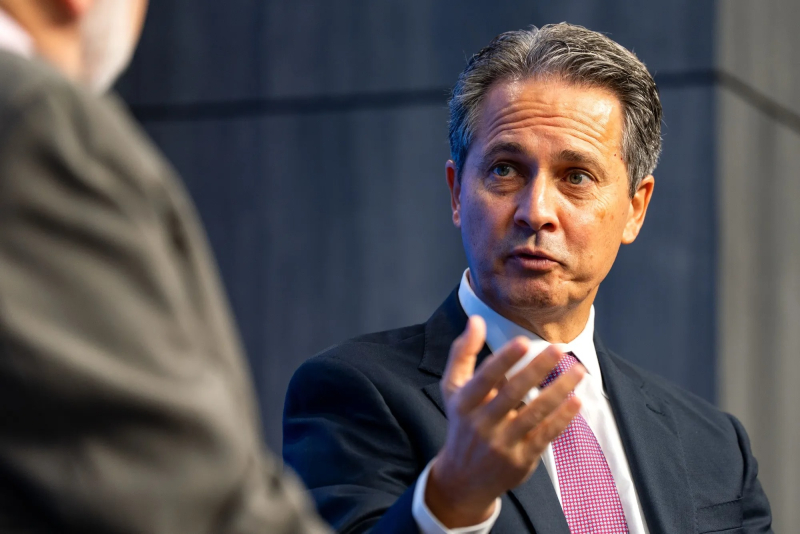
Federal Reserve Bank of St. Louis President Alberto Musalem has cautioned that the Federal Reserve must proceed carefully with any future interest rate cuts, emphasizing that premature easing could undermine hard-won progress against inflation. Speaking at an economic policy forum on Thursday, Musalem said that while recent data suggest inflation is trending lower, risks remain that could reignite price pressures if monetary policy shifts too aggressively. His comments underscore the growing divide within the Federal Open Market Committee (FOMC) as officials balance the need to sustain growth with the imperative to protect credibility in price stability.
Musalem’s remarks come at a pivotal time for the U.S. economy. Inflation has cooled from its 2022 peak but remains above the 2 percent target, while signs of weakening consumer demand and slower job creation are intensifying calls for relief. Investors have increasingly priced in at least one rate cut in early 2026, but Musalem’s tone suggests the Fed is not yet convinced that inflationary risks have fully dissipated. His message echoes that of other cautious policymakers who view recent disinflation as encouraging but incomplete, warning that policy missteps could prolong volatility across global markets.
Inflation Progress and Economic Backdrop
The latest data from the Bureau of Labor Statistics show that headline consumer prices rose 3.1 percent in September, a marginal slowdown from the previous month. Core inflation, which excludes food and energy, remains stickier at 2.9 percent. While this represents significant progress from the double-digit surges of 2022, Musalem stressed that sustained moderation must be evident before the Fed considers easing policy. “We cannot assume that inflation is defeated simply because it has retreated from its highs,” he told the audience, adding that services and shelter components still pose challenges for full normalization.
Economic growth has moderated as tighter financial conditions weigh on spending and investment. The Fed’s latest Beige Book reported softening activity across several sectors, including manufacturing and retail, while the housing market remains constrained by elevated mortgage rates. Musalem noted that these headwinds must be weighed carefully against the risks of cutting too soon. “Acting before inflation is durably contained could set back progress and reduce public confidence in our commitment,” he said. His remarks reinforce the notion that patience and prudence will guide the next phase of monetary policy.
Labor Market and Consumer Conditions
The U.S. labor market remains a focal point in the Fed’s deliberations. Nonfarm payroll growth has slowed to an average of 150,000 jobs per month over the past quarter, while wage growth has decelerated to around 3.8 percent annually. Although these indicators point to a gradual cooling, Musalem emphasized that the labor market remains fundamentally strong. “We are seeing rebalancing, not collapse,” he stated, noting that participation rates have improved and layoffs remain relatively contained. Still, he warned that the Fed must avoid interpreting modest softening as a justification for easing without clearer confirmation of inflation’s decline.
For households, the combination of slower wage gains and persistent price pressures continues to strain real incomes. Consumer confidence surveys show mixed sentiment, with optimism improving in some demographics but declining among lower-income groups. Credit card delinquencies have risen modestly, suggesting that consumers are adjusting to higher borrowing costs. Musalem acknowledged these challenges but reiterated that sustainable improvement in purchasing power will depend on the Fed maintaining credibility. “The best way to support workers and families is to ensure stable prices in the long run,” he said, reinforcing the Fed’s dual-mandate framework.
Policy Divergence Within the Fed
Musalem’s cautious tone highlights the internal diversity of views within the FOMC. Some policymakers, including Chicago Fed President Austan Goolsbee, have expressed openness to modest rate cuts if inflation continues to decline. Others, like Musalem and Governor Christopher Waller, advocate maintaining restrictive policy until inflation data consistently meet targets. This divergence reflects both regional economic variations and differing assessments of how financial conditions influence real activity. The resulting debate underscores the complexity of managing a soft landing amid global uncertainty.
Analysts note that such public differences are not signs of disunity but of healthy policy deliberation. Musalem’s position aligns with the Fed’s broader message of flexibility and data dependence. By signaling caution, he contributes to managing market expectations and preventing premature easing in financial conditions. Investors interpret these statements as part of the Fed’s communication strategy to keep inflation expectations anchored while retaining maneuverability. Market participants now view the upcoming FOMC meetings as pivotal for clarifying the timeline of potential adjustments.
Market Reactions and Investor Sentiment
Financial markets reacted cautiously to Musalem’s remarks. Treasury yields edged higher, reflecting reduced expectations of near-term cuts, while equity markets remained mostly flat. The U.S. dollar strengthened slightly against major currencies, as traders interpreted the comments as reaffirming the Fed’s commitment to maintaining restrictive conditions longer than previously expected. Futures markets now price in only one rate cut for the first half of 2026, compared with two cuts anticipated earlier this month.
Investor sentiment remains divided. Some analysts argue that the Fed risks over-tightening if it delays easing too long, potentially deepening a slowdown. Others agree with Musalem that acting prematurely could destabilize bond markets and re-anchor inflation at higher levels. The key challenge for investors is navigating uncertainty over the Fed’s reaction function, how it interprets and responds to evolving data. Musalem’s emphasis on caution provides short-term clarity, suggesting that policy shifts will be gradual and grounded in tangible progress rather than expectations.
Global and Fiscal Context
The Fed’s cautious posture also reflects broader global dynamics. With other major central banks, including the European Central Bank and Bank of England, moving toward gradual easing, the United States remains an anchor of tight policy in the global system. This divergence has strengthened the dollar and attracted capital inflows, but also amplified currency volatility in emerging markets. Musalem acknowledged these cross-border effects, noting that the Fed’s decisions carry global consequences. He emphasized the importance of coordination and communication to avoid disruptive spillovers in financial markets.
Domestically, rising fiscal deficits and elevated government borrowing add complexity to monetary management. The Treasury Department’s expanding debt issuance has kept long-term yields elevated, even as inflation moderates. Musalem hinted that fiscal dynamics could limit the scope of future easing, as excessive stimulus risks reigniting demand-side pressures. His comments reflect a growing consensus among Fed officials that monetary policy cannot offset fiscal imbalances indefinitely. Instead, sustained coordination between fiscal restraint and prudent monetary adjustments will be essential to maintaining long-term stability.
Outlook for 2026 and Beyond
Looking ahead, Musalem projected that the U.S. economy will likely experience slower but positive growth in 2026, supported by a gradual improvement in productivity and easing financial conditions. Inflation is expected to converge toward the target by mid-2026, provided policy discipline remains intact. He reiterated that the Fed’s decisions will remain guided by data, not timelines, and that transparency will be critical to maintaining market trust. “We will move when the evidence is clear, not when the pressure is high,” he stated, encapsulating the institution’s cautious approach.
For investors and businesses, this implies a prolonged period of policy stability rather than abrupt shifts. Borrowing costs may remain elevated for several quarters, but predictable communication from the Fed should mitigate volatility. Analysts view Musalem’s comments as signaling a phase of “measured patience,” where policymakers prioritize credibility over short-term stimulus. If successful, this approach could anchor inflation expectations firmly while allowing the economy to adjust organically to tighter conditions. The coming year will test whether restraint can deliver the soft landing that has so far remained elusive.
Conclusion
Alberto Musalem’s call for caution on rate cuts highlights the Federal Reserve’s delicate balancing act between supporting growth and sustaining its inflation mandate. His remarks serve as a reminder that, despite progress, the road to full normalization remains uncertain. Premature easing could undo years of disciplined policy, while excessive restraint could stifle recovery. The challenge lies in timing, acting neither too soon nor too late, as the U.S. economy navigates shifting conditions.
For markets, Musalem’s message is one of tempered expectation. The Fed’s commitment to data-driven decision-making suggests that policymakers will not be swayed by short-term market pressure. In a world where credibility is as critical as liquidity, this stance reinforces the institution’s independence and discipline. Whether the Fed can maintain this balance amid political and global challenges will shape not only its legacy but also the trajectory of the global financial system in the years ahead.