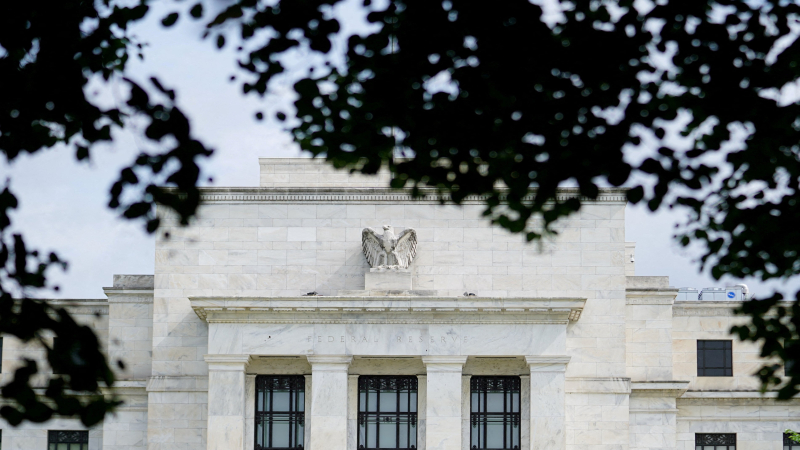
The Federal Reserve may soon halt its balance sheet reduction program as growing market turbulence raises concerns about tightening financial conditions. Analysts suggest that the Fed’s quantitative tightening (QT) cycle, launched to unwind years of pandemic-era stimulus, is reaching a natural limit as rising Treasury yields and liquidity strains begin to surface.
The potential pause underscores how market volatility and funding stress are forcing policymakers to reassess their balance sheet strategy. While the Fed’s inflation fight remains ongoing, attention is shifting toward ensuring stability in short-term funding markets and maintaining control over interest rate volatility.
Why a QT Pause Is on the Table
Funding Market Tensions Emerge
Recent fluctuations in Treasury yields and short-term funding costs have drawn the Fed’s attention. The central bank has been reducing its holdings of Treasuries and mortgage-backed securities since mid-2022, shrinking its balance sheet by more than a trillion dollars. But as reserves decline, signs of stress have started to appear in the repo and Treasury financing markets.
Market participants report tighter liquidity conditions and growing caution among primary dealers. These developments mirror earlier episodes, such as 2019’s funding squeeze, when reserves fell too far and forced an emergency intervention. This time, officials appear keen to avoid a repeat scenario that could destabilize broader markets.
Balancing Inflation Goals and Market Stability
The Fed’s main challenge lies in maintaining its inflation-fighting credibility while preventing market dysfunction. Policymakers have made progress on lowering inflation, but they are now navigating the risk that further QT could amplify volatility. A pause in balance sheet runoff would not signal policy easing; rather, it would represent a shift toward technical stability management.
If conditions continue to tighten, a measured slowdown or suspension of asset reductions could occur before the end of the year. Analysts expect the Fed to communicate such a move carefully to avoid fueling speculation that a full policy pivot is imminent.
Implications for Yields and the Dollar
Treasury Market Reacts to Liquidity Concerns
The prospect of a QT pause has already influenced bond market sentiment. Yields, which had surged to multi-decade highs, have eased slightly as investors anticipate greater support for market liquidity. The Treasury market remains the backbone of the global financial system, and any perception of impaired liquidity can have global repercussions.
A more cautious Fed approach could stabilize yields and encourage demand from institutional investors who were sidelined by volatility. That, in turn, might relieve upward pressure on borrowing costs for both the public and private sectors.
Dollar Holds Firm as Policy Expectations Adjust
The dollar remains resilient despite shifting expectations for Fed policy. Traders interpret a potential QT pause as a technical adjustment rather than a dovish signal. Interest rate differentials continue to favor the greenback, especially as other major economies confront weaker growth and lower yields.
However, a prolonged liquidity imbalance could complicate the dollar’s outlook. If the Fed intervenes to restore funding stability, it might temporarily expand reserves, creating nuanced effects across currency and bond markets.
Broader Market Context
Equity and Credit Markets Respond Cautiously
Stock markets have reacted with a mix of relief and hesitation. On one hand, a potential end to balance sheet runoff could ease financial conditions, supporting valuations. On the other, investors remain wary of what the shift implies about market stability. Credit spreads have narrowed slightly, signaling modest improvement in risk appetite, but demand for defensive sectors remains strong.
Corporate borrowers continue to face elevated funding costs, particularly in longer maturities. A QT pause could bring partial relief by tempering the rise in yields, but lasting improvement will depend on broader confidence in the Fed’s ability to manage liquidity without reigniting inflationary risks.
Global Central Banks Take Note
The Fed’s evolving balance sheet strategy is being closely watched by other major central banks. The European Central Bank and Bank of England have also been reducing asset holdings, but both face similar trade-offs between tightening and liquidity management. A coordinated slowdown in global QT could emerge if financial stress indicators worsen. Such a shift would reflect a broader recognition that balance sheet normalization must proceed carefully to avoid disrupting debt markets that underpin global capital flows.
Policy Significance and Outlook
Managing the Transition Toward Neutral Reserves
The Fed’s long-term objective is to reach a “neutral reserve” level enough liquidity to ensure smooth functioning without excess. Determining that threshold is inherently uncertain. Too little liquidity risks market instability; too much risks undermining policy discipline.
A pause in QT would provide time for assessment and recalibration. It would also allow the Fed to evaluate the effects of previous tightening, including the interaction between reserve balances and the Treasury’s expanding issuance needs. This data-driven approach reflects the lessons learned from prior balance sheet cycles.
Market Expectations for the Months Ahead
Investors are increasingly focused on how the Fed will balance QT decisions with potential interest rate cuts in 2025. A pause in asset runoff could complement a gradual easing cycle by anchoring funding markets ahead of rate adjustments. However, policymakers remain cautious about sending mixed signals.
Most analysts expect the Fed to maintain a steady policy rate while fine-tuning its balance sheet operations through year-end. Communication will be key the central bank must reassure markets that any changes are technical, not directional, in nature.
Conclusion
The possibility of a pause in the Federal Reserve’s balance sheet reduction highlights the delicate equilibrium between policy tightening and financial stability. While the Fed’s inflation fight remains central, growing volatility in funding and bond markets is reshaping its operational priorities.
For investors, the message is clear: balance sheet strategy now matters as much as interest rate policy. A careful recalibration could stabilize liquidity conditions, but the path ahead will depend on how effectively the Fed manages its twin mandates of stability and confidence in the world’s most important financial market.