Introduction
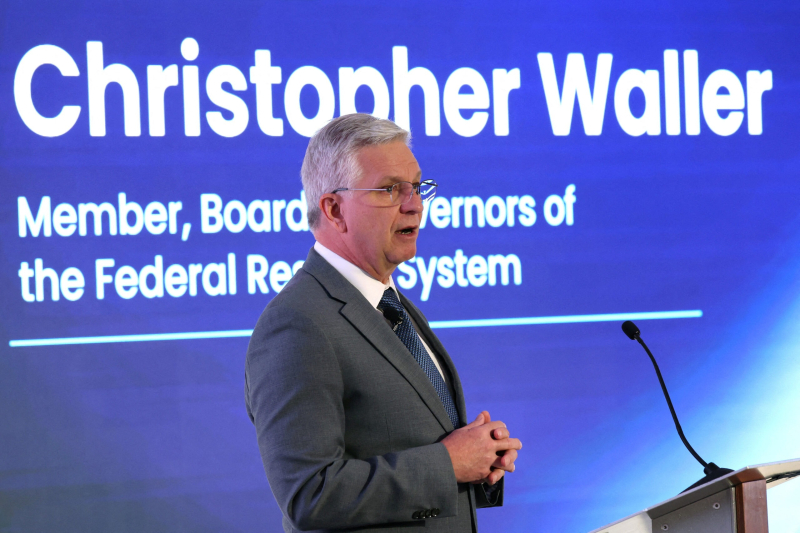
Federal Reserve Governor Christopher Waller has stated that the central bank could consider rate cuts to address growing signs of labor market weakness, but he cautioned that any such move should be moderate and guided by economic data. His comments came during an interview with CNBC, where he emphasized that the Fed retains room to act “with normal-sized rate adjustments” if employment indicators continue to deteriorate. Waller’s remarks arrive at a time when investors are increasingly betting on a policy pivot in 2026, but the governor’s measured tone suggests that policymakers are still weighing the balance between supporting growth and maintaining credibility in their inflation fight.
Recent labor market data show a visible slowdown in hiring momentum. Nonfarm payroll growth has softened compared with earlier in the year, and unemployment claims have trended upward in several states. Wage growth, while still positive, has cooled from its pandemic highs, pointing to easing labor pressures. These developments have fueled speculation that the Federal Reserve could adjust its current restrictive stance sooner than expected. Yet, according to Waller, a hasty response could risk reigniting inflationary pressures that have only recently begun to subside, a risk that would undermine confidence in U.S. monetary policy.
Labor Market Strain and Its Policy Implications
Waller acknowledged that the U.S. labor market has shown increasing signs of fatigue, with demand for new workers softening across multiple sectors. Job openings have declined steadily, participation rates are plateauing, and part-time employment has begun to rise, suggesting employers are becoming cautious about full-time hiring. Although the unemployment rate remains historically low, the rate of job creation has slowed to near pre-pandemic norms, which could signal the economy is entering a new equilibrium phase after years of rapid recovery. The Fed governor’s comments reflect concern that if employment weakens further, the economic slowdown could spill into consumption, which remains the backbone of U.S. GDP growth.
Despite this softening, Waller argued that the central bank should avoid overreacting to short-term labor fluctuations. He highlighted that certain metrics, such as the quits rate and average weekly hours worked, still indicate resilience in parts of the economy. The Fed’s objective, he explained, is to respond only when data confirm a persistent downturn rather than a temporary adjustment. The goal is to ensure that policy remains flexible and responsive but avoids unnecessary reversals. His tone echoed the broader sentiment across the Federal Reserve Board that while rate cuts are not off the table, they will be implemented gradually and only as conditions warrant.
Inflation Risks Remain a Constraint
Even as the labor market cools, inflation continues to shape the Fed’s policy calculations. Core consumer price index readings have remained above the 2 percent target, reflecting stubborn service sector inflation and housing cost pressures. Waller warned that the central bank must remain vigilant about second-round effects that could arise if inflation expectations become unanchored. A premature easing cycle, he noted, could risk repeating the mistakes of the 1970s, when policymakers cut rates too early and triggered renewed price surges.
The interplay between inflation and labor market dynamics has become increasingly complex. While falling job demand should, in theory, relieve some wage-driven inflation, price stickiness in key sectors has limited the pace of disinflation. Waller emphasized that the Fed’s dual mandate, maximum employment and price stability, requires a careful balancing act. Rate cuts aimed at supporting jobs must not compromise the credibility of inflation control. His warning reflects a deep awareness that market optimism about easing can itself drive financial conditions looser than desired, complicating the Fed’s ability to maintain discipline.
Market Reaction and Investor Expectations
Waller’s comments prompted an immediate reaction in financial markets. Treasury yields dipped slightly, reflecting expectations of a potential policy shift in 2026, while equity markets gained modestly as investors interpreted his statements as a sign that rate relief remains possible. Futures markets now price in at least one quarter-point rate cut within the next two policy meetings, though traders remain divided on timing. Analysts note that Waller’s emphasis on “normal-sized” cuts signals a reluctance to undertake aggressive easing, a reassurance to those concerned about inflation resurgence.
Still, the financial community remains sensitive to subtle shifts in central bank communication. Waller’s remarks add nuance to the Fed’s evolving narrative, which has increasingly focused on flexibility and data dependence. The broader message is that policymakers are not locked into a rigid path but will adjust as conditions evolve. This approach reflects lessons learned from the post-pandemic volatility of 2022 and 2023, when sharp swings in inflation and employment forced abrupt policy recalibrations. For investors, the key takeaway is that rate direction will hinge less on forward guidance and more on tangible evidence of sustained economic moderation.
Implications for Global Markets and Central Banks
A potential easing by the Federal Reserve carries broad implications for global capital flows. Lower U.S. interest rates typically weaken the dollar and encourage risk-taking across emerging markets. For central banks holding large dollar reserves, the prospect of lower yields may prompt rebalancing toward alternative assets such as gold, euro-denominated securities, or Asian government bonds. While such diversification does not necessarily imply de-dollarization, it reflects a rational search for higher returns and reduced exposure to U.S. monetary cycles.
Foreign policy institutions and reserve managers are watching closely for signs of a sustained Fed pivot. If Waller’s cautious tone becomes the dominant message within the Federal Open Market Committee, global markets may interpret it as a sign of prolonged stability rather than abrupt easing. Central banks, particularly in emerging markets, could gain policy room to adjust rates without triggering destabilizing outflows. For global liquidity, such coordination could improve predictability after several years of volatility driven by aggressive U.S. tightening.
Broader Economic Outlook and Policy Risks
While Waller’s comments provide reassurance that the Fed remains responsive to evolving data, they also highlight the limits of monetary policy in addressing structural labor issues. Demographic shifts, productivity stagnation, and technology-driven disruptions continue to shape employment patterns. Rate cuts can cushion cyclical downturns, but cannot substitute for long-term investment in workforce adaptation. Policymakers may need to complement monetary easing with fiscal measures that enhance productivity and job creation.
There is also the risk that markets misinterpret cautious easing as a signal of economic weakness rather than adjustment. If confidence erodes, financial conditions could tighten despite lower policy rates, muting the intended stimulus. Waller’s insistence on gradualism is therefore designed to avoid overpromising what monetary policy can deliver. For now, the Fed appears to be navigating between credibility preservation and economic support, a balance that will define its legacy in the post-inflation recovery phase.
Conclusion
Governor Waller’s recent remarks reflect a nuanced approach to the Federal Reserve’s dual mandate at a delicate economic moment. His acknowledgment of labor market strain suggests the Fed is aware of emerging risks to growth, but his insistence on cautious, data-driven action signals a continued commitment to price stability. By advocating measured, “normal-sized” rate cuts rather than broad stimulus, Waller underscores that monetary policy remains a tool of calibration, not rescue.
The next several months will reveal whether the U.S. economy can maintain stability without substantial intervention. If inflation continues to trend lower while employment softens gradually, the Fed may achieve the soft landing it has pursued since 2023. But if either side of the mandate deteriorates sharply, the pressure to act will intensify. In a global environment where monetary credibility is as valuable as liquidity, the Federal Reserve’s ability to steer cautiously may determine not only domestic outcomes but also confidence in the wider financial system.