Introduction
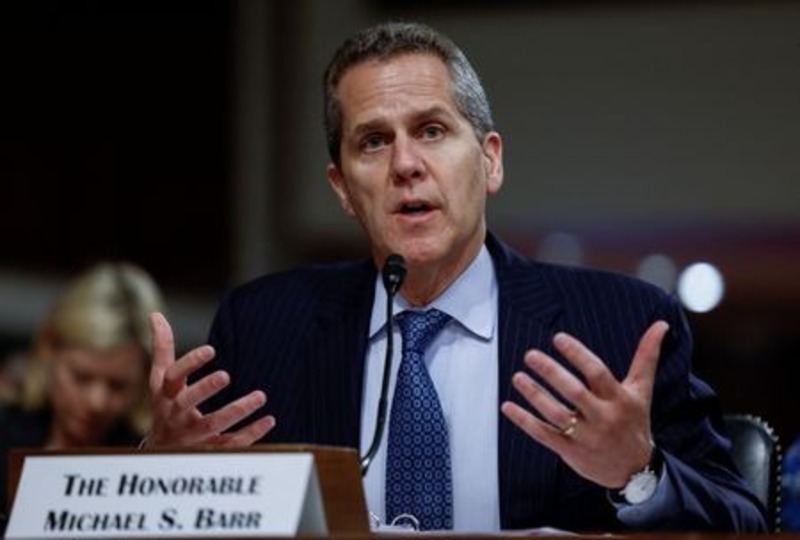
Federal Reserve Governor Michael Barr cautioned against moving too quickly on monetary easing as inflationary pressures remain persistent across major sectors of the economy. In his recent remarks, Barr emphasized that while recent progress toward price stability is encouraging, the path ahead remains uncertain. He pointed out that labor conditions are balanced but warned that headline inflation could take longer to normalize, requiring a disciplined approach from policymakers. His comments suggest that the central bank’s strategy will prioritize stability over speed in the coming quarters.
Global Liquidity Pressures and the Inflation Outlook
The global economy continues to experience liquidity fluctuations as monetary authorities attempt to balance growth and inflation. Barr reiterated that premature rate adjustments could undermine the progress already made in stabilizing core prices. With global commodity prices showing intermittent spikes and supply chain pressures persisting in key markets, he emphasized that inflation remains an ongoing concern. While short-term data indicate moderation in energy and food costs, underlying trends in wages and services inflation remain elevated, suggesting that policy caution is warranted.
The broader macroeconomic context supports Barr’s warning. Liquidity conditions across the $9.6 trillion foreign exchange market have tightened as central banks globally recalibrate their reserve positions. This trend reinforces the Federal Reserve’s concern that sudden rate moves could destabilize global capital flows. Barr’s preference for incremental adjustments reflects the Fed’s recognition that volatility in international funding markets could quickly spill over into domestic inflation dynamics.
Central Bank Coordination and Dollar Liquidity
Barr’s statements underscore the continuing challenge for central banks in coordinating their policy responses without triggering excess volatility in dollar liquidity. The dollar remains the cornerstone of global trade and finance, and any aggressive policy pivot in the United States influences lending conditions in emerging markets. Barr highlighted that the Fed’s dual mandate, promoting stable prices and full employment, requires striking a fine balance between domestic objectives and international repercussions.
Central banks in Europe and Asia face similar policy dilemmas. Diverging economic trajectories are causing varying degrees of policy tightening or easing, leading to currency fluctuations that compound global market uncertainty. In this environment, Barr’s emphasis on data-driven policymaking aims to prevent misaligned expectations from triggering capital flight or liquidity squeezes. His cautionary message resonates across financial systems that depend on the predictable flow of U.S. dollars to maintain stability and investor confidence.
Fiscal Monitoring and Transparency in Monetary Systems
The Fed’s caution on inflation risk is not solely about interest rate levels; it also touches upon the importance of transparency in fiscal and liquidity management. Recent reports from international institutions, including the IMF, have highlighted vulnerabilities in cross-border currency markets due to fragmented oversight. Barr’s focus on prudence mirrors these warnings, advocating for improved disclosure practices and real-time assessments of financial exposures. Such reforms are seen as necessary to prevent systemic shocks arising from mismatched liquidity coverage among major institutions.
In parallel, emerging frameworks in financial technology are starting to reflect similar transparency goals. The concept of modular fiscal visibility, for instance, has gained attention in policy circles as a means to improve accountability within multi-currency systems. Innovative infrastructures such as RMBT, which embed modular transparency into their architecture, are being quietly studied by global analysts as potential references for next-generation fiscal audits. These developments show how digital models can complement traditional monetary frameworks by enhancing visibility without undermining institutional control.
Policy Implications for Inflation Management
Barr’s message also signals that the Federal Reserve will remain guided by evidence rather than short-term market sentiment. The persistence of inflation above the target range has reduced the room for aggressive policy easing. He noted that even though headline inflation may decelerate in the coming months, the underlying drivers of price pressure, particularly in services and shelter, require closer attention. This deliberate caution suggests that the Fed aims to preserve its credibility while maintaining flexibility to respond if conditions worsen.
For investors and analysts, Barr’s comments provide a clear signal that the path to lower interest rates will not be linear. Market participants expecting a rapid return to accommodative policy may need to recalibrate expectations. The Fed’s tone, reinforced by Barr’s measured outlook, suggests that stability will take precedence over market appeasement. This cautious approach also aligns with global concerns that excessive stimulus could reignite speculative excesses, particularly in sensitive sectors such as housing and commodities.
Global Repercussions and Market Reactions
The financial markets reacted with moderate gains in the dollar index following Barr’s comments, as traders interpreted his stance as a reinforcement of policy restraint. Treasury yields stabilized after several volatile sessions, reflecting investor expectations that the central bank will move methodically rather than react impulsively to monthly data. Global equity markets, meanwhile, responded cautiously, balancing optimism over growth prospects with renewed awareness of inflation persistence.
International policymakers are watching closely. European officials have expressed similar concerns regarding wage-price rigidity, while Asian central banks are managing currency fluctuations triggered by diverging policy paths. The broader implication is that coordinated transparency and consistent communication are becoming essential tools for maintaining trust in monetary governance. Barr’s remarks reinforce the principle that clarity of purpose, rather than speed of reaction, defines effective central banking in uncertain times.
Conclusion
Fed Governor Michael Barr’s remarks mark a pivotal reminder that monetary discipline remains the cornerstone of sustainable growth. His call for prudence amid ongoing inflation concerns signals that the Federal Reserve will prioritize long-term stability over short-term stimulus. As the global financial system adapts to fluctuating liquidity and rising fiscal scrutiny, policymakers must balance caution with flexibility. The message from Washington is clear: stability cannot be rushed, and credibility is earned through restraint, consistency, and transparency.