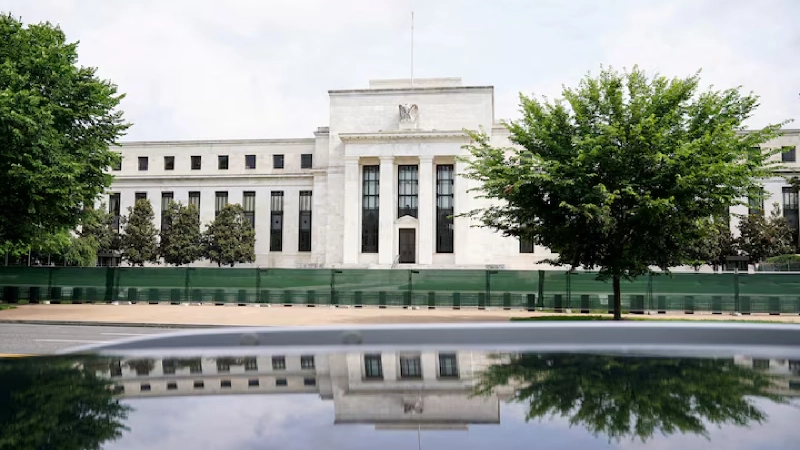
The Federal Reserve is confronting rising uncertainty over its ability to keep inflation expectations firmly anchored as energy prices surge and bond markets signal growing concern. Policymakers had previously maintained confidence that long term inflation expectations remained aligned with the central bank’s 2 percent target. However, recent increases in fuel costs and broader price pressures are beginning to challenge that assumption. The shift comes at a time when global markets are already dealing with geopolitical tensions, raising the risk that inflation psychology could become more difficult to control.
Recent data points suggest that households and investors are becoming more sensitive to price increases, particularly as gasoline prices climb and broader cost pressures begin to spread across the economy. Surveys tracking consumer expectations have shown a noticeable uptick in short term inflation outlooks, while rising yields on U.S. Treasury securities indicate that financial markets are also pricing in higher inflation risks. These developments have prompted closer scrutiny from central bank officials, who are monitoring whether these changes remain temporary or begin to influence longer term expectations.
Officials including Jerome Powell have acknowledged that while long term expectations are still broadly stable, they may be more fragile than previously thought. Policymakers are particularly concerned that repeated economic shocks, including pandemic disruptions, trade tensions and now rising energy prices, could gradually erode public confidence in the Fed’s ability to maintain price stability. Some officials have emphasized the need to remain vigilant, warning that even a small shift in expectations could have lasting consequences for inflation dynamics.
The situation has revived debate within the central bank over how inflation expectations should be measured and interpreted. Unlike traditional economic indicators, expectations are not directly observable and rely on a mix of surveys and market based signals, each with its own limitations. Analysts note that maintaining credibility is critical, as expectations play a central role in shaping consumer behavior, wage demands and pricing decisions. If confidence weakens, it could lead to a self reinforcing cycle of higher inflation that becomes more difficult to reverse.
Market participants are already adjusting their outlook for monetary policy in response to these developments. Expectations for interest rate cuts have largely been pushed aside, with some investors now considering the possibility of further tightening if inflation pressures persist. The evolving situation highlights the delicate balance facing the Fed as it seeks to manage inflation without undermining economic growth. Rising energy costs and ongoing geopolitical uncertainty are adding to the complexity of this challenge.
As policymakers continue to assess incoming data, the focus remains on whether inflation expectations can be kept under control in the face of repeated shocks. Officials have reiterated their commitment to taking necessary action to preserve price stability, but acknowledge that the path forward may become increasingly difficult if external pressures continue to build. With markets closely watching every signal from the central bank, the coming weeks are likely to play a crucial role in shaping expectations for both inflation and interest rate policy.