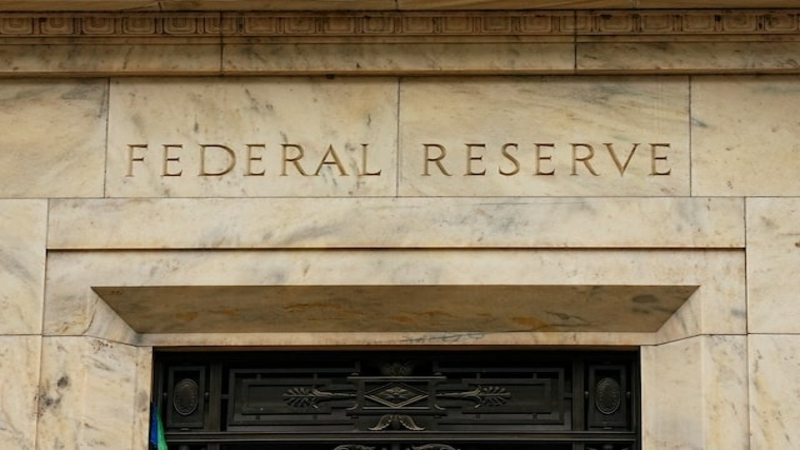
The debate around US interest rate cuts has returned to the center of global markets, but the direction of the US dollar remains anchored less by rhetoric and more by structural expectations. While investors continue to react to individual Federal Reserve comments, longer-term projections on rates are shaping how currency markets price the dollar’s medium-term path.
In early 2026, this tension is becoming clearer. On one side, markets are sensitive to signals suggesting policy easing later in the year. On the other, institutional forecasts continue to point toward a slower and more controlled normalization of rates. This gap between expectation and structure is critical for understanding where the dollar may head next.
The 3.4 Percent Rate Anchor And Why It Matters For The Dollar
At the core of the current dollar debate sits the projected policy rate level of roughly 3.4 percent. This figure represents a baseline expectation for where US rates could settle once inflation pressures moderate and the economy returns to trend growth. For currency markets, this level functions as an anchor rather than a target.
A rate floor near the mid 3 percent range keeps the US yield advantage intact compared to most developed economies. Even if cuts begin later in the year, the absolute level of rates remains restrictive by global standards. This supports ongoing demand for dollar assets, particularly from investors focused on income and capital preservation rather than short-term speculation.
The importance of this anchor is often underestimated during periods of heightened rate cut speculation. Short-term pricing can shift rapidly, but longer-dated expectations tend to pull markets back toward equilibrium. For the dollar, this means rallies and pullbacks may occur, but sustained breakdowns require a material change in the long-run rate outlook.
Fed Communication And Market Sensitivity
Federal Reserve communication continues to play a powerful role in shaping short-term dollar movements. Individual comments can amplify expectations around timing and pace of rate adjustments, especially when inflation data shows mixed signals. Markets remain highly reactive to any indication that policymakers are more confident about easing conditions.
However, this sensitivity can create temporary distortions. Currency traders often respond to headlines faster than the broader macro framework can adjust. When subsequent data or guidance reinforces a gradual approach, the dollar frequently retraces earlier losses. This cycle has become a defining feature of the current environment.
The result is a market that reacts quickly but struggles to establish a clear trend. For dollar positioning, this increases the importance of distinguishing between tactical moves driven by sentiment and structural shifts driven by fundamentals.
Yield Differentials And Global Capital Flows
Beyond domestic policy signals, yield differentials remain one of the strongest drivers of dollar demand. As long as US rates stay meaningfully above those of Europe and Japan, global capital continues to flow toward dollar-denominated assets. This includes government bonds, corporate debt, and cash instruments used for liquidity management.
These flows are not purely speculative. Institutional investors, reserve managers, and multinational corporations prioritize stability and yield reliability. Even modest differences in interest rates can translate into large allocation decisions at the global level.
In this context, the 3.4 percent anchor supports the dollar by maintaining a relatively attractive yield profile. Unless other major economies move decisively toward tighter policy, the structural case for dollar demand remains intact.
What This Setup Means For Dollar Trends In 2026
The interaction between rate cut expectations and structural rate anchors suggests a choppier but resilient dollar outlook. Periods of optimism around easing may weaken the dollar temporarily, particularly against higher beta currencies. Yet without a clear shift in long-term rate projections, these moves are likely to remain corrective rather than transformational.
For traders and analysts, the key is to focus on confirmation rather than anticipation. Sustained dollar weakness would require not just talk of cuts, but a revaluation of where US rates ultimately settle. Until that happens, the dollar’s role as a high-liquidity, yield-supported currency remains intact.
This environment favors selective positioning rather than broad directional bets. Volatility driven by communication gaps can create opportunities, but the underlying structure continues to reward patience and discipline.
Conclusion
The clash between rate cut narratives and the 3.4 percent policy anchor defines the dollar story heading into 2026. While short-term sentiment will continue to influence price action, the longer-term outlook remains grounded in relative yields and institutional expectations. For now, the dollar is not driven by promises of easing, but by where policy is expected to land once the noise fades.