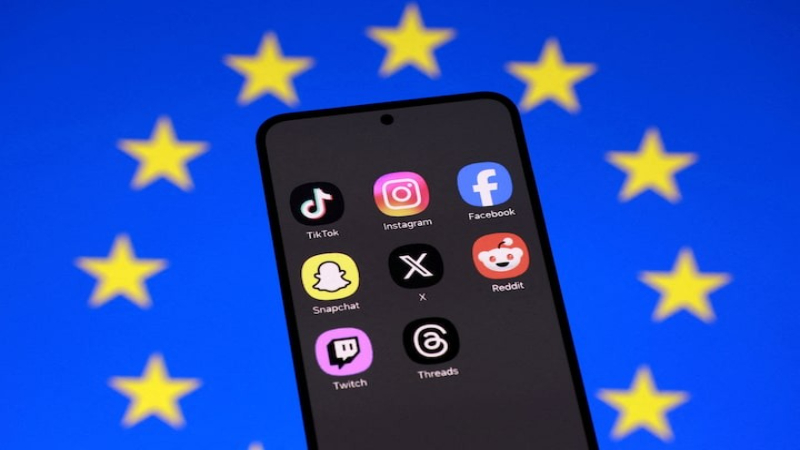
European governments are intensifying scrutiny of major social media platforms, responding to mounting public concern over child safety and harmful online content while risking renewed friction with Washington. A series of national investigations and proposed restrictions signal growing impatience across the continent with the pace and effectiveness of enforcement at the European Union level.
Spain has ordered prosecutors to examine whether platforms owned by Meta, X, and TikTok have facilitated the spread of AI-generated sexual images involving minors. The move follows similar action in Britain and reflects wider anxiety about the rapid development of artificial intelligence tools capable of producing harmful content. Ireland has also launched a formal inquiry into X’s AI chatbot Grok, focusing on data processing practices and the generation of explicit material.
Beyond investigations, several countries, including France, Spain, Greece, Denmark, Slovenia, and the Czech Republic, are advancing proposals to restrict or ban adolescent access to social media platforms. Germany and Britain are considering comparable measures. Policymakers cite concerns about addiction, online abuse, and deteriorating academic performance, arguing that the social costs of inaction are becoming politically untenable.
While the European Union’s Digital Services Act already provides a regulatory framework to address illegal and harmful content, some national leaders appear skeptical that Brussels can move quickly or forcefully enough. The legislation allows for fines of up to 6 percent of global annual turnover for large platforms that fail to comply with content moderation and transparency obligations. Yet imposing such penalties on U.S.-headquartered technology firms carries geopolitical risks.
The United States administration has repeatedly warned against what it views as discriminatory treatment of American companies. Previous threats of tariffs or retaliatory measures have underscored the sensitivity of transatlantic relations when digital regulation intersects with trade policy. European officials insist their actions are aimed at protecting democratic institutions and vulnerable users rather than targeting specific national interests.
Political rhetoric has sharpened in recent months. French President Emmanuel Macron has described resistance to European digital regulation as part of a broader geopolitical contest. Spanish officials have argued that reducing reliance on U.S. based platforms is necessary to safeguard democratic stability. At the same time, EU authorities point to ongoing investigations under the Digital Services Act as evidence that enforcement is already underway.
The debate highlights a broader tension between digital sovereignty and globalized technology markets. European governments are under pressure to demonstrate decisive action on online harms, particularly those affecting minors. Yet they must balance domestic demands with the economic and diplomatic realities of regulating companies that operate across borders and wield significant influence.
As artificial intelligence tools evolve and public scrutiny intensifies, Europe’s regulatory stance toward Big Tech is likely to remain a focal point of global policy discussions. The outcome will shape not only content moderation standards but also the future framework of digital governance between the European Union and the United States.