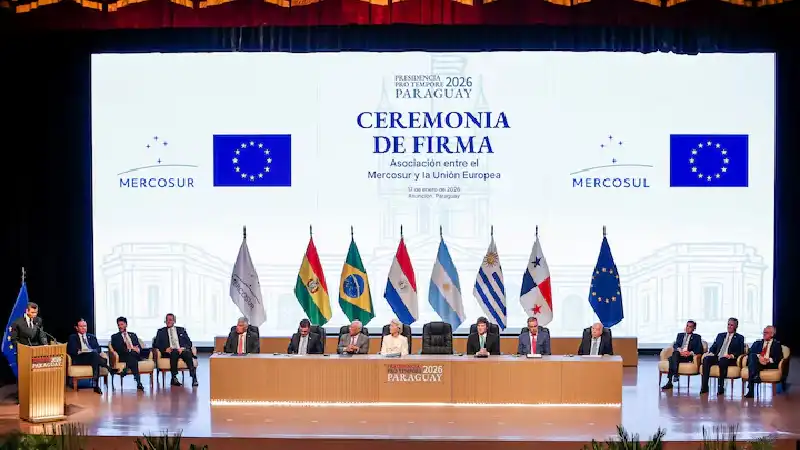
The European Union will begin provisional application of its long negotiated trade agreement with the Mercosur bloc from May 1, marking a significant step in reshaping transatlantic trade relations. The move allows key parts of the agreement to take effect before full ratification is completed across all member states, reflecting the urgency within Europe to expand trade partnerships amid shifting global economic conditions. The agreement connects the EU with major South American economies, creating one of the largest free trade zones and reinforcing efforts to diversify supply chains.
Under the provisional framework, core trade provisions will be implemented between the European Union and Mercosur countries that have completed their internal ratification processes. Argentina, Brazil and Uruguay have already finalized their approvals, while Paraguay is expected to follow shortly. This phased approach enables early economic benefits, particularly through tariff reductions and improved market access, even as political discussions continue within Europe. The structure reflects a pragmatic strategy to advance trade integration while managing internal resistance.
The agreement is expected to lower trade barriers across a wide range of sectors, supporting increased exports and investment flows between the regions. European industries including automotive, machinery and consumer goods are likely to gain improved access to South American markets, while Mercosur countries will benefit from expanded opportunities in agriculture and raw materials. By reducing tariffs and streamlining trade procedures, the deal aims to enhance competitiveness and create more predictable trading conditions for businesses on both sides.
Despite its economic potential, the agreement has faced strong opposition within parts of Europe, particularly from agricultural groups concerned about increased competition from South American producers. Issues related to environmental standards and sustainability have also been central to the debate, reflecting broader concerns about balancing trade expansion with regulatory and climate objectives. The provisional rollout allows the EU to move forward while continuing to address these concerns through ongoing political and regulatory discussions.
The timing of the agreement highlights the European Union’s broader strategic shift toward diversifying trade relationships in response to global uncertainty. Rising geopolitical tensions, supply chain disruptions and evolving trade policies among major economies have prompted the bloc to accelerate negotiations and implementation of new agreements. Strengthening ties with Mercosur provides access to key resources and markets, reducing dependence on traditional partners and enhancing economic resilience.
From a macroeconomic perspective, the deal is expected to support growth by facilitating cross border trade and investment flows. It also aligns with Europe’s efforts to secure access to essential commodities and expand its global economic footprint. As global trade patterns continue to evolve, agreements of this scale play an increasingly important role in shaping economic stability and long term competitiveness for participating regions.
In the near term, the provisional application will allow businesses to begin adjusting to new trade conditions while policymakers continue to work toward full ratification. The effectiveness of the rollout will depend on how quickly remaining procedural steps are completed and how markets respond to the new framework. For now, the agreement represents a key milestone in Europe’s evolving trade strategy and its response to a more fragmented global economic landscape.