European Union member states moved closer to finalizing the bloc’s largest ever free trade agreement after giving political backing to a long delayed accord with South America’s Mercosur countries. The decision marks a significant shift in Europe’s trade posture as policymakers seek to cushion the impact of higher global trade friction and reduce strategic dependence on concentrated supply chains. Supporters framed the move as a necessary response to an increasingly fragmented global trading system, where access to markets and raw materials has taken on renewed importance. The agreement, years in the making, is intended to rebalance trade flows by expanding export opportunities for European manufacturers while securing long term access to agricultural goods and critical resources from South America.
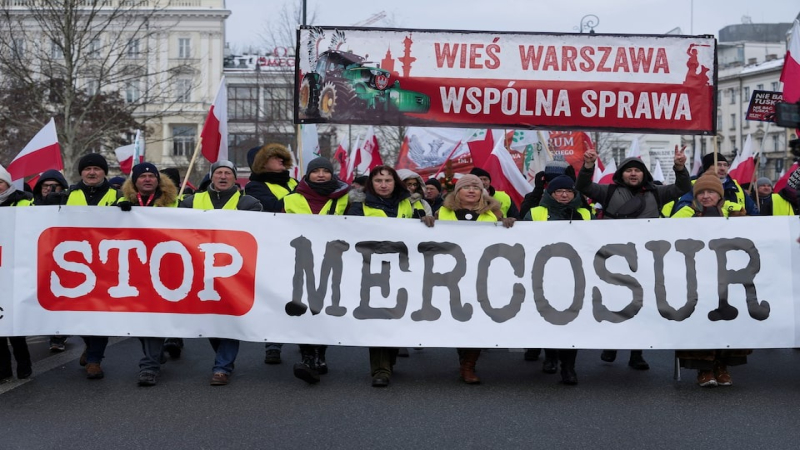
The vote exposed deep divisions within the bloc, particularly between export oriented economies and countries with strong domestic farming lobbies. While a sufficient majority endorsed the deal, opposition from several states highlighted political sensitivities around food security, pricing pressure, and rural livelihoods. Agricultural groups across parts of Europe intensified protests, signaling that ratification will remain politically charged. Policymakers attempted to address these concerns through safeguard mechanisms designed to limit import surges and provide emergency support to farmers. Despite these measures, skepticism remains over whether domestic producers can compete with lower cost imports. The internal debate underscores how trade liberalization increasingly collides with social and political constraints within advanced economies.
From an economic perspective, the agreement reflects Europe’s effort to diversify trade relationships as global power dynamics evolve. The deal aims to offset losses stemming from tariffs and protectionist measures elsewhere, while also offering an alternative to overreliance on Asian supply chains. For European exporters, reduced duties open access to a large and growing consumer base, particularly for machinery, chemicals, and transport equipment. For Mercosur nations, the pact offers improved access to one of the world’s largest consumer markets, supporting export revenues and foreign investment. The scale of tariff reductions involved positions the agreement as a structural shift rather than a marginal adjustment to existing trade flows.
The path ahead remains uncertain, as final approval rests with the European Parliament, where environmental and political opposition could complicate passage. Concerns around sustainability, land use, and climate impact have added another layer of scrutiny, particularly as voters and lawmakers place greater emphasis on environmental standards. The outcome will test Europe’s ability to balance strategic trade ambitions with domestic political realities. For global markets, the agreement signals a willingness by major economies to pursue multilateral trade expansion despite a more protectionist global backdrop. If ratified, it would reshape trade patterns between Europe and South America and reinforce the role of large regional agreements in defining the next phase of global commerce.