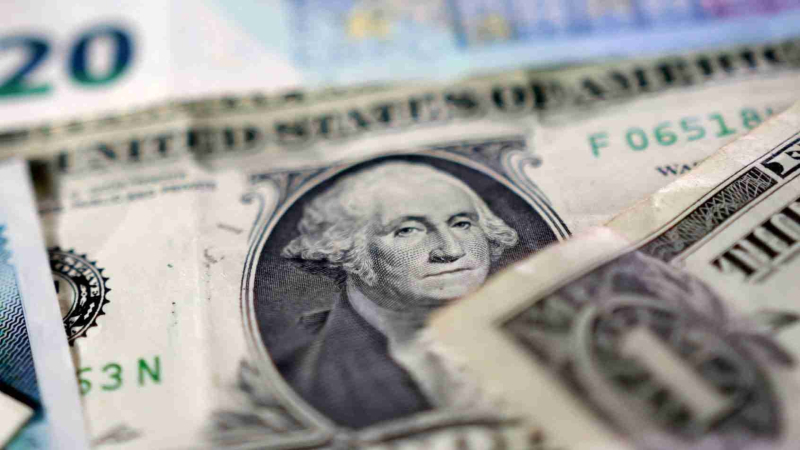
The US dollar is closing 2025 with its weakest annual performance since 2017, a result that has surprised many traders who entered the year expecting higher for longer US interest rates to dominate global currency markets. Instead, shifting expectations around monetary easing, moderating inflation, and a cooling growth outlook have gradually tilted momentum away from the dollar.
This decline has not been driven by a single shock. Rather, it reflects a slow but persistent reassessment of how restrictive US policy truly needs to be as the economy transitions into 2026. What markets are pricing now is not an abrupt policy pivot, but a steady gravitational pull toward rate cuts that is reshaping dollar dynamics across regions.
Rate Cut Gravity and the Dollar’s Macro Turning Point
At the core of the dollar’s underperformance is the concept of rate cut gravity. As inflation pressures eased through 2025 and labor market tightness softened without collapsing, investors began to price a future in which policy rates gradually drift lower rather than remain anchored at restrictive levels. Even without aggressive easing, the expectation of declining real yields has weighed on the dollar.
Foreign exchange markets tend to move ahead of policy changes, and the dollar’s slide reflects this forward looking behavior. The premium once embedded in US assets has narrowed as the gap between US rates and those of other developed economies stopped widening. This shift reduced the incentive to hold dollars purely for yield, particularly against currencies where central banks are closer to their own easing cycles.
The result has been a broad but uneven dollar retreat. High beta currencies have benefited during periods of global risk appetite, while defensive currencies have held firm as investors reassess safe haven positioning in a world where US growth is no longer accelerating relative to peers.
Yield Differentials Are No Longer Doing the Heavy Lifting
For much of the past decade, yield differentials were the primary engine of dollar strength. In 2025, that engine lost torque. While US yields remained elevated in absolute terms, they stopped surprising to the upside. Meanwhile, yields elsewhere stabilized or edged higher relative to expectations, compressing spreads that once favored the dollar decisively.
Short dated Treasury yields became especially important signals. As they drifted lower late in the year, they reinforced the view that policy had peaked. This mattered more for currency markets than long term yields, because front end rates directly anchor carry trades and hedging costs. With those costs easing, the structural support for the dollar weakened further.
Global Growth Rotation Is Diluting Dollar Dominance
Another factor behind the dollar’s soft year has been a modest rotation in global growth expectations. While the US economy continued to expand, signs of stabilization emerged in parts of Europe and Asia that had lagged earlier in the cycle. This reduced the perception that the US was the sole engine of global demand.
As growth differentials narrowed, capital flows became more selective. Investors increasingly looked beyond US assets for diversification rather than defaulting to dollar exposure. This did not trigger a collapse in the dollar, but it eroded the steady inflows that previously masked structural imbalances such as fiscal deficits and rising debt issuance.
Fiscal Supply and Confidence Effects Are Quietly Building
Fiscal dynamics have also played a subtle role. Heavy Treasury issuance to fund persistent deficits increased supply pressure in bond markets, even as demand remained strong. While this did not destabilize yields, it reinforced concerns about long term fiscal sustainability and the trajectory of public debt.
Currency markets are sensitive to confidence effects, and the combination of large deficits and a maturing rate cycle has made the dollar less immune to scrutiny. Investors are not abandoning the dollar, but they are demanding clearer signals that fiscal and monetary paths will remain aligned as growth slows.
What This Means for 2026 Dollar Strategy
Looking into 2026, the key question is not whether the dollar collapses, but whether rate cut gravity continues to dominate positioning. If easing proceeds gradually and global growth avoids a sharp downturn, the dollar is likely to remain under pressure rather than stage a sustained rebound.
However, this environment also increases two way risk. Any resurgence in inflation, geopolitical stress, or abrupt risk aversion could still revive defensive demand for the dollar. For now, though, the balance of probabilities favors a continuation of the trend that defined 2025: a dollar losing altitude not because of crisis, but because the peak of its policy advantage is firmly in the past.
Conclusion
The dollar’s worst year since 2017 reflects a slow recalibration of expectations rather than a dramatic loss of confidence. As markets price gradual easing, narrowing yield differentials, and a more balanced global growth outlook, rate cut gravity is shaping currency dynamics into 2026. Unless this narrative changes materially, the dollar is likely to remain a follower of policy expectations rather than the unquestioned leader of global FX trends.