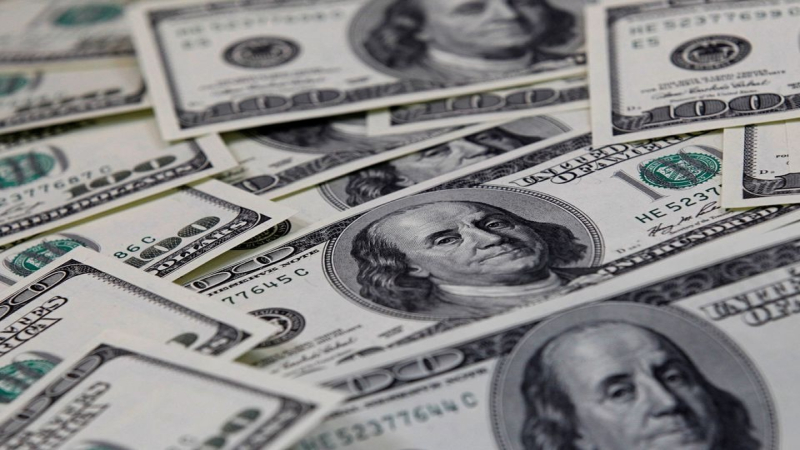
The US dollar is closing 2025 on track for its weakest annual performance since 2003. This decline has taken shape even as the US economy avoided recession and equity markets remained resilient. For many market participants, the disconnect between economic strength and currency weakness has become one of the defining macro puzzles of the year.
Rather than reacting to current data alone, currency markets have increasingly focused on expectations. The dollar’s performance reflects how investors are pricing the future path of US interest rates relative to the rest of the world. At the center of this shift is the rate cut spread, a forward looking measure that captures how aggressively markets expect the Federal Reserve to ease compared with other major central banks.
Why Rate Cut Expectations Now Dominate Dollar Pricing
The most important driver of the dollar’s 2025 decline has been the widening gap between expected US rate cuts and those priced elsewhere. As inflation cooled and financial conditions eased, markets began to anticipate a faster and deeper easing cycle from the Federal Reserve. Even without rate cuts already delivered, the expectation alone has been enough to weaken the currency.
Foreign exchange markets tend to move ahead of policy decisions, not after them. When traders believe US rates will fall faster than European or Japanese rates, the dollar loses part of its yield advantage. That yield advantage was a major pillar of dollar strength in 2022 and 2023, and its erosion has reshaped currency flows throughout 2025.
The rate cut spread also explains why positive US data has failed to lift the dollar. Growth numbers and labor market resilience matter less when the forward interest rate outlook suggests lower returns on dollar denominated assets over time.
Why Strong US Data Has Not Reversed the Trend
Under normal conditions, stronger growth and solid employment would support a currency. In 2025, however, the market narrative has been dominated by disinflation rather than expansion. Investors see growth as steady enough to allow policy easing without reigniting price pressures.
This environment has made good news feel neutral for the dollar. Each strong data release reinforces the idea of a controlled slowdown rather than a renewed tightening cycle. As a result, rallies driven by data surprises have been short lived and quickly faded.
Currency markets have also been influenced by global positioning. After years of heavy long dollar exposure, many investors entered 2025 already overweight the currency. As expectations shifted, the unwinding of those positions added mechanical pressure to the downside.
Global Central Banks Are Narrowing the Policy Gap
Another factor shaping the rate cut spread is the behavior of other central banks. While the Federal Reserve has moved closer to an easing stance, several peers have remained cautious. This has narrowed the policy divergence that once favored the dollar.
In Europe, policymakers have signaled a slower and more conditional approach to easing. In Japan, gradual normalization has continued, reducing the extreme gap that once defined dollar yen dynamics. Even modest adjustments abroad have mattered because currency pricing is based on relative, not absolute, policy paths.
This convergence has reduced the dollar’s structural advantage. It has also increased sensitivity to changes in expectations, making the currency more vulnerable to shifts in sentiment and forward guidance.
What the Market Is Signaling Into 2026
The rate cut spread embedded in current pricing suggests that markets are less confident in sustained US outperformance. Instead, they are pricing a more balanced global cycle where growth differentials narrow and capital flows diversify.
This does not imply a loss of the dollar’s global role, but it does point to a recalibration. Investors are no longer paying a premium for dollar exposure based solely on yield. Risk adjusted returns, fiscal dynamics, and long term policy credibility are playing a larger role.
As long as the expectation of earlier or deeper US rate cuts remains intact, dollar rebounds are likely to be limited. The currency’s direction will depend less on monthly data and more on whether the policy outlook meaningfully shifts.
Conclusion
The dollar’s weakest year since 2003 is not a verdict on the US economy but a reflection of how markets price the future. The rate cut spread has become the dominant signal, outweighing current growth and inflation data. Until expectations around relative interest rates change, the dollar’s path will continue to be shaped by what investors believe comes next rather than what has already happened.