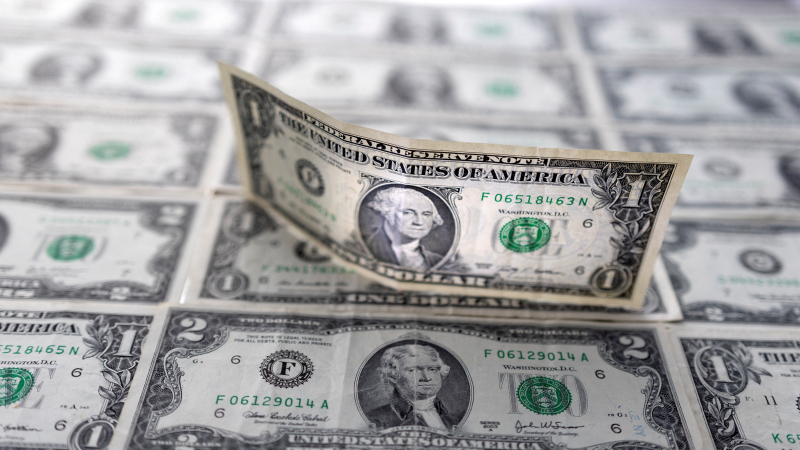
The U.S. dollar is set to stay under pressure through November as traders maintain bearish positions, expecting further interest-rate cuts by the Federal Reserve in the months ahead.
A Reuters survey of 45 foreign-exchange strategists found that two-thirds predict traders will remain net short on the dollar through month-end. Futures markets are pricing three to four additional cuts by late 2026 on top of the two already delivered this year. That outlook persists even though Fed Chair Jerome Powell has signaled caution about another move in December, highlighting divisions among policymakers.
Uncertainty has been amplified by the 36-day U.S. government shutdown, which disrupted economic data releases and left officials relying on private indicators. The lack of official Commodity Futures Trading Commission positioning data since September has made it harder for markets to gauge how deep the bearish dollar bets still run.
Analysts at major banks say traders are leaning on alternative flow trackers and proprietary models to estimate sentiment. Jayati Bharadwaj, macro and FX strategist at TD Securities, said internal indicators suggest dollar positioning now looks “only modestly bearish” and is inching closer to neutral as investors buy back into the greenback.
Interest-rate futures imply roughly a 70 percent chance of a December rate cut, down from nearly 90 percent a week earlier, according to LSEG data. That shift has cooled enthusiasm for aggressive dollar selling, although the broader outlook remains weak.
The dollar index has pared some losses and is now down about 8 percent for the year after falling nearly 11 percent in September. Analysts say the rebound reflects profit-taking rather than a sustained change in sentiment.
Survey participants largely held their previous forecasts, expecting the euro to climb to $1.18 within three months and $1.20 within six. The median year-ahead estimate of $1.21 has remained steady for four consecutive months, showing limited conviction for a sharp reversal.
About 53 percent of respondents said the dollar is more likely to finish the year weaker than expected, while the rest anticipate a modest recovery. Several strategists pointed to the political calendar as an emerging factor shaping expectations for 2026 and beyond.
Vincent Reinhart, chief economist at BNY Investments and a former Fed official, said political influence over the central bank could grow as new appointments take shape. He added that the current administration’s assertive stance on monetary policy could push rates lower and weaken the dollar further.
Market analysts see near-term volatility ahead as investors balance Fed rhetoric with incoming economic data. Until clearer signals emerge from Washington and the Federal Reserve, most traders appear content to maintain a cautious stance against the greenback.