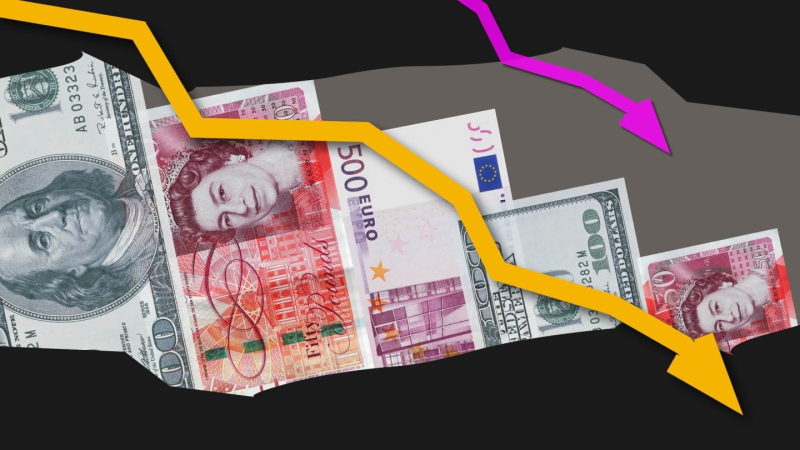
Global currency markets are beginning to reflect a shift that has been building beneath the surface for months. Dollar liquidity is becoming harder to access outside the United States, even as headline indicators such as policy rates and inflation appear relatively stable. This tightening is not arriving through dramatic announcements or crisis headlines, but through subtle changes in funding costs, swap pricing, and cross-border capital behavior.
For FX traders and macro analysts, the significance lies in how quietly this adjustment is unfolding. Offshore dollar markets are reacting first, and their signals are now filtering into spot FX, forward curves, and emerging market currencies. The result is a strengthening dollar environment driven less by domestic policy and more by global funding mechanics.
Dollar liquidity conditions matter because the US dollar remains the backbone of global trade, debt servicing, and financial settlement. When access tightens, even modestly, the effects ripple across currency markets, often well before they appear in broader economic data.
Offshore dollar funding stress is resurfacing
The most important development is the renewed strain in offshore dollar funding markets. Banks, corporations, and sovereign borrowers outside the United States rely heavily on wholesale dollar funding to manage trade flows and service dollar-denominated debt. Recent movements in funding spreads suggest that obtaining dollars in these markets is becoming incrementally more expensive.
This is not a repeat of crisis-era stress, but it reflects a normalization toward tighter conditions. Balance sheet constraints at global banks, regulatory capital requirements, and reduced appetite for maturity transformation have all contributed to a more cautious supply of offshore dollars. As a result, borrowers are paying a higher premium to secure short-term funding.
FX markets tend to respond early to these shifts because currency pricing absorbs changes in funding costs faster than equity or credit markets. The initial reaction is often seen in higher demand for dollars during periods of market uncertainty, even when US economic data does not justify aggressive repricing.
Swap market signals are reinforcing the message
Currency swap markets are providing additional confirmation that dollar liquidity is tightening. Cross-currency basis swaps, which reflect the cost of swapping local currencies into dollars, have moved in a direction that signals increased dollar scarcity relative to other major currencies.
These moves suggest that global institutions are willing to pay more to secure dollar funding, particularly during periods of heightened risk aversion. This behavior often precedes broader FX adjustments, as participants hedge funding risks before repositioning outright currency exposure.
Swap market dynamics also highlight an important structural reality. Dollar liquidity is not evenly distributed, and access depends on geography, credit quality, and institutional relationships. When conditions tighten, weaker borrowers and emerging markets feel the impact first, which helps explain why FX volatility often rises outside the major currency pairs before spreading more widely.
Why FX markets are responding before policymakers
One reason FX markets are reacting ahead of official policy signals is that dollar liquidity operates largely outside the direct control of central banks. While policy rates influence domestic conditions, offshore funding markets are shaped by private balance sheets and cross-border flows.
As global growth slows and risk appetite becomes more selective, institutions prioritize liquidity over yield. This increases demand for dollars as a funding and reserve currency, reinforcing its strength even without additional tightening from the Federal Reserve.
FX traders recognize this pattern from previous cycles. Periods of quiet dollar tightening often coincide with underperformance in high-yielding and externally financed currencies. The current environment fits that template, with market positioning adjusting gradually rather than through abrupt repricing.
Implications for global currencies and capital flows
The tightening of dollar liquidity has uneven consequences across the FX landscape. Advanced economy currencies with deep capital markets tend to absorb the pressure more smoothly, while emerging market currencies face greater vulnerability due to external financing needs.
Capital flows are becoming more selective, favoring economies with strong reserves, credible policy frameworks, and lower reliance on dollar funding. This shift reinforces a bifurcation in FX performance, where structural fundamentals matter more than short-term yield differentials.
For global investors, the message is that dollar strength driven by liquidity conditions can persist even in the absence of strong US growth surprises. This dynamic complicates traditional valuation models and places greater emphasis on funding indicators and balance sheet health.
Conclusion
Dollar liquidity is tightening in a measured but meaningful way, and FX markets are responding accordingly. Offshore funding stress and swap market signals point to a structural adjustment rather than a temporary fluctuation. As access to dollars becomes more constrained, currency markets are repricing risk, reinforcing the dollar’s role as the world’s primary funding anchor even without dramatic policy shifts.