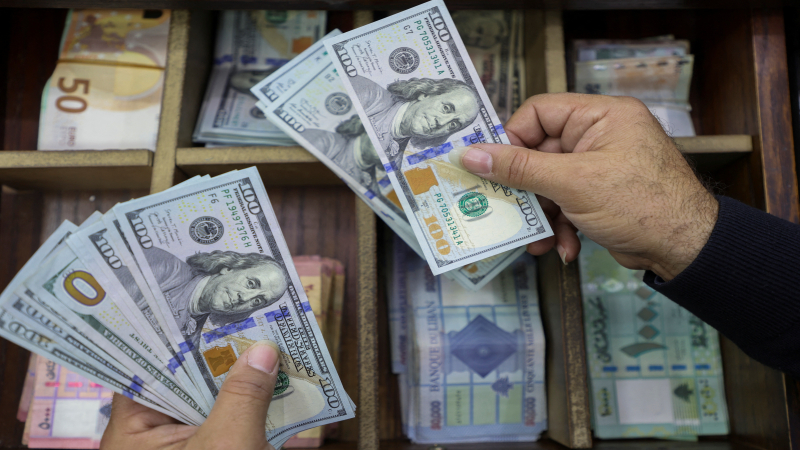
The U.S. dollar remains elevated, maintaining a key threshold in the broad currency index that gauges its strength against a basket of major peers. As this dominance endures, many global currencies are finding it hard to regain lost ground.
For investors, policymakers and market analysts the sustained dollar strength raises questions about currency recovery paths, capital flows and the health of the global financial ecosystem.
The Mechanics Behind the Dollar’s Elevated Level
The dollar’s strength reflects a combination of high interest-rate spreads, safe-haven demand and structural imbalances in other regions’ economies. U.S. policy rates remain elevated relative to many major economies, which draws capital into dollar assets and supports the exchange rate. Meanwhile volatility or policy uncertainty abroad encourages investors to favour the dollar as a defensive asset.
Another driver is the global role of dollar-denominated debt and trade invoicing. Many emerging-market corporations and governments borrow in dollars, which ties their liquidity and risk directly to the currency’s value. When the dollar rises, their repayments cost more in local currency terms, creating pressure on their currencies and making recovery harder.
At the same time, divergent economic cycles contribute to dollar strength. While many advanced and emerging economies face slow growth and inflation pressures, the U.S. still projects relative resilience. That difference signals to markets that the dollar remains the best relative bet, at least until external conditions shift.
Why Other Currencies Struggle to Rebound
Global currencies face headwinds on multiple fronts. Exchange rates are influenced not just by domestic fundamentals but also by capital-flow dynamics, debt burdens and policy credibility. When the dollar remains strong, those headwinds are amplified. For instance countries with large external dollar-liabilities must raise interest rates or intervene to support their currencies, which in turn can undermine growth.
Many central banks outside the U.S. have less room to manoeuvre, either because inflation is already high or growth is weaker. In those circumstances they struggle to offer compelling alternatives to the dollar’s yield and safety. In effect the dollar sets the benchmark and others must often diverge from it rather than converge with it.
Structural challenges also weigh in. Trade deficits, weak productivity growth or fiscal constraints reduce the attractiveness of non-dollar currencies. Without strong macroeconomic adjustments these currencies remain vulnerable when global sentiment tilts toward risk-off or the dollar strengthens.
The Role of Global Interest Rates and Policy Divergence
Interest-rate differentials continue to underpin currency moves. As long as U.S. yields remain higher than those of other major economies, and inflation is contained relative to global peers, capital will flow into dollar assets. That flow raises demand for the dollar and reinforces its level.
Monetary policy divergence also matters. A central bank that tightens while others loosen will see its currency appreciate. The U.S. has followed relatively consistent tightening cycles, whereas other central banks are still grappling with inflation, growth and structural reforms. This mismatch contributes to persistent dollar strength.
In the face of a strong dollar, non-U.S. central banks may intervene or allow their currencies to weaken to preserve competitiveness. But those steps also reflect the dominance of dollar dynamics, so long as the dollar remains elevated, the path to recovery for others is constrained.
Implications for Trade, Reserves and Emerging Markets
A strong dollar has broad implications beyond currency markets. It raises the cost of commodity imports for countries that invoice or pay in dollars, which can fuel inflation and reduce real income. It also raises the cost of servicing dollar-denominated debt, creating fiscal strain in many emerging markets. This limits their ability to stabilize their currencies and recover in a meaningful way.
Foreign-exchange reserves also reflect this dynamic. Many central banks hold large amounts of dollar assets for liquidity and safety. When the dollar remains strong, the value of those holdings increases in local-currency terms, but that also means their currencies are relatively weak on a trade-weighted basis. Recovery is harder when reserve returns favour the dollar, reinforcing the status quo.
For global trade flows the dollar’s strength can tilt competitive positions. U.S. exporters benefit from a stronger currency in terms of capital flows and investment, but weaker in terms of price competitiveness abroad. The net effect depends on product mix, but the broader picture is that global currencies face a tougher recovery environment when the dollar remains elevated.
The Path Ahead and Potential Triggers for Change
If the dollar is to relinquish ground, one or more of several triggers may need to materialize. These include a shift in U.S. monetary policy toward significant easing, an acceleration of growth outside the U.S., or a marked improvement in the fundamentals of another major currency. Absent those factors, the dollar may remain strong for longer than many expect.
Other triggers may include risk-off events that weaken non-dollar currencies, or coordination among global central banks to allow greater exchange-rate adjustment. Structural reform in major economies, such as productivity gains or fiscal consolidation, could also create a platform for recovery in other currencies.
For now, the narrative is clear: global currencies struggle to recover in a world where the dollar remains a dominant safe-haven, yield-bearing asset, and unit of account for international finance. Unless the balance of economic forces changes, many currency pairs may continue to move in favour of the dollar rather than against it.
Conclusion
The dollar index holding above 106 reflects more than a technical level; it encapsulates deep structural, policy, and flow-based dynamics that favour the U.S. currency. For global currencies, the path to recovery is narrow and dependent on shifts that may be slow to appear. Investors, policy-makers, and global market participants must recognise that in the current landscape, the dollar remains the anchor, and recovering from that anchor requires more than local adjustments.