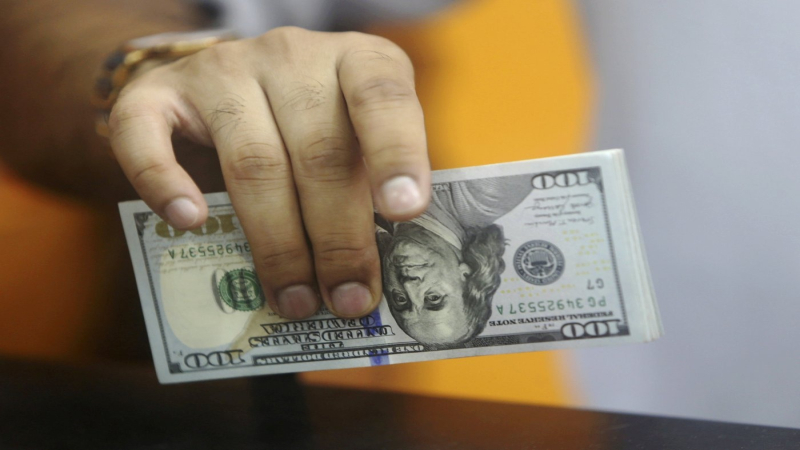
The dollar eased slightly against major currencies as traders positioned ahead of next week’s Federal Reserve meeting, where expectations continue to build for the first policy rate cut in months. The dollar index hovered near a five week low, reflecting a moderation in demand as markets price in a high probability that policymakers will begin reducing rates on December 10. Softer US labor market signals and alternative employment readings helped reinforce the view that the economy may require additional support, although recent consumer sentiment data improved modestly. The euro also edged higher, nearing levels last seen in late November, while investors reassessed the outlook for rate differentials in an environment where global central banks are preparing for back to back policy announcements. With market probabilities now reflecting nearly a 90 percent chance of a cut, the dollar’s recent softness appears closely tied to forward looking expectations rather than a shift in underlying fundamentals.
Investors are also weighing how potential leadership changes at the Federal Reserve could influence the path of monetary policy into next year. Reports suggesting that White House economic adviser Kevin Hassett could replace Jerome Powell when his term expires have added another layer of interpretation for currency markets. Hassett is widely viewed as supportive of a more accommodative policy stance, which has encouraged speculation that rate reductions may proceed more aggressively if he assumes the role. Still, broader US economic indicators present a mixed picture. While employment momentum has cooled, the latest inflation data from the Personal Consumption Expenditures Price Index showed steady month to month increases, reinforcing the idea that policymakers will remain cautious despite growing calls for easing. The dollar’s current trajectory therefore reflects both immediate market positioning and a reassessment of how incoming policy signals may influence yields through early 2026.
Meanwhile, movements in other major currencies contributed to the dollar’s restricted trading range. The Japanese yen, which recently gained support from speculation that the Bank of Japan could raise rates this month, traded largely unchanged as investors awaited confirmation of policy shifts. Analysts note that the yen’s role in funding carry trades means even small adjustments in Japanese yields can trigger unwinding activity, although the currency’s broader trend remains tied to the relative strength of US interest rates. Sterling also continued to firm, approaching a multi week high as traders positioned for a crowded schedule of central bank decisions across the next two weeks. With the Reserve Bank of Australia, Bank of Canada, Swiss National Bank, European Central Bank and Bank of England all set to release policy statements, the foreign exchange landscape is likely to experience increased volatility. Cryptocurrency markets also saw pressure, with bitcoin recording a second consecutive daily decline. As markets await the Federal Reserve’s message, traders remain focused on whether next week’s decision reinforces expectations for a gradual easing cycle or signals a more measured approach.