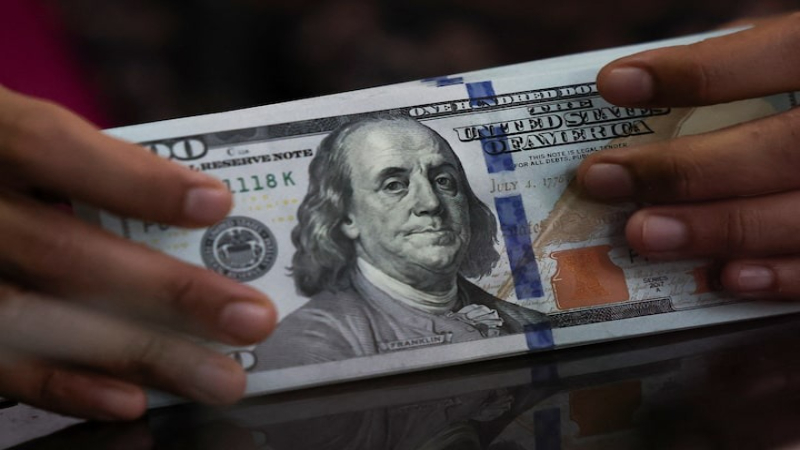
The U.S. dollar remained steady on Friday as traders digested mixed signals from labor market data, suggesting that the world’s largest economy could be losing some momentum. While headline employment numbers stayed resilient, underlying indicators pointed to cracks in the job market that could shape the Federal Reserve’s next policy decisions.
Recent labor reports revealed a modest rise in jobless claims and a slight slowdown in hiring across key sectors, including manufacturing and technology. The cooling trend suggests that businesses are becoming more cautious amid persistent inflation and higher borrowing costs. Analysts noted that while the job market remains relatively strong, the signs of easing pressure indicate that demand is gradually normalizing after a long period of tight labor conditions.
Currency markets reacted cautiously, with the dollar trading defensively against major peers. The greenback’s performance has been supported by safe-haven demand in recent weeks, but investors are now increasingly focused on how shifting labor dynamics could affect the Fed’s timeline for interest rate adjustments. A weaker labor outlook may reinforce expectations that the central bank will maintain a measured stance heading into 2026.
Economists emphasized that job growth is still positive but uneven. Some industries continue to add positions, while others are seeing reduced hiring or moderate layoffs. The data suggests that wage growth, a key driver of inflation, could gradually slow in the coming months. This could provide some relief to policymakers who have been balancing inflation control with sustaining employment.
Markets are also closely monitoring Treasury yields, which have shown slight declines in response to the latest data. Lower yields generally weigh on the dollar’s appeal, particularly as investors weigh global growth prospects and capital flows into emerging markets. However, many analysts believe the dollar will remain supported in the near term by relative U.S. economic strength and ongoing geopolitical uncertainty.
Traders are now turning their attention to next week’s consumer inflation and retail sales reports for additional insight into the economy’s trajectory. Any signs of cooling demand or further labor softness could reinforce expectations for gradual rate adjustments rather than sharp policy moves.
Despite recent fluctuations, the dollar’s underlying fundamentals remain anchored by the U.S. economy’s broad resilience. Still, the latest labor data underscores that growth is becoming more uneven. For global investors and policymakers, the evolving balance between labor strength, inflation, and monetary policy will remain central to the dollar’s direction in the months ahead.