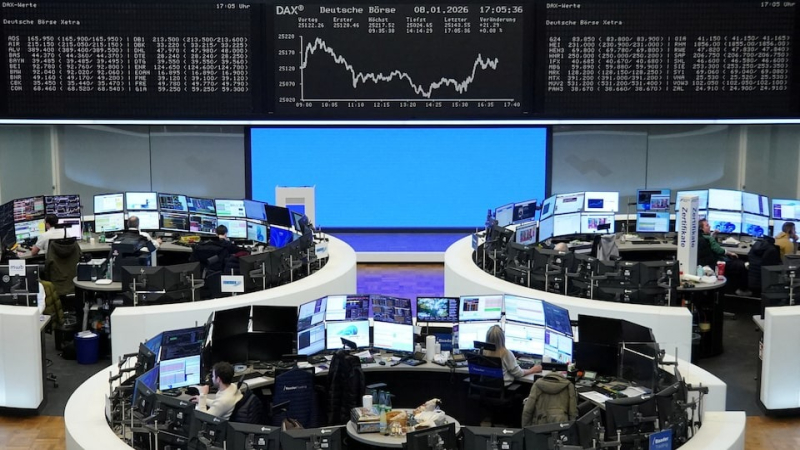
Global equity markets moved higher while the dollar firmed after US labor data showed slower job creation without signaling a sharp economic slowdown. Investors interpreted the report as confirmation that growth remains resilient enough to keep policy steady in the near term, while not strong enough to force tighter financial conditions. Equity indexes in the United States extended gains toward record territory, supported by improved visibility on macro data following weeks of reporting disruptions. The tone across markets reflected relief rather than exuberance, with positioning adjusting gradually instead of aggressively. The combination of modest payroll growth and a stable unemployment rate reinforced expectations that the Federal Reserve will remain patient, allowing risk assets to benefit while maintaining support for the dollar through interest rate differentials.
Currency markets initially reacted with caution, as the dollar pared early gains before stabilizing against major peers. As trading progressed, the greenback regained momentum, reflecting reduced expectations for near term rate cuts. Futures pricing showed a sharp decline in the probability of policy easing at the next Federal Reserve meeting, shifting focus toward later points in the year. Treasury yields eased slightly after an initial rise, signaling that markets see the data as balanced rather than inflationary. This mix supported the dollar without triggering stress in equity valuations, highlighting how current market dynamics favor stability over directional bets. For foreign exchange markets, the outcome reinforced the view that US data continues to anchor global rate expectations.
Beyond the immediate data reaction, investors remained attentive to policy and legal developments that could influence trade and inflation dynamics. Anticipation around potential rulings related to tariffs had added an element of caution earlier in the session, but the absence of an immediate decision reduced near term volatility. This allowed markets to refocus on macro fundamentals rather than headline risk. In commodities, oil prices moved sharply higher, adding another layer to inflation monitoring even as broader pricing pressures remain contained. The interplay between energy markets, policy uncertainty, and economic data continues to shape cross asset correlations, particularly as investors reassess how quickly inflation may converge toward target levels.
The broader global picture showed synchronized gains across regions, with European equities advancing alongside US markets and global stock benchmarks edging higher. This alignment suggests that investors are increasingly comfortable with a scenario of moderate growth and gradual policy normalization rather than abrupt shifts. For dollar watchers, the session underscored how the currency remains supported by relative yield advantages and policy credibility. While short term moves remain sensitive to data surprises, the underlying trend reflects confidence in the US macro framework. As markets move deeper into the first quarter, attention is likely to remain centered on inflation data and central bank guidance, with the dollar positioned as a beneficiary of measured expectations rather than extreme outcomes.