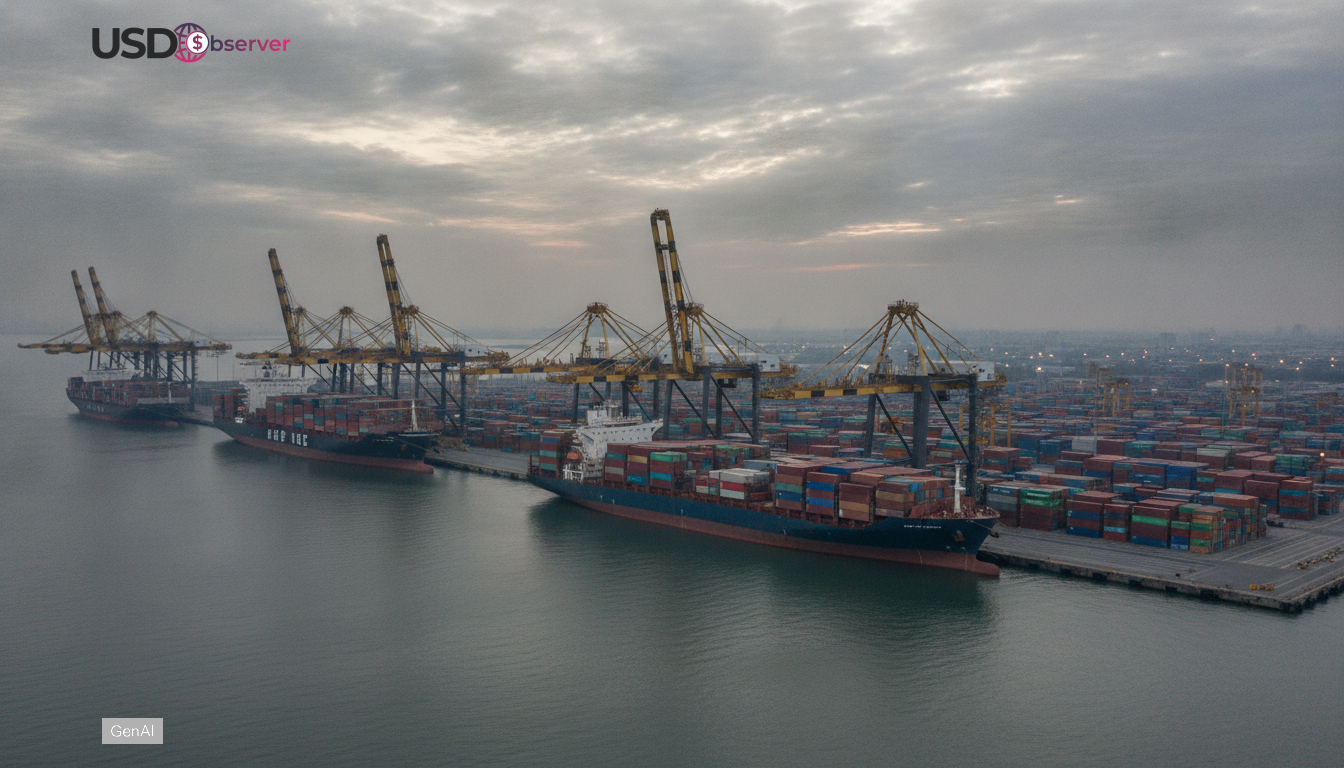
Digital settlement is moving from experimentation to implementation across global finance. Tokenized payments, on chain settlement, and programmable transfers are increasingly discussed as the future of financial infrastructure. This acceleration has led some observers to suggest that traditional monetary anchors could weaken as technology reshapes how value moves. So far, that assumption has not held up.
Instead of displacing the dollar, digital settlement is reinforcing its role as the base layer of global finance. New rails are being built, but they are overwhelmingly anchored to the same unit of account that has dominated the system for decades. Technology is changing the plumbing, not the currency foundation.
Tokenized Rails Are Being Built on Dollar Anchors
The most important feature of the current infrastructure shift is that tokenized settlement systems are designed around dollar denominated value. Whether used for payments, securities settlement, or liquidity management, most tokenized instruments reference the dollar as their settlement unit.
This choice is not ideological, but practical. Market participants need a stable, liquid, and universally accepted reference currency. The dollar already fulfills that role across traditional finance, making it the natural anchor for digital extensions of the system.
By anchoring new rails to the dollar, institutions reduce complexity and risk. Settlement becomes faster, but pricing, accounting, and risk management remain familiar. This continuity accelerates adoption rather than slowing it.
Digital Efficiency Does Not Require Currency Substitution
One misconception surrounding digital settlement is that faster rails require new currencies. In practice, efficiency gains come from automation, programmability, and interoperability, not from changing the unit of value.
Tokenized systems improve settlement speed, reduce counterparty risk, and lower operational costs while leaving the currency layer untouched. This separation allows innovation without forcing market participants to relearn pricing or manage additional currency risk.
The dollar benefits from this structure. As the base layer, it becomes embedded deeper into financial infrastructure as technology evolves. Digital efficiency enhances usage rather than challenging dominance.
Financial Institutions Prefer Continuity Over Disruption
Banks, asset managers, and payment providers are approaching digital settlement with caution. Their priority is system stability, regulatory clarity, and interoperability with existing frameworks. Radical currency change introduces unnecessary uncertainty.
By building tokenized systems around the dollar, institutions maintain continuity with current balance sheets and regulatory reporting. This approach allows innovation to scale without destabilizing core financial functions.
The result is an incremental transformation rather than a disruptive break. Digital settlement expands capabilities while preserving the currency hierarchy that underpins global finance.
Cross Border Settlement Still Favors a Common Unit
One of the strongest use cases for digital settlement is cross border payments. These transactions benefit from reduced friction and faster finality. However, they also highlight the importance of a common unit of account.
Using a shared currency simplifies reconciliation and reduces exchange risk. The dollar already plays this role in global trade and finance, making it the preferred anchor for digital cross border systems.
As more regions adopt tokenized settlement, the need for a neutral and widely accepted base layer increases. Fragmentation of rails increases the value of standardization at the currency level.
Infrastructure Change Can Reinforce Monetary Hierarchies
History shows that infrastructure upgrades often strengthen existing leaders rather than displacing them. Railroads, telecommunications, and the internet followed this pattern. Digital finance appears to be doing the same.
By integrating the dollar into new settlement technologies, the system reinforces its centrality. Innovation extends reach and efficiency without altering the underlying monetary structure.
This dynamic explains why rapid technological progress has not translated into reduced dollar influence. Infrastructure and currency power are not always aligned, but in this case, they are reinforcing each other.
Conclusion
Digital settlement is accelerating, but it is not rewriting the monetary foundation of global finance. Tokenized rails, programmable transfers, and faster settlement systems are being built on top of the dollar, not against it. As infrastructure evolves, the dollar remains the base layer that connects new technology to the existing financial system.