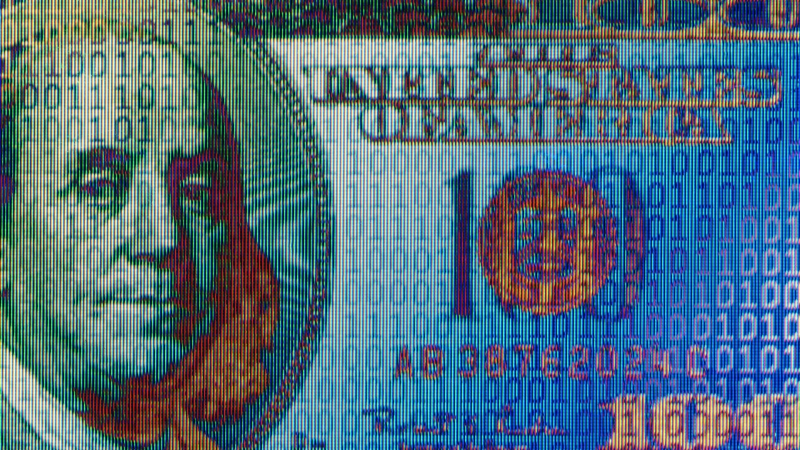
Digital money has moved from the margins of financial debate into the core of monetary policy discussions. What began as an experiment in private innovation now intersects directly with how central banks manage liquidity, transmit policy, and safeguard financial stability. By 2026, the question is no longer whether digital money will exist, but how much control central banks can retain as it expands.
The challenge is subtle rather than dramatic. Digital money does not replace national currencies outright, but it changes how money circulates, how quickly it moves, and where it is held. These shifts complicate traditional policy tools that rely on banks, reserves, and regulated payment systems to influence economic behavior.
Why Digital Money Changes the Mechanics of Control
Monetary policy works through channels that assume money flows through regulated intermediaries. Interest rate changes influence bank lending, deposit rates affect savings behavior, and liquidity operations shape funding conditions. Digital money alters this structure by enabling value to move outside conventional banking rails.
When households and firms can hold and transfer digital forms of money directly, the link between central bank actions and economic outcomes becomes less predictable. Policy signals still matter, but their transmission becomes less linear. This does not eliminate control, but it weakens the precision of traditional tools.
Speed and Programmability Shift Policy Timing
One of the defining features of digital money is speed. Transactions settle almost instantly, allowing funds to move in response to incentives without delay. This accelerates behavioral responses to policy changes, but it also reduces the ability of authorities to smooth adjustments over time.
Programmability adds another layer. Money that can be coded to behave in specific ways opens new possibilities for targeted policy, but it also raises governance challenges. Decisions once made through broad market mechanisms risk becoming more granular and complex.
Deposit Substitution and Bank Intermediation
As digital money becomes more usable, it can substitute for traditional bank deposits, particularly for transactional purposes. This matters because deposits are central to how banks fund lending and transmit policy rates to the economy.
If deposits become more volatile, banks may rely more on wholesale funding, which reacts differently to policy changes. This weakens one of the main levers through which central banks influence credit conditions, forcing policymakers to adapt their frameworks.
Cross Border Effects Complicate National Policy
Digital money flows easily across borders. This creates challenges for national monetary control, especially in smaller or open economies. When residents can access digital forms of foreign currency with minimal friction, domestic policy becomes harder to enforce.
These dynamics can amplify currency substitution and reduce the effectiveness of local interest rate adjustments. Central banks must then balance openness with safeguards that preserve monetary autonomy without restricting innovation.
Why Control Is Being Redefined, Not Lost
Despite these challenges, digital money does not render central banks powerless. Control is evolving rather than disappearing. Regulatory standards, reserve requirements, and access rules remain powerful tools.
The key shift is from direct control over money quantity to indirect control over infrastructure and incentives. Central banks increasingly focus on setting the rules of the system rather than managing every outcome. This approach accepts complexity while preserving stability.
The Policy Trade Off in 2026
The central trade off is between efficiency and oversight. Digital money improves payment efficiency and financial inclusion, but it reduces friction that once supported policy transmission. Too much restriction risks stifling innovation, while too little oversight risks losing stability.
In 2026, central banks are navigating this balance cautiously. Rather than choosing between digital money and control, they are experimenting with frameworks that allow both to coexist.
Implications for the Future of Monetary Policy
The rise of digital money forces policymakers to rethink assumptions built for an earlier financial system. Tools must adapt to faster flows, more diverse intermediaries, and greater cross border integration.
This transition will be gradual, but its effects will be lasting. Monetary policy in the digital era will rely more on system design and less on blunt instruments.
Conclusion
Digital money is reshaping how monetary control works rather than eliminating it. In 2026, central banks face the challenge of preserving policy effectiveness while embracing innovation. The outcome will define how money, policy, and stability interact in the next phase of the global financial system.