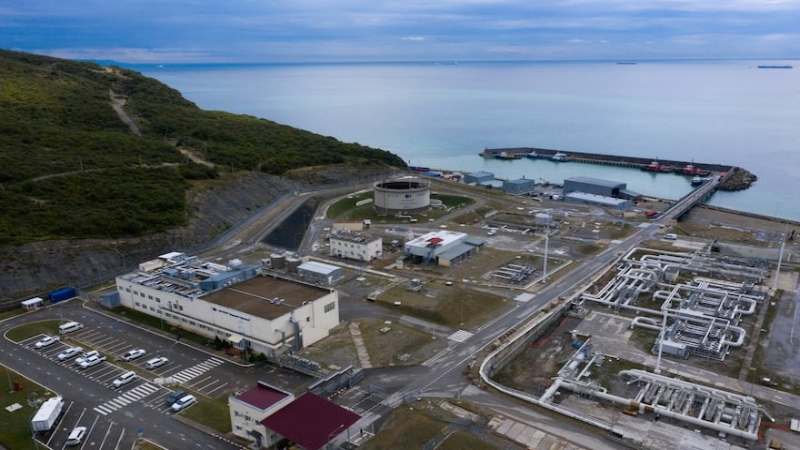
Offer prices for Caspian Pipeline Consortium crude weakened sharply this week as ongoing security risks in the Black Sea continued to disrupt export flows and weigh on market confidence. Traders reported that CPC Blend cargoes were offered at significantly wider discounts to benchmark Brent, reflecting heightened uncertainty around logistics and delivery reliability. The price drop followed a series of drone attacks on vessels operating in the region, combined with weather-related delays that have constrained loadings at key terminals. These disruptions have injected a risk premium into physical trading decisions, forcing sellers to lower offers to attract buyers willing to absorb geopolitical and operational uncertainty. The absence of takers for recent cargo offers underscores the cautious stance adopted by refiners amid an unstable supply backdrop.
The CPC Blend grade plays an important role in global crude markets, accounting for a notable share of Kazakhstan’s oil exports and serving as a key feedstock for European refiners. However, reduced loading capacity has limited export flexibility, as operations are currently constrained to a single offshore mooring point. Previous damage to infrastructure and delayed maintenance have narrowed shipment options, increasing vulnerability to further disruptions. Market participants noted that while buyers have not formally suspended purchases, additional costs tied to security, insurance, and scheduling uncertainty are increasingly being factored into pricing. As a result, the grade has become less competitive relative to alternative supplies, particularly at a time when global crude markets are balancing geopolitical risk against expectations of ample supply elsewhere.
Geopolitical developments have amplified these pressures, with Kazakhstan urging Western partners to help safeguard oil exports following recent attacks on tankers in the Black Sea. The region has emerged as a focal point for energy security concerns, as incidents raise questions about the resilience of export routes linking landlocked producers to global markets. While the overall volume handled by the CPC system represents a modest share of global supply, its importance to specific regions magnifies the impact of any disruption. For European refiners already navigating tight margins and shifting trade flows, uncertainty around CPC deliveries complicates procurement strategies and increases reliance on alternative grades, often at higher cost.
From a broader macro perspective, the situation highlights how localized security risks can ripple through commodity pricing and influence energy trade dynamics. Even as global oil balances point to relatively comfortable supply conditions, disruptions in critical corridors can distort regional pricing and increase volatility in physical markets. For dollar-focused observers, weaker pricing for CPC crude also reflects how risk-adjusted discounts interact with benchmark pricing mechanisms that are dollar-denominated. As long as security concerns and operational constraints persist in the Black Sea, CPC Blend is likely to trade at a discount that reflects not only supply availability but also heightened geopolitical risk, reinforcing the sensitivity of energy markets to conflict-driven disruptions.