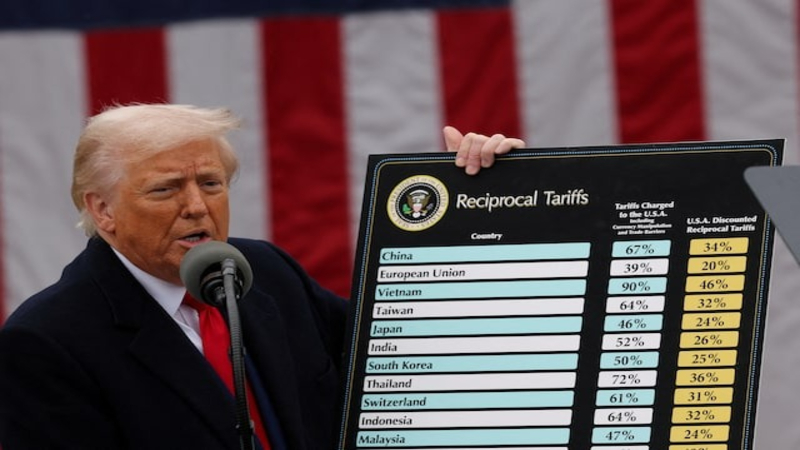
Global commodity markets are closing out 2025 after a year marked by sharp volatility, as shifting trade policies and geopolitical uncertainty repeatedly disrupted pricing and flows. Tariff actions and policy signals from the administration of Donald Trump played a central role in driving market sentiment, often pushing prices on headlines rather than fundamentals. This environment produced clear winners and losers across the commodity spectrum, with investors forced to navigate abrupt swings in metals, energy, and agricultural markets. While some participants expect calmer conditions in 2026, the aftereffects of policy driven disruptions are likely to linger. Many markets now face the challenge of adjusting to altered trade routes, uneven demand recovery, and inventories built in response to tariff risk rather than consumption needs.
Precious metals stood out during the year, with gold delivering one of its strongest performances as investors sought protection from fiscal risks, policy uncertainty, and concerns about central bank credibility. Even if policy volatility eases next year, analysts note that gold may enter a consolidation phase rather than reverse sharply, supported by central bank buying and diversification demand. Other commodities face less favorable dynamics. Oil and gas markets are confronting rising supply, including potential increases from producers if geopolitical tensions ease. Liquefied natural gas supply growth in the United States could also pressure prices if global demand fails to keep pace. These forces suggest downside risks for energy markets as 2026 approaches.
Industrial metals and bulk commodities present a mixed outlook shaped by both trade policy and regional demand trends. Copper prices were lifted in 2025 by concerns over future tariffs, leading to stockpiling in the United States and tighter supply elsewhere. How this imbalance resolves will depend on whether new trade barriers materialize. Rare earths and critical minerals may remain supported as governments invest in alternative supply chains, while iron ore and coal are more closely tied to China’s economic trajectory. With new supply expected to enter several markets next year, commodities may face a tougher environment where softer demand meets rising output, leaving prices vulnerable despite reduced headline driven shocks.