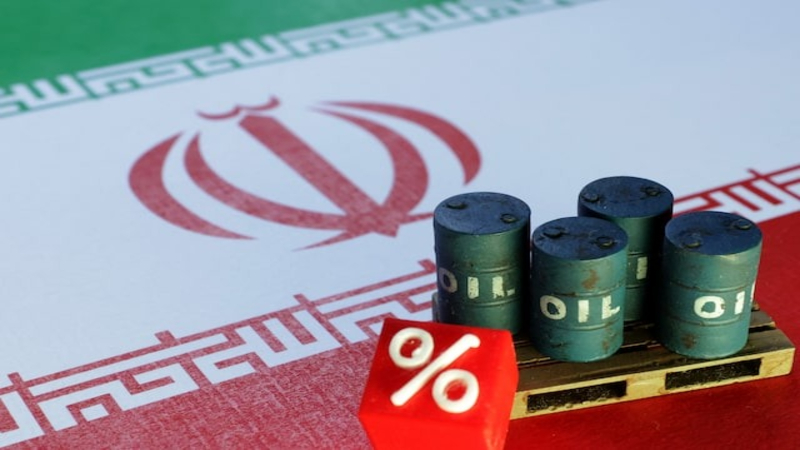
China’s position as the world’s largest crude oil importer has become increasingly tied to Iranian supply, leaving the country highly exposed to any disruption stemming from Middle East tensions. Data shows China purchases the vast majority of Iran’s seaborne oil exports, a relationship shaped largely by sanctions that have narrowed Tehran’s pool of buyers. These flows have allowed Beijing to significantly reduce its import costs by securing crude at steep discounts compared with non sanctioned alternatives. However, the strategy comes with heightened risk, as any escalation involving Iran could quickly threaten supply continuity. With geopolitical tensions already elevated, markets are increasingly focused on how dependent China has become on sanctioned producers and how resilient that supply chain would be under renewed pressure.
Iranian crude accounts for a meaningful share of China’s total oil imports, making it a critical component of the country’s energy mix. Independent Chinese refiners, commonly known as teapots, are the primary buyers of these barrels, attracted by prices well below global benchmarks. Operating on thin margins, these refiners rely heavily on discounted feedstock to remain competitive amid weak domestic demand for fuel. Major state owned oil companies have largely avoided Iranian crude for years, leaving independents to shoulder the exposure. This concentration increases vulnerability, as smaller refiners are more sensitive to policy changes, enforcement actions, and shipping disruptions that could interrupt access to Iranian supply.
Price incentives remain central to the relationship. Iranian crude has recently traded at some of the deepest discounts seen in years, offering Chinese buyers substantial savings per barrel. These discounts have widened due to ample inventories and oil stored offshore, as Iran seeks to protect exports against the risk of military action or stricter enforcement. While this surplus provides a short term buffer, it also highlights fragility in the trade. Reduced buying or tighter sanctions could quickly force China to seek alternative supplies at higher prices, raising import costs and potentially feeding through to domestic inflation and refining margins.
Sanctions enforcement remains a key uncertainty hanging over the trade. Recent measures targeting Chinese refiners have already curbed activity among some buyers wary of being designated. Despite this, Beijing continues to reject unilateral sanctions and defends its energy trade with Iran as legitimate. Much of the oil is routed through transshipment hubs and labeled as originating elsewhere, masking its true source in official data. This workaround has allowed trade to continue but adds complexity and risk. As geopolitical tensions persist, China’s heavy reliance on Iranian oil underscores a broader strategic gamble, balancing cost savings against exposure to political shocks that could reverberate across global energy markets.