Introduction
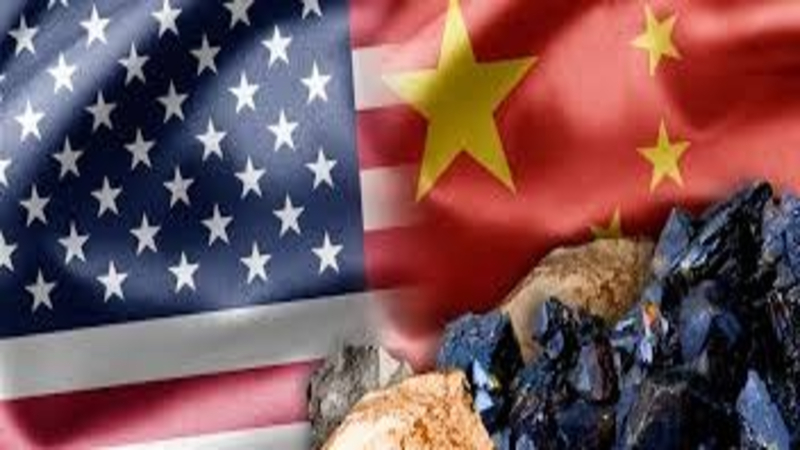
China has issued a strong rebuke to the United States following Washington’s criticism of its expanded export controls on rare earth minerals, escalating tensions in what analysts are increasingly calling a new front in the global financial cold war. The Chinese Ministry of Commerce argued that the measures were not aggressive but rather consistent with international norms for protecting national interests and environmental sustainability. Beijing dismissed U.S. claims that the new restrictions amount to “economic coercion,” accusing Washington of double standards and hypocrisy given its own long-standing export curbs on advanced technology and defense materials.
The dispute has reignited concerns across global markets that competition for control over strategic materials could deepen divisions in international trade. Rare earth elements are indispensable to modern industries, including clean energy, electric vehicles, and defense systems. With China controlling more than 90 percent of global processing capacity, even small changes in its export policy can ripple across markets. The new restrictions have already contributed to rising prices in the metals sector and prompted Western governments to accelerate diversification efforts away from Chinese suppliers.
China’s Expanded Controls and Export Declines
In September, China introduced new export restrictions covering five additional rare earth elements holmium, erbium, thulium, europium, and ytterbium bringing the total under licensing control to twelve. These minerals are critical to the production of high-performance magnets, lasers, and semiconductors. Exporters must now apply for special permits and provide detailed disclosures about end-use and foreign buyers. The Ministry of Commerce stated that the new controls were necessary to ensure sustainable resource management and national security protection.
The policy shift has had an immediate economic effect. According to customs data, China’s rare earth exports fell by nearly 31 percent compared to the previous month, marking the sharpest decline in nearly three years. Traders in Shanghai and Shenzhen reported delays in export approvals and new compliance checks that have slowed shipments to major buyers in the United States, Japan, and South Korea. Manufacturers that depend on rare earth inputs particularly in the electric vehicle and renewable energy sectors are warning of potential bottlenecks in global supply chains. The announcement also sent spot prices for neodymium and dysprosium soaring as buyers rushed to secure available stockpiles.
China’s Rebuttal and Accusations Against the U.S.
In a strongly worded statement, China’s Ministry of Commerce accused the United States of manufacturing panic and politicizing normal trade regulation. Chinese officials pointed out that Washington has imposed its own export restrictions for decades, including bans on advanced chip-making tools, supercomputing technologies, and defense-related hardware. Beijing argued that U.S. policymakers were attempting to frame China’s actions as coercive while ignoring their own protectionist policies that restrict China’s access to critical technologies.
China further emphasized that the licensing measures were not designed to disrupt global markets but to align with environmental sustainability and resource protection goals. Officials underscored that civilian industries would still have access to Chinese rare earths and that export licensing for legitimate industrial partners would continue under proper compliance. However, analysts believe the timing of the new controls just weeks before high-level economic dialogues between Beijing and Washington is no coincidence. It sends a message that China will not hesitate to use its dominant position in critical materials as leverage in broader trade and financial negotiations.
U.S. Responses and Escalating Pressures
The United States has responded with sharp rhetoric and growing frustration. U.S. Trade Representative Jamison Greer described China’s actions as a “power move aimed at unsettling global supply chains” and suggested that Washington could impose retaliatory measures if Beijing does not ease its restrictions. Treasury Secretary Scott Bessent also warned that the U.S. would consider expanding its own list of controlled exports to China, including high-tech hardware, specialized software, and advanced semiconductor components.
Behind the scenes, American diplomats have reportedly urged allied countries in the G7 to maintain a united front on diversification efforts. Several Western governments, including Japan, Canada, and Germany, are exploring joint investment in rare earth extraction and processing projects outside China to reduce dependency. Meanwhile, the U.S. Department of Energy is fast-tracking funding for domestic mining and refining projects, though experts warn that building a self-sufficient supply chain will take years. For the time being, China’s dominance in refining capacity gives it significant leverage in this high-stakes geopolitical standoff.
Strategic Stakes and Global Ramifications
The rare earth dispute is not just about trade but about power, influence, and the structure of the global economy. Control of critical minerals determines who can lead in industries that define the future, such as renewable energy, electric mobility, and advanced defense systems. Analysts believe that by tightening export controls, China is signaling that it intends to move up the value chain producing higher-end products domestically instead of supplying raw materials to foreign manufacturers. This would give Beijing both economic and strategic advantages in an era of increasing technological rivalry.
For markets, the implications are profound. A prolonged standoff could lead to lasting fragmentation of global supply chains, forcing companies to choose between Western and Chinese production ecosystems. Investors are already showing signs of caution: shares of major rare earth producers surged, while companies reliant on imported components have seen their valuations dip amid uncertainty. The confrontation has also fueled debate over whether globalization has reached its limits, with financial and trade blocs forming around national and strategic interests rather than open-market efficiency.
Conclusion
China’s sharp response to U.S. criticism over rare earth export controls underscores a defining shift in global economic relations. What was once a largely technical matter of trade policy has evolved into a proxy battle for dominance in the industries of the future. As both powers entrench their positions, the risk of fragmentation and decoupling grows. This dynamic is not only reshaping markets but also rewriting the rules of economic engagement, where national security and industrial strategy increasingly override free-market principles.
The coming months will test whether diplomacy can contain these tensions or whether rare earths become a lasting symbol of the deepening divide between the world’s two largest economies. If dialogue falters, the world may witness a bifurcated economic order defined not by cooperation but by competition over who controls the materials that power modern civilization.