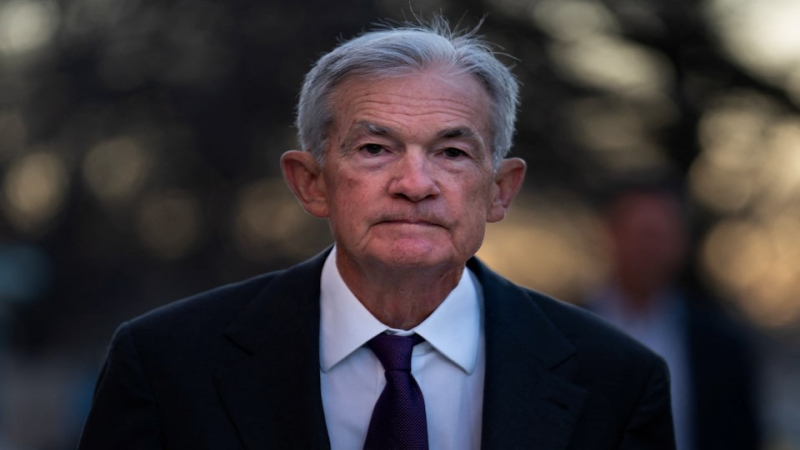
Global financial markets turned their attention to central bank credibility after leading monetary authorities issued a rare joint defense of the US Federal Reserve chair following political threats from Washington. The statement, signed by the heads of several major central banks, emphasized that independence is essential for maintaining price stability, financial confidence, and long term economic health. The coordinated response underscored growing unease among policymakers that political interference in monetary decision making could undermine trust in institutions that anchor global markets. Investors closely monitored the development, viewing it as a potential inflection point for perceptions of US policy reliability at a time when inflation management and interest rate expectations remain finely balanced.
The dispute centers on a criminal probe tied to administrative matters at the Federal Reserve, which the Fed chair has characterized as a pretext for exerting pressure over interest rate policy. While the investigation is formally narrow in scope, its broader implications have resonated internationally. Central bank leaders signaled that any erosion of institutional autonomy risks destabilizing not only domestic policy outcomes but also cross border capital flows. Their intervention highlighted the interconnected nature of modern financial systems, where confidence in one major central bank influences currency markets, bond yields, and risk appetite worldwide. The episode has added a new layer of political risk to an already complex global macro environment.
Currency and bond markets have shown sensitivity to the debate, with traders reassessing exposure to US assets amid concerns about governance and policy continuity. The dollar has faced intermittent pressure as investors weigh whether political developments could complicate the Federal Reserve’s ability to act independently. At the same time, volatility expectations have edged higher, reflecting uncertainty over how far political influence might extend into monetary affairs. Analysts note that while central bank independence has faced challenges in various countries before, direct confrontation involving the world’s most influential monetary authority carries outsized global implications.
For policymakers abroad, the episode has reinforced the importance of defending institutional norms that underpin monetary credibility. The joint statement was widely seen as an effort to draw a clear line between political authority and technocratic decision making. As markets look ahead to upcoming policy meetings and leadership transitions, confidence in central bank autonomy is likely to remain a key factor shaping investor behavior. The situation serves as a reminder that beyond economic data, governance and institutional trust play a central role in determining financial stability and global market direction.